
Casinos That Accept Interac UK 2026: What British Players Actually Need to Know
 Available in US
Let’s address the elephant in the room straight away: no casino licensed by the UK Gambling Commission accepts Interac as a payment method in 2026. Not one. If you’re a British player searching for Interac casinos in the UK, you’ve stumbled into a geographic mismatch between what affiliate content promises and what your bank account can actually do. Interac is a Canadian banking network, built for Canadian financial institutions, and it requires a Canadian bank account to function. Your Barclays or HSBC login won’t authenticate an Interac transaction, and offshore casinos that list Interac in their cashier menus are serving Canadian players, not British ones.
This guide unpacks why Interac doesn’t work in the UK, which casinos accept it (spoiler: they’re all Canadian-facing), and what British players should use instead. The alternatives exist, they’re faster in some cases, and they work with UK banking infrastructure rather than against it. No promotional fluff. Just the technical reality and the practical options that actually land your deposits at UKGC-licensed operators.
The Short Answer: Interac and UK Players in 2026
No UKGC-licensed casino accepts Interac. The payment method is exclusive to Canada. You cannot use Interac at any online casino from a UK bank account, whether the casino is licensed in Britain or offshore. The restriction isn’t regulatory — UK law doesn’t ban Interac. The restriction is technical: Interac operates only within Canada’s banking network, and UK banks do not participate in that network. They use different payment rails, different clearing systems, and different authentication protocols.
Offshore casinos licensed in Malta, Curaçao, or Kahnawake often list Interac as a payment option. These are legitimate sites, but they target Canadian players. If you register at one of these casinos as a UK player, you can fund your account with Skrill, Neteller, Visa debit, or cryptocurrency. You cannot use Interac. The cashier will ask for Canadian bank credentials you don’t have. The transaction will fail at the authentication stage, not because the casino rejected you, but because the Interac network doesn’t recognize your bank.
Can I use Interac at UK online casinos?
No. Interac requires a Canadian bank account issued by a financial institution that participates in the Interac Cooperative. UK banks do not participate. UKGC-licensed casinos integrate with UK payment processors authorized under Financial Conduct Authority and PSD2 regulations. Interac is not authorized in the UK, so no UKGC operator offers it.
The closest UK equivalent is Trustly, an instant bank transfer service that works the same way Interac does in Canada — you authenticate via your own online banking, funds move directly from your bank to the casino, and withdrawals clear in minutes to hours rather than days. PayPal, Skrill, Neteller, and Pay by Mobile are also widely accepted at UKGC casinos and offer instant deposits.
What Is Interac and Why It Doesn’t Work in the UK

Interac is a payment network operated by Interac Corp, a consortium owned by Canada’s major financial institutions. Founded in 1984 as a shared ATM network, it expanded into online payments in 2001 with Interac Online and launched Interac e-Transfer in 2002. Today, more than 250 Canadian banks and credit unions participate, including the Big Five — RBC, TD, BMO, Scotiabank, and CIBC — plus regional players like Desjardins, Vancity, Tangerine, and Simplii.
Interac e-Transfer is the version online casinos use. The flow is straightforward: you log into your Canadian bank’s online banking portal, initiate a transfer to the casino’s email address or unique code, and the funds arrive in your casino account within minutes. The casino never sees your bank credentials. Authentication happens inside your own financial institution’s secure environment. For Canadian players, it’s fast, familiar, and free at most banks.
The problem for UK players isn’t the concept — it’s the infrastructure.
How Interac Works in Canada
When you deposit via Interac e-Transfer at a Canadian casino, the transaction routes through the Automated Clearing Settlement System, Canada’s national payment clearing network. Your bank confirms the transfer inside your online banking session, tokenizes the payment details, and sends the funds through ACSS to the casino’s receiving bank. The casino gets a notification, matches the transfer to your account, and credits your balance. Withdrawals reverse the flow: the casino initiates an Interac e-Transfer to your email address, you accept it in your online banking, and the money lands in your account. Typical payout time is 12 to 48 hours, though some casinos offer Autodeposit, which skips the manual acceptance step and settles in minutes.
Security is bank-level because the transaction is a bank transfer, not a card payment. Your credentials never leave your financial institution’s domain. Interac uses real-time fraud monitoring and two-factor authentication through your bank’s own systems. For Canadian regulators and players, it’s a known quantity. For British players, it’s irrelevant, because UK banks don’t connect to ACSS.
The Banking Infrastructure Problem
Interac membership is restricted to Canadian financial institutions. Participation requires integration with Canada’s clearing system and a seat in the Interac Cooperative’s governance structure. UK banks operate on entirely separate payment rails: Faster Payments Service for real-time transfers, CHAPS for same-day high-value payments, and Bacs for batch processing. These systems don’t interoperate with ACSS. There is no cross-border bridge, no API gateway, no reciprocal agreement. A UK bank’s online banking portal cannot authenticate an Interac transaction because the authentication request would arrive in a format the UK bank doesn’t recognize, on a network it doesn’t participate in, governed by rules it didn’t agree to.
Think of it as two phone networks that don’t share towers. You can own the best phone in the world, but if your carrier doesn’t have a roaming agreement with the network you’re trying to reach, the call won’t connect. Interac is the Canadian network. UK banks are on the UK network. No roaming agreement exists.
Why UK Banks Cannot Join the Network
Regulatory jurisdiction is the first barrier. Interac operates under Canadian federal and provincial financial regulations, overseen by the Financial Consumer Agency of Canada and FINTRAC for anti-money laundering compliance. UK banks are regulated by the Financial Conduct Authority and must comply with the Payment Services Regulations 2017, which implement the EU’s revised Payment Services Directive. The two frameworks don’t overlap. A UK bank joining Interac would need dual regulatory approval, separate compliance teams, and parallel audit trails. For a payment method that serves one foreign market, the business case doesn’t exist.
Technical integration is the second barrier. Interac’s authentication model relies on direct API connections to each participating bank’s online banking platform. UK banks have spent the past decade building open banking infrastructure under PSD2, which standardizes APIs for third-party payment initiation across the European Economic Area. Interac predates PSD2 and uses a different technical standard. Retrofitting a UK bank’s systems to speak Interac’s protocol while maintaining PSD2 compliance would require significant engineering investment for a feature no UK customer is asking for.
Market demand is the third barrier. UK players who want instant bank transfers already have Trustly, which works with every major UK bank via PSD2 APIs. Players who want e-wallet privacy have PayPal, Skrill, and Neteller. Players who want carrier billing have Pay by Mobile through Boku. The payment landscape in the UK is mature and competitive. Interac would be entering as a foreign entrant with no functional advantage over domestic alternatives. Banks have no incentive to integrate it, and UKGC casinos have no incentive to request it.
Why do I see “Interac casinos UK” content if it doesn’t work here?
You’re seeing a quirk of how people search. Many UK players encounter Interac while reading Canadian casino reviews that rank well for generic “best casino payment methods” queries. They search for “Interac UK” to clarify whether it works here. Affiliate sites create UK-targeted content to capture that search traffic and redirect it to UK alternatives. The content exists to answer the question “does it work?” with “no, use this instead.” It’s not deceptive — it’s clarifying a common misconception.
Why can’t UK banks join the Interac network?
Because Interac membership requires integration with Canadian payment clearing systems and compliance with Canadian financial regulations. UK banks operate under FCA and PSD2 rules, use Faster Payments and CHAPS clearing, and have no regulatory authority to join a Canadian banking consortium. There is no technical or regulatory bridge between the two systems. Building one would cost millions for a feature that serves no UK customer, since UK players already have functional equivalents like Trustly and PayPal.
Offshore Casinos That Accept Interac (But Not for UK Players)

Offshore casinos licensed in Malta, Curaçao, and Kahnawake accept Interac deposits. These are legitimate operators serving Canadian players, and many of them also accept UK registrations under their international licenses. The catch: UK players can open accounts, claim bonuses, and play games, but they cannot deposit via Interac. The payment method is geo-restricted to Canadian bank accounts.
Below are four established offshore casinos that list Interac as a payment option. All four target Canadian players primarily, hold recognized international licenses, and have been operating for years. If you’re a UK player, you can register at any of these sites and use alternative methods. If you’re a UK citizen living in Canada with a Canadian bank account, you can use Interac at these casinos.
| Casino | License | Interac Deposit Limit (CAD) | Withdrawal Time | UK Player Access |
|---|---|---|---|---|
| Jackpot City | Kahnawake, MGA | $10 – $4,000 | 24–48 hours | Yes, but not via Interac |
| Spin Casino | Kahnawake, MGA | $10 – $4,000 | 24 hours | Yes, but not via Interac |
| Royal Vegas | Kahnawake, MGA | $10 – $5,000 | 24–48 hours | Yes, but not via Interac |
| LeoVegas | AGCO (Ontario), MGA | $10 – $3,000 | 24 hours | Site de-prioritizes UK traffic; Interac unavailable |
Jackpot City
Jackpot City has been operating since 1998, making it one of the oldest names in online gambling. It’s owned by Bayton Limited, a subsidiary of Super Group, the New York Stock Exchange-listed conglomerate that also owns Betway. The casino holds licenses from the Kahnawake Gaming Commission and the Malta Gaming Authority, plus AGCO approval for the Ontario market. Canadians can deposit via Interac e-Transfer with a minimum of CAD $10 and a maximum of $4,000 per transaction. Withdrawals back to Interac typically process within 24 to 48 hours after identity verification.
The game library runs 650-plus titles, sourced primarily from Microgaming until around 2018, when the operator diversified into NetEnt, Evolution, and other providers. The welcome package splits across four deposits, matching each up to CAD $400 for a total of $1,600, with 10 daily wheel spins tied to a million-dollar prize pool. Canadian players value it for CAD account support and Microgaming’s progressive jackpot network, which has paid out over CAD $1.3 billion since launch.
UK players can register under the MGA license. Payment options for British accounts include Visa and Mastercard debit, PayPal, Skrill, Neteller, and Paysafecard. Interac won’t appear in your cashier menu because the payment processor checks your account country during registration. You won’t be blocked from the casino, but you will be blocked from a payment method that requires Canadian credentials.
Spin Casino
Spin Casino is Jackpot City’s sister brand, same ownership, same licenses — Kahnawake and MGA. It launched as a mobile-first platform and still markets itself with that angle, though the desktop site is fully featured. Interac e-Transfer works the same way here: CAD $10 minimum, $4,000 maximum, withdrawals quoted at 24 hours. The faster payout claim compared to Jackpot City is marketing rather than infrastructure — both sites use the same payment processor.
The game library mirrors Jackpot City’s breadth, with a slight tilt toward slots over table games in the homepage layout. The welcome bonus is structured differently: CAD $1,000 total across three deposits rather than four. Live dealer coverage comes through Evolution, with blackjack, roulette, baccarat, and game show variants available in multiple betting ranges.
UK players access Spin Casino under the MGA license. Payment methods for British accounts are identical to Jackpot City: debit cards, e-wallets, Paysafecard. No Interac. The casino accepts GBP and processes withdrawals back to the method you deposited with, so if you funded via PayPal, your payout returns to your PayPal account. Typical withdrawal time for UK players is 24 to 72 hours after verification, depending on the method.
Royal Vegas
Royal Vegas launched in 2000 and carries the heritage branding of the Microgaming era, when a handful of operators dominated the market. It’s owned by Digmedia Limited and licensed by the Malta Gaming Authority and Kahnawake. The site still leans heavily on Microgaming content, though NetEnt, Evolution, and Pragmatic Play titles have been added over the years. Interac deposits run from CAD $10 to $5,000 per transaction, with withdrawals processing in 24 to 48 hours.
The welcome package splits across three deposits, matching up to CAD $1,200 total. The loyalty program is more tangible than most — points convert to electronics, travel vouchers, and physical goods rather than just bonus credits. For long-term players, that’s a differentiator. For casual players, it’s irrelevant.
UK players can register under the MGA license. Payment options include Visa and Mastercard debit, PayPal, Skrill, Neteller, and bank transfer. Interac is listed in the cashier for Canadian accounts but hidden for UK accounts. GBP is supported. Withdrawals go back to the deposit method, with e-wallets clearing fastest and bank transfers taking three to five business days.
LeoVegas
LeoVegas positions itself as the “King of Mobile Casino,” a branding claim backed by a strong mobile app on iOS and Android. The operator is now owned by MGM Resorts International, which acquired it in 2022 for $607 million. It holds licenses from AGCO for Ontario, the Malta Gaming Authority, and the Swedish Gambling Authority. Interac e-Transfer is available for Canadian players with a CAD $10 minimum deposit and withdrawals quoted at 24 hours.
The game library exceeds 2,000 titles, sourced from most major providers. Live dealer coverage is extensive, with multiple Evolution studios and dedicated tables for high rollers. The welcome offer varies by region, but Canadian players typically see a deposit match up to CAD $1,000 plus free spins.
LeoVegas exited the UK market in 2023, returning its UKGC license voluntarily. British players can still access the site under the MGA license, but the operator de-prioritizes UK traffic — no GBP-focused promotions, slower customer support response times for UK time zones, and a general sense that the site is optimized for Scandinavia and Canada. Interac does not appear in the cashier for UK accounts. Alternative payment methods include Visa, Skrill, Neteller, and Trustly. Withdrawals via e-wallet clear in 0 to 24 hours; card withdrawals take one to three business days.
Can UK players access offshore casinos that list Interac?
Yes, UK players can legally register at offshore casinos licensed in Malta, Curaçao, or Kahnawake. The Gambling Act 2005 regulates operators offering services to UK residents, not the residents themselves. However, these offshore sites are not enrolled in GamStop, do not offer UKGC consumer protections like segregated funds and IBAS dispute resolution, and do not fall under UK advertising standards. Interac itself is unavailable to UK players at these sites because the payment method requires Canadian bank authentication. You can play at these casinos using Skrill, Neteller, Visa, or crypto, but not Interac.
The Best UK Alternatives to Interac
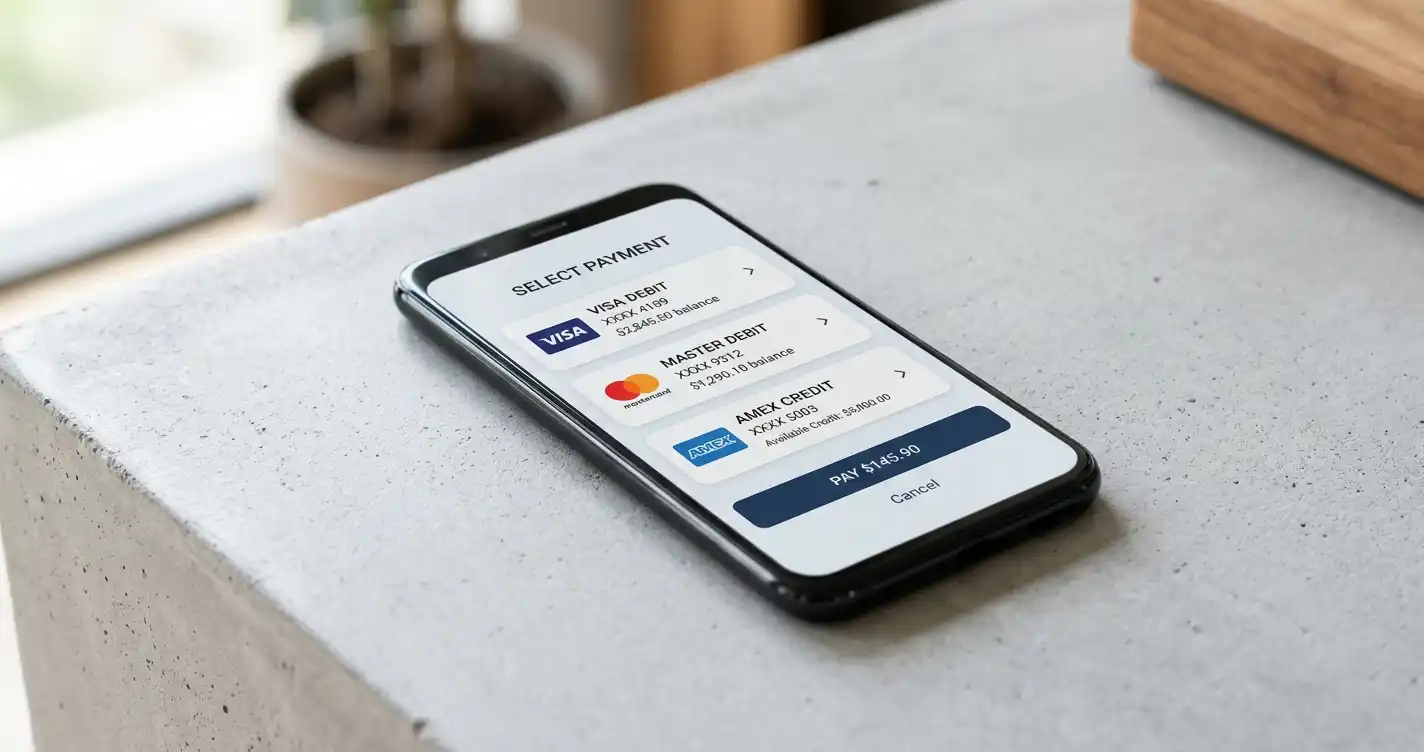
British players have access to a mature payment ecosystem built around UK and European banking rails. The alternatives below offer instant deposits, fast withdrawals, bank-level security, and wide acceptance at UKGC-licensed casinos. Most are functionally equivalent to Interac; a few offer features Interac doesn’t, like anonymity or mobile-first convenience.
| Payment Method | Speed (Deposit / Withdrawal) | Limits (Typical) | Fees | UKGC Casino Acceptance | Best For |
|---|---|---|---|---|---|
| Trustly | Instant / 0–4 hours | £10 – £10,000 | None | ~60% | Instant bank transfers, fastest withdrawals |
| PayPal | Instant / 0–24 hours | £10 – £5,000 | None | ~40% | Brand recognition, privacy layer |
| Skrill | Instant / 0–24 hours | £10 – £10,000 | 1.45% FX, £1 instant withdrawal | ~70% | Offshore casino acceptance, crypto integration |
| Neteller | Instant / 0–24 hours | £10 – £10,000 | 1.50% FX, £1 instant withdrawal | ~65% | Net+ card for offline spending |
| Pay by Mobile | Instant / Not supported | £10 – £30 per transaction | None | ~50% | Low limits, no bank account needed |
| Paysafecard | Instant / Not supported | £10 – £1,000 | None | ~40% | Anonymity, deposit-only |
| Apple Pay / Google Pay | Instant / Not supported | £10 – £100 typical | None | ~30% | Mobile-first, biometric auth |
| Visa/Mastercard Debit | Instant / 1–5 days | £10 – £20,000 | None | 100% | Universal acceptance, fallback option |
Trustly (Pay by Bank) — The Closest Equivalent
Trustly is the functional equivalent of Interac for UK players. It’s an instant bank transfer service operated by Trustly Group AB, a Swedish fintech licensed by the Swedish Financial Supervisory Authority and passported across the UK and European Economic Area under PSD2. You don’t need a Trustly account. You select your bank at the casino cashier, authenticate via your own online banking credentials, and the deposit lands instantly. Withdrawals clear in 0 to 4 hours at the fastest UKGC casinos, with some operators offering 15-minute payouts.
Trustly integrates with every major UK bank — Barclays, HSBC, Lloyds, NatWest, Santander, and dozens of others — via open banking APIs mandated under PSD2. The payment flow mirrors Interac’s e-Transfer model: bank-level authentication, no intermediary account, direct transfer from your current account to the casino. The difference is regulatory framework. Interac operates under Canadian financial rules; Trustly operates under European open banking standards. For UK players, Trustly is what Interac is for Canadians.
Security is identical to logging into your own bank. Trustly never sees your credentials. The payment is tokenized at your bank and transmitted via encrypted APIs. Your transaction history appears on your bank statement as a transfer to the casino or its payment processor, not to Trustly. There is no separate Trustly balance to manage, no funding step, no withdrawal delays while you move money from an e-wallet back to your bank. It’s direct.
Around 60 percent of UKGC-licensed casinos accept Trustly as of 2026. Notable operators include SpinYoo, DAZN Bet, and Casumo. Minimum deposits typically start at £10; maximums vary by casino but run up to £10,000 per transaction at high-roller sites. Withdrawal limits mirror deposit limits. There are no fees to the player — the casino absorbs Trustly’s processing charge, which averages 0.8 percent per transaction.
The withdrawal speed is where Trustly outperforms most alternatives. E-wallets quote 0 to 24 hours, but Trustly’s open banking connection allows some UKGC casinos to process payouts in minutes. If speed is your priority, Trustly is the first choice.
What is the closest UK equivalent to Interac?
Trustly. It offers the same instant bank transfer model — you authenticate via your own online banking, funds move directly from your bank to the casino, no intermediary account is needed. Deposits are instant, and withdrawals at UKGC casinos clear in 0 to 4 hours. There are no fees to the player. It works with all major UK banks via PSD2 open banking APIs. Functionally, it’s Interac for the UK market.
PayPal
PayPal is the most recognizable e-wallet globally, with 435 million active accounts as of Q4 2023. In the UK, it operates via PayPal (Europe) S.à r.l. et Cie, S.C.A., a Luxembourg entity authorized by the Financial Conduct Authority as an e-money institution. Around 40 UKGC-licensed casinos accept PayPal, a lower penetration than Skrill or Neteller because PayPal is selective about which operators it partners with. If a casino accepts PayPal, it’s typically a sign of operational maturity and compliance track record.
The payment flow is standard e-wallet: you fund your PayPal account via bank transfer or debit card, then deposit to the casino from your PayPal balance. Deposits are instant. Withdrawals return to your PayPal account, typically within 24 hours, though some casinos process them in under an hour. From PayPal, you can withdraw to your bank account (next business day for free, or instant for £1) or leave the balance in PayPal for other purchases.
The privacy layer is the main draw. The casino sees your PayPal email address, not your bank details or card number. Your bank statement shows a transfer to PayPal, not to the casino. For players who value discretion or prefer to consolidate gambling transactions under one PayPal statement line, that’s useful.
UKGC regulations require PayPal casinos to block deposits funded by credit cards, even though PayPal itself allows credit card links. The operator must verify the funding source and refuse transactions backed by credit. In practice, this means you fund PayPal via bank transfer or debit card if you plan to use it for gambling. Most UK PayPal users already fund via bank transfer, so the restriction rarely causes friction.
Notable UKGC casinos accepting PayPal include Bet365, William Hill, PartyCasino, and 888 Casino. Minimum deposits run £5 to £10; maximums vary but typically cap at £5,000 per transaction. There are no fees for casino deposits or withdrawals to PayPal. If you withdraw from PayPal to your bank instantly, PayPal charges £1 for that convenience. Standard bank withdrawal (next business day) is free.
Skrill
Skrill is an e-wallet operated by Skrill Limited, part of Paysafe Group, which is owned by Blackstone and CVC Capital Partners. It’s authorized by the FCA as an e-money institution and has been a fixture in online gambling payments since its founding in 2001 as Moneybookers. Skrill supports 40 currencies, integrates with cryptocurrency on-ramps and off-ramps, and is accepted at roughly 70 percent of UKGC casinos.
The e-wallet model requires you to upload funds to your Skrill account via bank transfer, debit card, or crypto before depositing to a casino. Deposits to casinos are instant and free. Withdrawals from casinos back to Skrill are instant to 24 hours, depending on the operator. From Skrill, you can withdraw to your UK bank account (free standard transfer, £1 for instant), spend via the Skrill prepaid Mastercard, or convert to cryptocurrency.
Fees are minimal but present. Skrill charges 1.45 percent for currency conversion if you hold balances in multiple currencies. Instant withdrawal to your bank costs £1; standard withdrawal (one business day) is free. Casino deposits and withdrawals within Skrill are free. Some UKGC casinos exclude Skrill and Neteller deposits from bonus eligibility as an anti-bonus-abuse measure, so check terms before funding.
Skrill’s main advantage over PayPal is offshore casino acceptance. PayPal restricts partnerships to operators with strong regulatory standing, which means most non-UKGC casinos don’t offer it. Skrill works at virtually every offshore casino, making it the go-to for British players who use non-GamStop sites. The crypto integration is another differentiator — you can buy Bitcoin or Ethereum inside Skrill and move it to a crypto casino without touching a separate exchange.
The VIP program reduces fees for high-volume users. If you move significant sums through Skrill monthly, you can qualify for lower FX rates and free instant withdrawals. For casual players, the benefit is negligible.
Neteller
Neteller is Skrill’s sister service under Paysafe Group, authorized by the FCA as an e-money institution. It launched in 1999 and was acquired by Optimal Payments (now Paysafe) in 2004. Functionally, it’s interchangeable with Skrill: same e-wallet model, same instant deposits, same 0-to-24-hour withdrawals, same offshore casino acceptance. The fee structure is nearly identical — 1.50 percent for currency conversion, £1 for instant bank withdrawal, free for standard withdrawal.
The differentiator is the Net+ prepaid Mastercard. Neteller issues a physical debit card linked to your Neteller balance, allowing you to spend gambling winnings offline at shops, restaurants, or ATMs without first withdrawing to your bank. For players who prefer to keep gambling funds separate from their main bank account, the Net+ card offers a convenient middle ground. You can withdraw casino winnings to Neteller, spend directly from the card, and avoid mixing gambling transactions with household finances on your primary bank statement.
Around 65 percent of UKGC casinos accept Neteller. The slightly lower penetration compared to Skrill is marginal and varies by operator preference rather than any functional difference. Some casinos exclude Neteller from bonus eligibility, just as they do with Skrill, to prevent bonus hunters from cycling funds between operators.
Neteller’s VIP program mirrors Skrill’s: high-volume users get reduced fees and perks. The card issuer changed in 2020 from Wirecard (which collapsed) to Paysafe Financial Services Limited, but the service continuity was seamless for users.
Pay by Mobile (Boku / Zimpler)
Pay by Mobile is a carrier billing service that charges casino deposits to your phone bill (if you’re on contract) or deducts them from your pay-as-you-go credit. The dominant provider in the UK is Boku, a US-based platform with partnerships across EE, Vodafone, O2, and Three. Zimpler, a Swedish alternative, also operates in the UK but with narrower casino acceptance.
The payment flow is instant: you select Pay by Mobile at the casino cashier, enter your mobile number, confirm via SMS, and the deposit lands in your casino balance immediately. The charge appears on your next phone bill or reduces your PAYG balance. There is no registration, no app, no separate account. Your phone number is the identifier.
Limits are strict. Carriers cap transactions at £10 to £30 per deposit and around £240 per month. The caps are safeguarding measures, not casino restrictions. For players managing gambling spend via phone bill limits, it’s a useful self-control tool. For players who want to deposit larger sums, it’s impractical.
Pay by Mobile is deposit-only. Withdrawals are not supported, so you must link an alternative method (debit card, e-wallet, or bank transfer) to cash out. That two-step payment setup is the main friction point. Around 50 percent of UKGC casinos accept Pay by Mobile as of 2026. There are no fees to the player. The casino absorbs Boku’s processing charge, which runs around 15 percent — significantly higher than card or e-wallet fees, which is why not all operators offer it.
Pay by Mobile suits low-stakes players and those who prefer not to link a bank account or card to their casino account. For everyone else, it’s a niche option.
Paysafecard
Paysafecard is a prepaid voucher system. You buy a voucher at a retail location — corner shop, petrol station, PayPoint terminal — with cash, and receive a 16-digit PIN. You enter the PIN at the casino cashier, and the voucher value is credited to your account. Vouchers come in £10, £20, £50, and £100 denominations. You can combine multiple vouchers in a single transaction up to £1,000.
Paysafecard is issued by Paysafe Prepaid Services Limited, authorized by the FCA. It’s been operating since 2000, initially in Austria, and is now available at 650,000 retail locations worldwide. Around 40 percent of UKGC casinos accept it.
The main appeal is anonymity. You buy the voucher with cash, so there’s no bank or card record linking you to the casino. Your bank statement stays clean. For players who value discretion or don’t have a bank account, Paysafecard is the only viable option at UKGC casinos.
The downside is that it’s deposit-only. Withdrawals must go to a bank account or e-wallet, which means you need to complete identity verification and link a withdrawal method even if you funded via Paysafecard. The anonymity is one-way. You can deposit anonymously, but you cannot withdraw anonymously from a UKGC-licensed casino.
Fees are zero at the point of use — you pay face value for the voucher, and the casino credits the full amount. Paysafecard charges a maintenance fee (£3 per month) if you don’t use a voucher within 12 months of purchase, but that’s irrelevant for gambling use cases where vouchers are spent immediately.
Apple Pay / Google Pay
Apple Pay and Google Pay are mobile wallets that store your debit card and allow biometric authentication — Face ID, Touch ID, or fingerprint — for contactless payments. Around 30 percent of UKGC casinos accept them, a figure that’s grown rapidly since 2023 as operators add mobile wallet support to streamline mobile deposits.
The payment flow is faster than entering card details manually. You select Apple Pay or Google Pay at the casino cashier, authenticate with your biometric, and the deposit is instant. The transaction is processed via the debit card on file, so your bank statement shows it as a card payment to the casino, not to Apple or Google.
Both services are deposit-only at casinos. Withdrawals return to the original debit card via standard card payout rails, which take one to three business days. Limits depend on the linked card — typically £10 to £100 per transaction at mobile-optimized casinos, higher at desktop-focused operators. There are no fees.
Apple Pay and Google Pay are not payment institutions themselves. They’re interfaces that tokenize your card details and pass them to the card network (Visa or Mastercard) for processing. The underlying card issuer must be an FCA-authorized UK bank. Security is handled by the card network and your bank, with the mobile wallet adding a biometric layer.
The main advantage is convenience on mobile devices. Typing 16-digit card numbers on a phone keyboard is friction; Face ID is instant. For desktop players, the benefit is negligible.
Visa/Mastercard Debit
Debit cards issued by UK banks on the Visa or Mastercard networks are accepted at 100 percent of UKGC casinos. They’re the universal fallback when specialist methods aren’t available or when you’re depositing at a new casino for the first time. Minimum deposits start at £10; maximums vary but typically run £5,000 to £20,000 per transaction.
Deposits are instant. You enter your card details at the casino cashier, authenticate via 3D Secure (Verified by Visa or Mastercard SecureCode), and the payment clears immediately. Withdrawals go back to the same card, processed via Faster Payments or CHAPS, and take one to five business days depending on the casino’s payment processor and your bank.
Credit cards have been banned for gambling in the UK since April 2020 under Gambling Commission licence condition 5.1. The ban applies to UKGC operators, not to UK players using offshore sites, though most Malta-licensed casinos also block credit cards to align with UK standards. Only debit cards are accepted at UKGC casinos.
There are no fees for debit card deposits or withdrawals at UKGC casinos. Visa and Mastercard process the transactions, but the casino absorbs the interchange fee. Your bank statement shows the transaction as a payment to the casino or its payment processor (often a generic descriptor like “Everymatrix” or “PIQ”).
The downside is withdrawal speed. Debit card payouts take longer than e-wallets or Trustly because the funds route through the card network rather than open banking APIs. If speed is your priority, use an alternative method for withdrawals even if you deposit via card.
Which UK casino payment method has the fastest withdrawals?
Trustly. Some UKGC casinos process Trustly withdrawals in 15 minutes to 4 hours. E-wallets (PayPal, Skrill, Neteller) clear in 0 to 24 hours. Debit cards take 1 to 5 business days. Pay by Mobile, Paysafecard, and mobile wallets do not support withdrawals — you must use a bank-linked method for payouts.
Are there any fees for UK casino payment methods?
Most UKGC casinos do not charge deposit or withdrawal fees. Trustly, PayPal (to casino), debit cards, and Pay by Mobile are free. Skrill and Neteller charge 1.45 to 1.50 percent for currency conversion and £1 for instant bank withdrawal (standard withdrawal is free). Paysafecard has no transaction fees but charges £3 monthly maintenance on unused vouchers after 12 months.
How UKGC Regulation Affects Casino Payment Methods

The UK Gambling Commission regulates which payment methods licensed operators can accept, both directly through licence conditions and indirectly through financial compliance requirements. Operators must use payment service providers authorized under UK or European Economic Area law, which means FCA-regulated institutions or PSD2-passported entities. Interac is neither. It’s a Canadian network, regulated by Canadian authorities, with no authorization to provide payment services in the UK. That’s the regulatory reason no UKGC casino offers it.
Beyond Interac specifically, UKGC licence conditions shape the entire payment landscape. The credit card ban, implemented in April 2020 under LCCP 5.1, removed the most common funding method overnight. Operators scrambled to integrate debit card processors and expand e-wallet options. The result is a payment ecosystem tilted toward bank-linked methods and prepaid solutions rather than credit-based ones.
Payment Method Approval Requirements
UKGC operators must verify that payment processors hold valid authorization from the FCA or a European regulator passported into the UK under PSD2. The operator’s licence compliance team checks the processor’s FRN (Financial Register Number) against the FCA’s public register before integrating the payment method. If the processor isn’t listed, the operator cannot offer the method. This is why niche payment services popular in other markets — Zelle in the US, Interac in Canada, Bizum in Spain — don’t appear at UKGC casinos unless they obtain UK authorization.
The rule extends to cryptocurrency. Bitcoin and Ethereum are not banned under UKGC rules, but crypto exchanges and wallet providers are subject to FCA anti-money laundering registration. Most crypto payment processors operating in online gambling are not FCA-registered, which means UKGC operators avoid them to stay compliant. A handful of UKGC casinos accept crypto via FCA-registered on-ramps, but the penetration is under 5 percent.
Payment method approval also considers affordability checks and source-of-funds verification. Since 2024, UKGC operators must conduct enhanced checks on players depositing over £2,000 within a rolling 365-day period. The payment method must allow the operator to trace the deposit back to a verified bank account or card. Anonymous methods like Paysafecard satisfy deposit anonymity but trigger mandatory verification before the first withdrawal. Cash-to-crypto pathways are scrutinized more heavily because they obscure the fund origin.
The Credit Card Ban and What It Means
Gambling Commission licence condition 5.1 prohibits UKGC operators from accepting credit card payments for gambling. The ban applies to credit cards, charge cards, and any other payment instrument that extends credit to the customer. Debit cards, prepaid cards, and e-wallets funded by bank transfer are permitted. The ban took effect in April 2020 and was driven by consumer protection concerns — evidence showed that problem gamblers were more likely to fund gambling via credit, leading to compounded debt.
For UK players, the practical impact is that you cannot deposit at a UKGC casino via Visa Credit, Mastercard Credit, or American Express. You can deposit via Visa Debit, Mastercard Debit, and prepaid cards issued by UK banks. PayPal, Skrill, and Neteller allow credit card links, but UKGC casinos must block deposits funded that way. The operator’s payment processor checks the funding source during transaction approval and refuses deposits backed by credit. In practice, this means you fund your e-wallet via bank transfer or debit card if you plan to use it at a UKGC casino.
Offshore casinos licensed in Curaçao, Kahnawake, or some Malta operators (MGA does not mandate the credit ban, though many MGA sites voluntarily comply) still accept credit cards from UK players. Using an offshore casino is legal for UK players under current law, but you lose UKGC consumer protections — segregated player funds, IBAS dispute resolution, GamStop self-exclusion, and strict advertising standards. The risk is yours.
2026 Affordability Checks and Limits
On 19 January 2026, the Gambling Commission implemented a 10x cap on bonus wagering requirements across all UKGC licensees. Any welcome bonus, reload bonus, or free spins offer now carries a maximum 10x playthrough requirement before winnings become withdrawable. Previously, operators set their own wagering terms, with some bonuses running 30x, 40x, or even 50x. The cap is the most player-friendly regulatory change in recent years.
Enhanced affordability checks also came into force in 2024 and remain in place through 2026. Operators must conduct risk assessments on players depositing over £500 per month or exhibiting behavioural markers of problem gambling. At the £2,000 threshold within any 365-day rolling period, operators must request source-of-funds documentation — bank statements, payslips, tax returns — to verify the player can afford their gambling expenditure. Players who decline to provide documentation face account restrictions or closure.
The affordability framework doesn’t dictate payment methods directly, but it affects how operators manage deposits. Some casinos cap deposit amounts for players who haven’t completed enhanced checks. Others implement cooling-off periods between large deposits. The payment processor must support transaction-level limits and real-time velocity checks, which favours UK-native methods like Trustly and debit cards over international e-wallets where operators have less visibility into upstream funding.
Do UKGC casinos accept any Canadian payment methods?
No. Payment methods available at UKGC casinos must be provided by FCA-authorized institutions or PSD2-passported European providers. Interac is a Canadian network regulated by Canadian authorities and does not hold UK authorization. Canadian players visiting the UK cannot use Interac at UKGC casinos unless they fund an e-wallet (Skrill, Neteller, PayPal) from their Canadian bank first and deposit via the e-wallet. The e-wallet becomes the payment method the casino sees, not the Canadian bank.
Bonuses and Promotions: Does Payment Method Matter?
Yes, but inconsistently. Some UKGC casinos exclude Skrill and Neteller deposits from bonus eligibility. Others exclude Pay by Mobile and Paysafecard. A few treat all methods equally. The exclusions are anti-fraud measures, not technical restrictions. Skrill and Neteller are popular among bonus hunters because they allow instant deposits and withdrawals across multiple casinos, making it easy to cycle funds and extract low-wagering bonuses repeatedly. Operators respond by blocking those methods from triggering welcome offers.
The typical exclusion language in bonus terms reads “deposits via Skrill, Neteller, or prepaid cards do not qualify for this offer.” If you deposit via one of those methods and claim a bonus anyway, the operator will void the bonus and potentially the winnings derived from it during a withdrawal review. The safest approach: check the terms before depositing, or fund via debit card or Trustly if you plan to claim a bonus.
Pay by Mobile exclusions happen because the payment method is deposit-only. Operators want to ensure you can withdraw winnings before crediting a bonus. If you deposit via Pay by Mobile but haven’t linked a withdrawal method, the casino may require you to verify a bank account or card before releasing the bonus. Paysafecard faces similar scrutiny. You can deposit anonymously, but the operator will require identity verification before paying out bonus winnings. The KYC check happens before the withdrawal, not at deposit.
PayPal, Trustly, and debit cards rarely face bonus exclusions. They’re verified methods linked to your bank, offering the operator confidence that you’re a real player rather than a multi-accounter or bonus abuser. Apple Pay and Google Pay are treated the same as the underlying debit card.
The 10x wagering cap implemented in January 2026 applies regardless of payment method. Every UKGC casino must cap playthrough at 10x on all bonuses. That levels the playing field. Previously, some operators offered lower wagering on specific deposit methods as an incentive, but the regulatory cap removed that flexibility.
Mobile Casino Payments: Apps and Alternatives
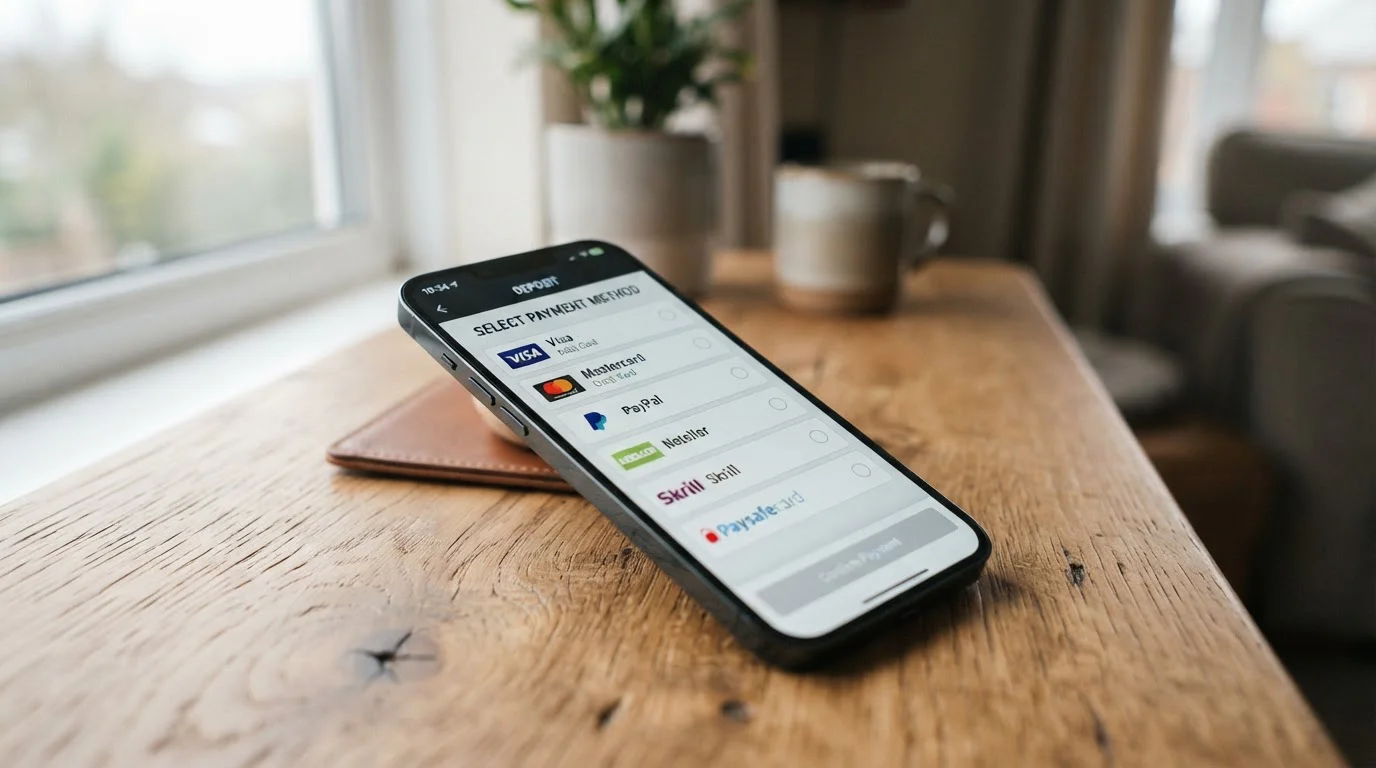
Mobile deposits at UKGC casinos work identically to desktop deposits, with minor UX differences. The payment methods available on mobile match those on desktop, though some casinos prioritize mobile wallets (Apple Pay, Google Pay, Pay by Mobile) in the mobile cashier to streamline the flow. Typing 16-digit card numbers on a phone is friction; biometric authentication is instant.
Casino apps generally offer the same payment methods as the mobile browser version. A few operators restrict certain methods in-app due to app store policies — Apple’s App Store guidelines historically restricted real-money gambling apps in some regions, though UK casino apps are now approved if the operator holds a UKGC licence. Google Play has similar restrictions, though enforcement varies.
If you’re depositing via mobile, Trustly and mobile wallets are the fastest options. Trustly’s open banking flow is optimized for mobile — you tap your bank, authenticate via your banking app, and return to the casino automatically. Apple Pay and Google Pay are one-tap. E-wallets require logging into the e-wallet provider’s site or app, which adds a step but is still faster than card entry.
Withdrawals on mobile are identical to desktop. The payout method is usually pre-selected based on your last deposit, and you confirm the amount. E-wallets and Trustly clear fastest. Debit cards take longer but work the same way.
Practical Guidance: Choosing Your UK Casino Payment Method
The right payment method depends on what you prioritize: speed, anonymity, convenience, or limits.
For Speed: Trustly or E-Wallets
If withdrawal speed is your top concern, use Trustly. It offers 0-to-4-hour payouts at the fastest UKGC casinos, with some operators processing Trustly withdrawals in 15 minutes. That beats e-wallets by hours and debit cards by days. Deposits are instant. There are no fees. It works with every major UK bank. The only scenario where you’d skip Trustly is if your preferred casino doesn’t accept it — around 40 percent of UKGC operators don’t offer it yet.
If Trustly isn’t available, use PayPal, Skrill, or Neteller. All three clear withdrawals in 0 to 24 hours, usually closer to the instant end of that range. PayPal has the narrowest casino acceptance (~40 percent), but if your casino supports it, it’s as fast as Skrill with better brand trust. Skrill and Neteller work at ~70 and ~65 percent of UKGC casinos respectively, making them more versatile. The £1 instant withdrawal fee from the e-wallet to your bank is negligible if you’re prioritizing speed.
Debit cards are instant for deposits but slow for withdrawals (1 to 5 business days). Use them for deposits if you’re not in a rush to cash out, or if you value the simplicity of one payment method for both directions. Avoid them if you want same-day payouts.
For Anonymity: Paysafecard
Paysafecard is the only anonymous deposit option at UKGC casinos. You buy a voucher with cash at a retail location, so there’s no bank record linking you to the casino. Your bank statement stays clean. The casino sees a 16-digit PIN, not your identity, at the deposit stage.
The anonymity is partial. UKGC operators must verify your identity before paying out winnings, even if you deposited via Paysafecard. You’ll need to provide ID and proof of address before your first withdrawal. The anonymous part is the deposit; the withdrawal is fully KYC-checked. If absolute anonymity end-to-end is your goal, UKGC casinos cannot provide it. Offshore casinos licensed in jurisdictions with looser KYC requirements might, but you trade regulatory protection for that anonymity.
For players who simply want to keep gambling transactions off their bank statement for household budgeting or discretionary reasons, Paysafecard works. The deposit is anonymous, and the withdrawal goes to a verified bank account or e-wallet. You control what appears on your bank statement by choosing the withdrawal method.
For Convenience: Debit Cards
Visa and Mastercard debit cards are accepted at 100 percent of UKGC casinos. You don’t need a separate account, no funding step, no app. Enter your card details, authenticate via 3D Secure, and deposit. If you’re playing at multiple casinos, your card works at all of them. It’s the path of least resistance.
The downside is withdrawal speed. Card payouts take 1 to 5 business days because the funds route through the card network. If speed matters, use Trustly or an e-wallet for withdrawals even if you deposit via card. Most casinos allow mixed payment methods — deposit via card, withdraw via Trustly — though some operators restrict withdrawals to the deposit method for AML reasons. Check the cashier before depositing if you plan to mix methods.
For Low Deposits: Pay by Mobile
Pay by Mobile via Boku or Zimpler suits players who want to deposit £10 to £30 and keep gambling spend capped at carrier-imposed limits. The monthly cap is around £240, enforced by your mobile network, which acts as a built-in safeguard. If you’re managing gambling spend or trying low-stakes play, the method prevents overspending.
The limitation is withdrawal. Pay by Mobile is deposit-only, so you must link a debit card, e-wallet, or bank account to cash out. That two-step setup is friction, but it’s intentional — the operator wants to verify a withdrawal method before releasing funds. If you’re comfortable linking a card or e-wallet for payouts, Pay by Mobile works for deposits. If you want a single-method flow, use Trustly or a debit card instead.
What should I use instead of Interac if I want anonymous deposits?
Paysafecard. You buy a prepaid voucher with cash at a retail location (corner shop, petrol station, PayPoint terminal) and use the 16-digit PIN to deposit at UKGC casinos. No bank or card record is created at the deposit stage. Note that UKGC casinos require identity verification before paying out winnings, so the anonymity is one-way. You can deposit anonymously, but you cannot withdraw anonymously from a UKGC-licensed operator.
Special Cases and Edge Scenarios
Most UK players fall into standard use cases: you want instant deposits, fast withdrawals, and access to UKGC-licensed casinos. The alternatives covered above solve that. A few edge scenarios deserve clarification.
If you’re a UK citizen living in Canada temporarily or permanently and you hold a Canadian bank account, you can use Interac at Canadian-licensed casinos. Interac eligibility is based on your bank account location, not your citizenship or residency history. Open an account with RBC, TD, BMO, Scotiabank, or any other Canadian financial institution, and you’ll have access to Interac e-Transfer. You can deposit at casinos licensed by the Alcohol and Gaming Commission of Ontario (AGCO), Kahnawake, or offshore operators serving Canada. You won’t be able to use Interac at UKGC casinos because those operators don’t integrate with Canadian payment rails, but you’ll have full access to the Canadian gambling market.
If you’re a Canadian citizen visiting the UK short-term and you want to gamble online while here, you cannot use Interac at UKGC casinos. Your Canadian bank account works fine for Interac e-Transfers in Canada, but UKGC operators don’t accept the payment method. You’ll need to fund an e-wallet (Skrill, Neteller, PayPal) from your Canadian bank account before arriving in the UK, or use a Visa or Mastercard debit card issued by your Canadian bank. Most Canadian cards work at UK casinos if they support international transactions, though your bank may charge a foreign exchange fee. The cleaner option is to load an e-wallet in CAD before traveling and deposit from the e-wallet at UKGC casinos in GBP. The e-wallet handles currency conversion.
If you’re searching for “Interac casinos UK” because you saw Interac mentioned in a casino review and assumed it worked everywhere, now you know: it doesn’t. Interac is Canada-exclusive. The affiliate content ranking for “Interac casinos UK” exists to clarify that misconception and redirect you to UK alternatives. It’s not a listing of UK casinos that accept Interac, because none do. It’s a guide to what UK players should use instead.
If you’re trying to use Interac at an offshore casino and the payment method isn’t appearing in your cashier, the casino has geo-restricted Interac to Canadian accounts. You won’t see it as an option even if the casino’s payment page lists it, because the processor checks your account country during registration or at first deposit. Use Skrill, Neteller, Visa, or crypto instead. Those methods work at offshore casinos for UK players.
Can I use Interac if I’m a UK citizen living in Canada?
Yes, if you hold a Canadian bank account. Interac eligibility depends on your bank account location, not your citizenship. Open an account with a Canadian financial institution (RBC, TD, BMO, Scotiabank, credit union) and you can use Interac e-Transfer at Canadian-licensed casinos and offshore operators serving Canada. You cannot use Interac at UKGC casinos because they do not integrate with Canadian payment rails, but you’ll have full access to Canada’s regulated gambling market.
Responsible Gambling and Payment Controls
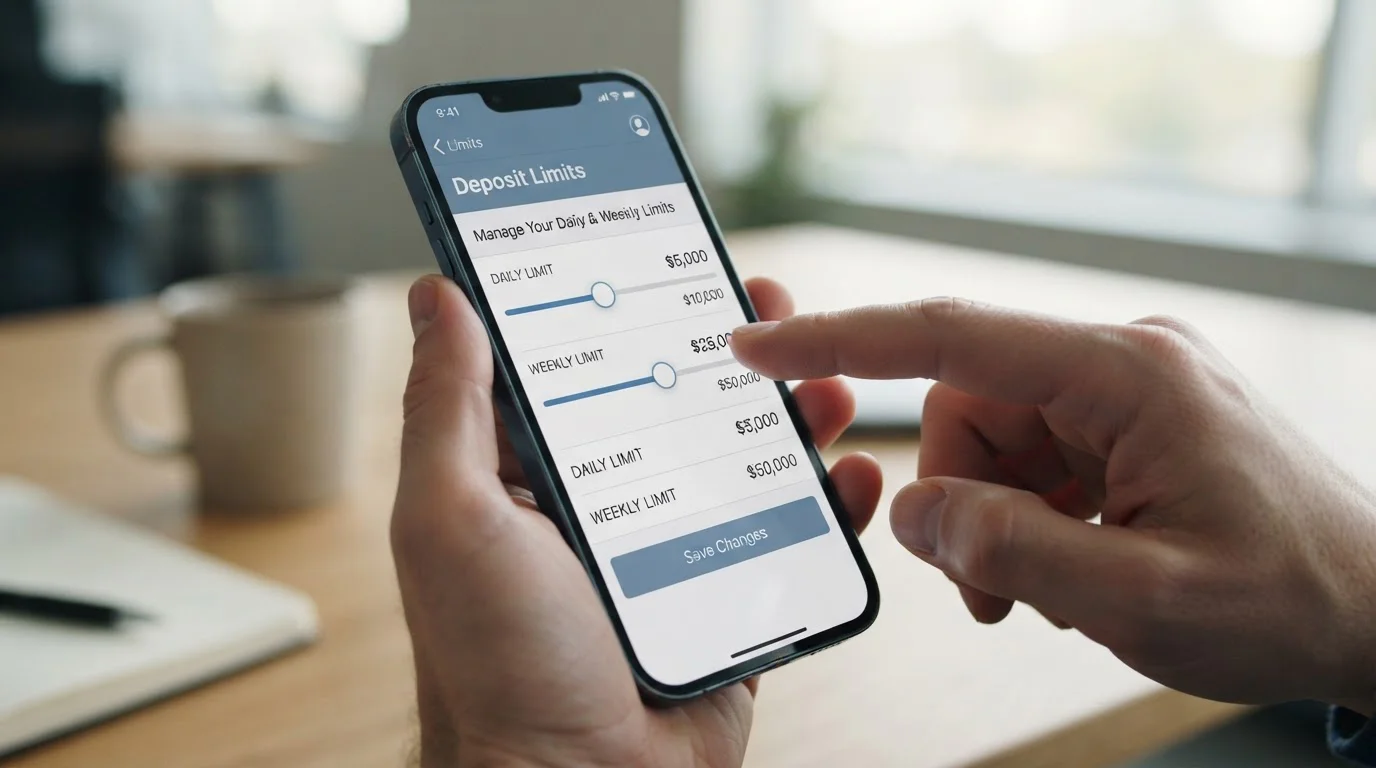
Payment method choice intersects with responsible gambling in two ways: transaction limits and self-exclusion enforcement. UKGC operators must offer deposit limits, loss limits, and reality checks as part of their licence conditions. The payment method you choose affects how easily you can enforce those limits on yourself and how visible your gambling spend is to the operator.
Debit cards and Trustly link directly to your bank account. Every deposit is visible to the operator as a verified bank transaction. If you set a £500 monthly deposit limit at a UKGC casino and fund via Trustly or card, the casino can enforce that limit at the payment processor level. Attempts to deposit beyond your limit are blocked before the transaction reaches your bank.
E-wallets add a layer of separation. You fund your Skrill or Neteller account, then deposit from the e-wallet to the casino. The casino sees the e-wallet deposit, not the bank transaction that funded the e-wallet. If you set a £500 deposit limit at one casino, you can still deposit £500 at a second casino from the same Skrill balance. The limit is per-casino, not cross-operator. That makes e-wallets more flexible but also easier to overspend across multiple sites. GamStop addresses this by blocking your access to all UKGC casinos if you self-exclude, but offshore casinos are outside GamStop’s reach, and Skrill works at most offshore sites.
Pay by Mobile’s carrier-imposed limits (£10 to £30 per transaction, ~£240 monthly) act as a built-in safeguard. You cannot overspend beyond what your mobile network allows. For players who struggle with impulse deposits, Pay by Mobile’s low limits can be a useful control tool. The downside is that the limits are too low for casual players who want to deposit £100 or £200 in a session. It’s a trade-off.
Paysafecard’s prepaid model offers a different kind of control. You buy a £50 voucher, you can spend £50. You cannot overspend because there’s no credit line and no bank account linked. Once the voucher is used, you’d need to physically go buy another one. That adds friction, which in responsible gambling terms is a feature, not a bug. Impulsive deposits are harder when you need to walk to a shop.
If you’re concerned about gambling spend, use Trustly or a debit card with deposit limits set at your casino account. The limits are enforced at the transaction level, and your bank statement gives you a clear record of all deposits. If you want to self-exclude, register with GamStop, which blocks access to all UKGC casinos. E-wallets and offshore casinos weaken that control because they operate outside UKGC jurisdiction.
If you or someone you know is struggling with gambling, GamCare, GambleAware, and the National Gambling Helpline offer free, confidential support. GamStop is the UK’s national self-exclusion scheme and covers all UKGC-licensed operators. BeGambleAware provides tools, resources, and counselling. These services are free and independent of the gambling industry.
Casino Deposit Methods UK 2026 — Compare Payment Options
Content created by the «casinopayexp» team