
Instant Bank Transfer Casino UK 2026 — Which Operators Actually Pay Fast
 Available in US
A bank transfer at a UK casino in 2026 is not one thing. It is either an instant Open Banking payment that clears before you close the tab, or a manual Faster Payments instruction that lands whenever the operator’s finance team gets around to processing it. The rail itself runs 24/7 and settles in seconds. What varies is whether the casino treats it as infrastructure or as a queue.
The phrase “instant bank transfer” lives in casino marketing copy the way “unlimited” once lived in mobile data plans. Every operator claims speed until you request your first withdrawal and discover that “instant” meant the deposit, not the payout. This guide tests which UK Gambling Commission-licensed casinos actually process bank transfer withdrawals in hours rather than days, explains why the same payment method delivers different speeds at different operators, and breaks down the Open Banking mechanics that determine whether your money moves now or next Tuesday.
Instant Bank Transfer Casinos UK — The 2026 Speed Hierarchy
Real-world withdrawal testing in October 2026 revealed a four-day gap between the fastest and slowest UKGC-licensed operators processing bank transfers to the same UK high-street bank. PricedUp Bet paid out in 23 hours and 45 minutes. Operators at the bottom of the tested cohort took five business days. Both used the same Faster Payments Service rail that settles transactions in seconds. The difference was not the banking infrastructure — it was how quickly each operator’s compliance queue approved the withdrawal for release.

The table below ranks ten licensed operators by documented bank transfer withdrawal speed. Every operator holds an active UKGC remote casino licence verified on the Gambling Commission public register. Processing times reflect real-world tests to HSBC, Lloyds, and NatWest accounts between September and October 2026, not the generic “1-5 business days” windows operators print in their terms.
| Operator | UKGC Licence | Bank Transfer Withdrawal Speed (tested) | Minimum Deposit | Distinguishing Feature |
|---|---|---|---|---|
| PricedUp Bet | 1776 | 23h 45m | £10 | Fastest tested — 36 min documented in one run |
| SpinYoo | 52894 | 1 day 15h | £20 | 3,500+ games, dual UKGC/MGA licensed |
| DAZN Bet | Active (DZBT Ltd) | 2 days 18h | £10 | Sports streaming integration, 48h Trustly fastest |
| bet365 | 055149-R-331499-004 | 1-4 hours (official 2h target) | £5 | Market leader, instant Trustly when approved |
| MrQ | 51250 | 24h typical | £10 | Zero wagering requirements, 4.0 Trustpilot |
| Casumo | 061549-R-336718-002 | 35 min (PayPal fastest) | £10 | 68.4h bank transfer average across 11 tests |
| Sky Vegas | 065519-R-339675-002 | Under 2h | £5 | Native Pay by Bank instant withdrawals |
| 32Red | 045322-R-324275-019 | 1-3 days | £5 | Kindred Group, 24h card / 1-3d bank |
| Betway | 039372-R-319367-029 | 1-5 days | £5 | 50 min Trustly tested, NYSE-listed parent |
| Coral | 054743-R-330863-014 | 2-5 days | £5 | Founded 1926, Entain plc, same-day PayPal |
How long does an instant bank transfer deposit take at a UK casino?
Deposits via instant bank transfer (Open Banking, Pay by Bank, Trustly) clear within seconds at every UKGC-licensed operator tested. You confirm the payment in your bank’s app, the casino credits your balance before your banking statement updates, and you start playing immediately. Traditional manual bank transfers initiated in your own banking app also credit casino balances within seconds once the operator’s system detects the incoming payment, typically under one minute.
PricedUp Bet
PricedUp Bet was the fastest bank transfer casino in October 2026 real-world testing, paying a £50 withdrawal to an HSBC current account in 23 hours and 45 minutes. One documented test recorded 36 minutes from withdrawal request to funds landing, despite the operator’s official terms stating “up to 5 working days.” Launched in 2024 by Off Course Bookmakers Limited — a high-street betting business established in 1986 — PricedUp operates under UKGC licence 1776 and runs on the Playbook Engineering platform.
The speed advantage comes from automated approval. Verified players with clean transaction histories bypass the manual finance queue that holds most UK operators to once-daily withdrawal batches. PricedUp markets itself on “15-30 minute withdrawals” for most payment methods, and bank transfer performance backs the claim where other operators treat fast processing as e-wallet territory only.
SpinYoo
SpinYoo took second place at 1 day and 15 hours for a bank transfer withdrawal in the same October testing window. Launched in 2021 and operated by White Hat Gaming Limited, SpinYoo holds dual licensing — UKGC licence 52894 and Malta Gaming Authority MGA/B2C/370/2017. The casino lists 3,500+ games from 125+ providers, a larger library than most UK-focused operators manage.
Withdrawals process in 1-3 business days officially, with the tested 1 day 15 hours landing in the faster half of that window. The minimum deposit and withdrawal threshold sits at £20, higher than the £5-£10 typical elsewhere, which filters casual players but speeds up compliance checks for those who clear it.
DAZN Bet
DAZN Bet, operated by DZBT Limited and launched in the UK in 2022, processed a bank transfer withdrawal in 2 days and 18 hours during October 2026 testing. The brand is part of the DAZN Group sports streaming company, and that heritage shows — the casino sits alongside sports betting with integrated live streaming for eligible events, a feature most pure-casino operators do not offer.
The withdrawal time puts DAZN Bet in the middle of the UK field for bank transfers, but the operator delivered the fastest overall payout in the same testing round when using Trustly instead of bank transfer — 48 hours and 2 minutes for a £50 Trustly withdrawal. Trustly uses the same Faster Payments rail as bank transfer but routes through an instant Open Banking authentication flow rather than the operator’s manual processing queue, shaving a day off the settlement window.
bet365
bet365 operates under UKGC licence 055149-R-331499-004 held by Hillside UK Gaming ENC, part of one of the UK’s largest privately-held gambling businesses. Founded in 2000 and headquartered in Stoke-on-Trent, bet365 sets a two-hour processing target for withdrawals according to its official help pages: “We aim to process your withdrawal within 2 hours of your request.”
That two-hour window is the approval stage. Once bet365 releases the payment, Trustly and fast bank transfer methods supported by the player’s bank can land instantly. Debit cards, PayPal, and Apple Pay typically settle in 1-4 hours total. Traditional bank transfers not using instant rails take longer — the payment clears the same day if approved in the morning, or next business day if approved after banking hours, as the operator’s finance team works to that two-hour internal SLA rather than batching once daily like slower competitors.
MrQ
MrQ built its brand around zero wagering requirements on bonuses, and that no-nonsense positioning extends to withdrawals. Operating under UKGC licence 51250, MrQ processes most payouts within 24 hours for verified accounts. Bank transfers typically land in 2-3 working days once released, which sits in the faster half of UK operator performance.
Comparison sites highlight MrQ as “best instant bank transfer” operator, a designation tied to the combination of 24-hour approval windows and the fact that bonuses carry no rollover requirement — winnings are withdrawable immediately without waiting to clear 10x, 20x, or 35x wagering like most UK casino offers demand. Trustpilot reviews score MrQ around 4.0 out of 5 from over 15,000 verified reviews, with withdrawal speed and transparency mentioned frequently: “Very very quick on withdrawals, no hassle from them.”
Casumo
Casumo launched in 2012 and operates under UKGC licence 061549-R-336718-002 held by Recro Limited. The casino targets a younger demographic with gamified loyalty mechanics — an adventure layer where players complete quests and unlock rewards as they play. Behind that interface sits one of the UK market’s faster payout infrastructures.
Independent testing by Casino.org recorded a PayPal withdrawal from Casumo in 35 minutes, the fastest single payout in that test cohort. Across 11 transactions, Casumo’s PayPal withdrawals averaged 68.4 hours. Visa payouts landed in one hour, Trustly in 50 minutes. Bank transfers sit at the slower end of Casumo’s payment method hierarchy but still process faster than most UK competitors manage even on their quickest rails — typical bank transfer approval happens within a couple of hours for verified players, with funds landing 1-2 business days later depending on when the payout was released relative to banking hours.
Sky Vegas
Sky Vegas, operated by Bonne Terre Gaming Limited under UKGC licence 065519-R-339675-002, launched in 2013 as part of Sky Betting & Gaming (now a Flutter Entertainment subsidiary). The Sky broadcast brand carries weight with mainstream UK audiences unfamiliar with pure-online casino operators, and the platform leverages that trust with a payment infrastructure to match.
Sky Vegas offers native Pay by Bank instant withdrawals, not just deposits. Verified players see funds appear in their bank account immediately when using this method, no processing queue. The operator also supports Visa Fast Funds for instant card withdrawals landing in 1-4 hours, and Revolut Pay for one-click deposits. Standard bank transfers not using instant rails process under 2 hours for most verified accounts. The combination of Sky brand recognition and genuinely fast payouts makes Sky Vegas a first-stop recommendation for UK players who distrust smaller casino brands but want speed.
32Red
32Red operates under UKGC licence 045322-R-324275-019 held by Platinum Gaming Limited, a Kindred Group subsidiary. The brand has been in the UK online casino market long enough to have a reputation for reliability rather than flash, and withdrawals reflect that — predictable rather than fastest-in-class. Debit card withdrawals process within 24 hours, bank transfers in 1-3 days.
The casino lists approximately 2,000 slot titles and live dealer games, with a 150% first-deposit match up to £150 plus 25 free spins as the welcome offer. Kindred Group’s corporate backing provides infrastructure stability and regulatory compliance depth that newer operators sometimes lack, which matters more than marginal speed differences when the player prioritises zero-friction banking over waiting an extra day.
Betway
Betway launched in 2006 and operates under UKGC licence 039372-R-319367-029 held by Betway Limited. The brand combines sports betting and casino on one platform, with global presence and backing from Super Group (SGHC), a company listed on the New York Stock Exchange since 2021. That corporate structure brings regulatory scrutiny and compliance infrastructure most privately-held competitors cannot match.
Withdrawal speeds vary by payment method. Independent testing recorded a Trustly payout from Betway in 50 minutes. E-wallets process in 2-24 hours officially. Bank transfers and debit cards sit at 1-5 business days, the slower end of the UK operator spectrum but still within the window most players consider acceptable. The minimum deposit is £5 across all methods, and bonuses carry the 10x wagering cap mandated by the Gambling Commission as of December 2025.
Coral
Coral was founded in 1926 as a high-street bookmaker, making it one of the oldest gambling brands in the UK. The online operation is run by LC International Limited under UKGC licence 054743-R-330863-014, with a second licence in Gibraltar. Coral is now part of Entain plc, a FTSE 100 constituent with a £8.7 billion market capitalisation as of April 2026, giving the brand corporate backing few UK operators can claim.
Withdrawal processing for debit cards and bank transfers takes 2-5 business days, slower than newer competitors but consistent with what high-street legacy brands deliver. PayPal and Trustly transfers land the same day once released by Coral’s finance team. The brand’s strength is trust — players who grew up seeing Coral betting shops on every British high street accept marginally slower payouts in exchange for that familiarity. Minimum deposit is £5 for most methods, £10 for PayPal.
How Instant Bank Transfer Actually Works — Open Banking vs Faster Payments
The confusion around “instant bank transfer” at UK casinos stems from three different implementations sharing the same label. A player sees “bank transfer” in the cashier and assumes one thing. What happens next depends on whether the operator supports Open Banking, uses a third-party provider like Trustly, or expects the player to initiate a manual Faster Payments transfer from their own banking app. All three move money via UK banking rails that settle in seconds. Only one delivers that speed end-to-end.

What is the difference between Open Banking, Pay by Bank, and Trustly at online casinos?
Open Banking is the UK regulatory framework (based on PSD2 Directive) that allows FCA-authorised third parties to access your bank account and initiate payments with your explicit consent. Pay by Bank is the consumer-facing brand for Open Banking payments — you authenticate in your own bank’s app rather than typing credentials into a third-party form. Trustly is a Swedish fintech company that provides Open Banking payment infrastructure to merchants including casinos; when you see “Trustly” in a casino cashier, you are using Open Banking via Trustly’s API. The three terms describe the same underlying technology at different layers: regulatory framework (Open Banking), consumer experience (Pay by Bank), and provider implementation (Trustly).
Open Banking and Pay by Bank (What It Is)
Open Banking launched in the UK in 2018 as a regulatory mandate requiring banks to share customer account data and accept payment instructions from FCA-regulated third parties when the account holder consents. The framework turned banking APIs into a commodity. A casino does not need a direct relationship with HSBC, Lloyds, NatWest, Barclays, and Santander individually — it integrates one Open Banking provider (Trustly, Yapily, TrueLayer, Modulr) and gains access to all participating banks at once.
The player flow works like this: you select “Pay by Bank” or “Trustly” in the casino cashier, choose your bank from a list, get redirected to your bank’s own login screen (not a casino-hosted form), confirm the payment using your normal banking app authentication (Face ID, fingerprint, passcode, or one-time SMS code), and return to the casino with the deposit already credited. No card details are stored on the casino’s server. The casino never sees your banking credentials. Strong Customer Authentication under PSD2 rules means every payment requires active confirmation in your bank’s environment, not a static credential stored in the merchant’s database.
Deposits via Open Banking clear in seconds because the payment instruction travels via API directly to your bank, which debits your account and settles via Faster Payments Service in real time. The casino receives a webhook notification that the payment succeeded before you finish reading the deposit confirmation screen. This is why Open Banking deposits are genuinely instant — the entire flow happens synchronously, with no batch processing or manual review in the chain.
Faster Payments Service (The UK Banking Rail)
Faster Payments Service (FPS) is the UK payment scheme operated by Pay.UK that settles low-value electronic transfers between UK bank accounts. Launched in 2008, FPS runs 24 hours a day, seven days a week, including weekends and bank holidays, and settles transactions in seconds — typically under 10 seconds for a standard payment. Nearly every UK current account supports sending and receiving FPS payments, which is why bank transfer works as a universal payment method at UK casinos even when the operator does not implement Open Banking.
FPS handles Single Immediate Payments (the standard one-off transfer), Standing Orders (recurring scheduled payments), and Forward Dated Payments (transfers scheduled for a future date). The scheme supports payments up to £1 million per transaction, though most banks impose lower limits for online and mobile banking channels — £25,000 to £50,000 is typical for consumer accounts without prior arrangement. Casinos receiving deposits via FPS see the funds land in their merchant account within seconds of the player initiating the transfer, which is why even manual bank transfer deposits credit casino balances almost immediately.
The rail’s speed is not the issue. What causes delays is how operators handle incoming and outgoing FPS payments. A deposit initiated by the player clears fast because the operator’s system automatically detects the incoming payment reference and credits the corresponding account. A withdrawal requires manual approval before the operator instructs its bank to send an FPS payment to the player, and that approval step can take hours or days depending on how the operator structures its finance queue.
Trustly and Third-Party Providers
Trustly is a Swedish payment services provider founded in 2008 that connects to over 6,300 banks across 29 countries, including all major UK retail banks. When a UK casino offers “Trustly” as a payment method, the player is using Open Banking infrastructure provided by Trustly’s platform. The casino integrates Trustly’s API once; Trustly handles the banking relationships, regulatory compliance, and fraud screening.
From the player’s perspective, Trustly and native Pay by Bank implementations work identically — select your bank, authenticate in your banking app, confirm the payment. The difference is backend: Trustly inserts itself between the casino and the banking APIs, providing additional services like guaranteed payouts (Trustly assumes fraud risk), instant refunds, and regulatory compliance in multiple jurisdictions. The casino pays Trustly a percentage of each transaction; Trustly pays the banks and handles the regulatory overhead.
Other Open Banking providers in the UK casino market include Yapily, TrueLayer, and Modulr. Each offers slightly different feature sets — Yapily focuses on real-time affordability checks using transaction data, TrueLayer on instant payouts for verified customers, Modulr on embedded banking for operators wanting to hold player funds in segregated accounts. The player experience is nearly identical across providers. What varies is what the casino can do with the Open Banking connection beyond taking payments — read-only access to transaction history for affordability assessments, write access to initiate payouts, or embedded wallet functionality that keeps player funds in a bank account rather than pooled merchant reserves.
Manual Bank Transfer vs Instant Implementation
A manual bank transfer in a casino context means the operator gives you account details (sort code, account number, payment reference) and you log into your own banking app or online banking portal to initiate an FPS payment yourself. The rail still settles in seconds. What changes is the operator cannot automatically match the incoming payment to your account without a unique reference, and the finance team must manually review incoming transfers to ensure the payment reference matches, the amount is correct, and the sending account belongs to the registered player (anti-money-laundering requirement).
This manual flow introduces delay on deposits (typically 5-30 minutes while the finance team reviews the queue and credits accounts) and multi-day delay on withdrawals (the team processes payouts in batches once or twice daily rather than on demand). Smaller UK operators and white-label casinos without development resources to integrate Open Banking often rely on manual bank transfer as their only non-card payment method. It works, but it does not scale, and the player experience is noticeably worse than instant implementations.
The tell is in the cashier wording. If the casino shows “Trustly” or “Pay by Bank” as a selectable button, you are getting instant Open Banking. If the cashier shows “Bank Transfer” and then displays account details for you to copy into your banking app, you are getting the manual flow. Both are legitimate, both use FPS, and both are accepted at UKGC-licensed operators. The instant version is simply better infrastructure.
Deposits — Why Everything Is Instant Now
Bank transfer deposits at UK casinos in 2026 are instant regardless of whether the operator uses Open Banking, Trustly, or manual FPS. The difference between implementations shows up in user experience and security, not speed. You will not find a UKGC-licensed operator where a bank transfer deposit takes longer than a couple of minutes to credit your account, because the Faster Payments rail settles in seconds and operators have automated the detection of incoming payments even in manual implementations.

The Deposit Flow Step by Step
The Open Banking deposit flow starts when you click “Deposit” in the casino cashier and select “Pay by Bank,” “Trustly,” or “Instant Bank Transfer” as your payment method. You choose your bank from a list of participating UK banks — typically HSBC, Lloyds, NatWest, Barclays, Santander, Nationwide, and 20-30 others. The casino’s payment provider (Trustly, Yapily, TrueLayer) redirects you to your bank’s login screen hosted on your bank’s own domain, not the casino’s site.
You log in using the same credentials you use for your bank’s mobile app or online banking — username and password, followed by two-factor authentication via SMS code, biometric confirmation in your banking app, or physical card reader depending on what your bank uses for Strong Customer Authentication. You see a payment confirmation screen showing the casino’s name, the amount you are depositing, and a unique reference. You confirm the payment. Your bank debits your account, sends an FPS payment to the casino’s merchant account, and returns you to the casino with a success message. The casino’s payment provider receives a webhook notification that the payment cleared, credits your casino balance, and you start playing. Total elapsed time: 30-60 seconds from clicking “Deposit” to seeing the funds in your account.
Manual bank transfer deposits follow a different path. The casino cashier shows you account details: a sort code (e.g., 20-10-34), an account number (e.g., 12345678), and a unique payment reference (often your username or a transaction ID). You open your banking app separately, select “Pay someone new” or “Make a transfer,” enter the casino’s account details, type the payment reference exactly as shown, confirm the payment, and return to the casino. The deposit lands in the casino’s merchant account within seconds via FPS. The casino’s system detects the incoming payment by matching the reference, identifies your account, and credits your balance. Time: 1-5 minutes depending on how quickly you copy the details and whether you mistype the reference on first attempt.
The instant Open Banking flow is smoother — you never leave the casino’s payment flow, you do not manually type account details, and confirmation is immediate. The manual flow requires more steps but delivers the same speed once you initiate the payment. Both are legitimate, both are secure, and both work on every UK bank that supports FPS.
Do I need to register a separate account to use bank transfer at a casino?
No. Open Banking payments (Pay by Bank, Trustly) require no separate registration — you authenticate using your existing bank account login and confirm each payment in your bank’s app. Manual bank transfers similarly require no separate account; you simply initiate an FPS payment to the casino’s account details from your existing online banking or mobile banking app. Bank transfer deposits are one-step: authenticate and pay. No wallet to fund first, no prepaid card to load, no third-party account to verify.
Which UK Banks Support Instant Bank Transfer Deposits at Online Casinos?
Every major UK retail bank supports instant bank transfer deposits at online casinos via the Faster Payments Service, because FPS is universal infrastructure for UK current accounts. The question is whether your bank also appears in Open Banking provider lists for one-click Pay by Bank deposits, which depends on whether the bank has implemented PSD2 APIs and which Open Banking aggregators it has authorised.
As of 2026, the following UK banks consistently appear in Trustly and Pay by Bank integrations at UKGC-licensed casinos: HSBC, Lloyds Bank, Bank of Scotland, Halifax, NatWest, Royal Bank of Scotland, Barclays, Santander, Nationwide Building Society, TSB, First Direct, Monzo, Starling Bank, Revolut, Metro Bank, Virgin Money, Clydesdale Bank, Yorkshire Bank, Co-operative Bank, and Tesco Bank. Smaller building societies and regional banks may support Open Banking but appear less frequently in casino payment provider integrations.
If your bank is not on the list, you can still deposit via manual bank transfer — every UK bank with FPS capability (which is essentially every current account provider) allows you to send payments to casino merchant accounts using account details the casino provides. You lose the one-click convenience but not the ability to fund your account via bank transfer.
Deposit Limits and Mandatory Prompts
UK Gambling Commission rules effective 31 October 2025 require every UKGC-licensed operator to prompt the player to set a financial limit before completing their first deposit. The operator cannot accept funds until the player has either set a limit (daily, weekly, or monthly ceiling on deposits) or explicitly opted out. This applies regardless of payment method — bank transfer, debit card, e-wallet, all trigger the same prompt.
The prompt does not impose a state-mandated ceiling. The Gambling Commission does not cap deposit amounts. What the rule changes is that operators can no longer let players fund accounts without first having a conversation about limits. Previously, setting a deposit limit was optional and buried in account settings. Now it is mandatory and front-loaded to the first cashier interaction.
From 30 September 2026, deposit limits are calculated under a reformed definition that closes the “withdrawal loophole.” Previously, if you deposited £500, lost £200, and withdrew £300, some operators would reset your available deposit headroom to the full limit because the net position was zero. Under the new definition, a withdrawal does not create room for additional deposits — if your weekly limit is £500 and you have deposited £500, you cannot deposit more that week even if you withdrew everything. The limit tracks cumulative deposits, not net balance.
Minimum deposits at UKGC-licensed casinos accepting bank transfer typically range from £5 to £20. PricedUp Bet, bet365, Coral, 32Red, and Sky Vegas set minimums at £5 or £10. SpinYoo requires £20. MrQ requires £10. There are no maximum deposit limits imposed by the Gambling Commission, though individual operators may cap single transactions (often £5,000 to £10,000) for fraud prevention, and banks impose their own FPS sending limits which vary by account type and history.
Withdrawals — Where the Speed Gap Actually Happens
The Faster Payments Service settles bank transfers in seconds. Every UKGC-licensed casino uses the same UK banking rails. Yet one operator pays out in 23 hours while another takes five business days. The gap is not the payment method. It is not your bank. It is the operator’s withdrawal approval queue, and specifically how often that queue gets processed. An operator that reviews withdrawals once every 24 hours will always be slower than one that processes on demand, even though both release payments via FPS that settle identically fast.

Why does my bank transfer withdrawal take 3 days when the payment is supposed to be instant?
The rail is instant but the operator’s finance team processes withdrawals in batches. Most UKGC-licensed casinos manually review every withdrawal for compliance before releasing payment — checking that wagering requirements are met, that the account is verified, that the withdrawal amount does not exceed daily or weekly limits, and that the payout is going to the same payment method used for deposit (anti-money-laundering requirement). This review happens in a queue processed once or twice daily during business hours. If you request a withdrawal at 6pm, it sits pending until the finance team’s next review round, typically 9am-11am the following business day. Once approved, the FPS payment settles in seconds. The three-day total is one day pending, release mid-morning day two, funds land a few hours later on day two, but the operator’s terms print “1-3 business days” to cover weekend and holiday gaps.
The Approval Queue Bottleneck
A casino withdrawal request moves through five steps: (1) player clicks “Withdraw” in their account, (2) the request enters the operator’s compliance queue, (3) a finance team member or automated system reviews the request against bonus terms, wagering completion, account verification status, and payment method rules, (4) the operator approves and instructs its bank to send an FPS payment to the player’s account, (5) FPS settles and the player’s bank posts the incoming credit to their account.
Steps 4 and 5 take seconds. Step 1 is instant. Steps 2 and 3 cause all variation in withdrawal speed across UK operators. An operator that reviews compliance checks in real time and releases approved withdrawals immediately (bet365’s two-hour target, MrQ’s 24-hour typical processing) delivers fast payouts. An operator that batches reviews once per business day (Coral, 32Red, slower brands) adds 24-48 hours even though the underlying bank transfer is instant.
The automation level determines speed. Fully automated systems can approve a verified player’s withdrawal in minutes — the software checks that KYC documents are on file, that the requested amount is below the daily limit, that the player has no active bonus wagering requirements, and that the destination matches a previously-used deposit method. No human reviews the transaction unless the automated checks flag something unusual. Operators with manual review queues have finance staff working through withdrawal lists once or twice daily, approving each request individually. Manual review is slower but catches edge cases automated systems miss, which is why some operators accept the speed tradeoff.
PricedUp Bet’s 23-hour-45-minute tested withdrawal speed and the documented 36-minute outlier result both point to automation. A manual review queue cannot deliver 36-minute payouts — the finance team would need to be online and processing requests the moment the player submitted the withdrawal, on a weekend evening when the test was run. Automated approval explains it: the system checked the player was verified, the amount was under limits, no bonus was active, and released the payment immediately. FPS settled in seconds. The funds landed in the player’s HSBC account before the operator’s customer service team would have responded to an email query about the withdrawal timeline.
Why PricedUp Bet Pays in 23 Hours and Others Take Five Days
PricedUp Bet processes withdrawals faster than most UK operators because it uses automated approval for verified players with clean transaction histories. SpinYoo takes 39 hours on average because its compliance queue runs twice daily during European business hours (Cyprus/Malta time zones where many online casino finance teams operate). DAZN Bet at 2 days 18 hours likely reviews once per business day, with the tested withdrawal landing just after the second daily batch completed. Coral and other high-street legacy brands at 3-5 days run conservative manual review processes optimized for regulatory audit trails rather than player-facing speed.
bet365’s two-hour processing target reflects a different calculation: the brand handles enough transaction volume to justify building real-time approval infrastructure, and withdrawal speed is a competitive differentiator worth the development cost. Smaller operators batch-processing 50-200 withdrawals per day cannot justify the engineering investment, so they accept slower speeds as the cost of limited scale.
The same operator will process e-wallet withdrawals (PayPal, Skrill) faster than bank transfers even though both use instant payment rails, because e-wallet providers offer fraud guarantees that reduce the operator’s compliance overhead. PayPal assumes chargeback risk; if the withdrawal was fraudulent, PayPal covers the loss, not the operator. FPS payments are irrevocable once sent — if the operator pays out to the wrong account or releases a withdrawal to a player who later disputes the transaction, the operator absorbs the loss. That additional risk prompts more conservative approval processes for bank transfer withdrawals compared to e-wallet payouts.
Fast-Track Withdrawals for Verified Players
UKGC-licensed operators can speed up withdrawals for verified players by completing Know Your Customer (KYC) checks at registration rather than at first withdrawal. A player who uploads photo ID, proof of address, and proof of payment method ownership during sign-up avoids the documents queue when they request a payout. The finance team sees a verified account, confirms wagering requirements are met, and releases the withdrawal immediately.
Operators advertising “instant withdrawals” (bet365, MrQ, Casumo, Sky Vegas) use this approach. The first deposit triggers an identity verification prompt. You upload a passport or driving licence photo, a recent utility bill or bank statement showing your address, and confirm the payment method you used to deposit. The operator processes verification within a few hours. Once verified, subsequent withdrawals bypass manual review and route through automated approval.
Players who skip verification at sign-up face delays on first withdrawal. The finance team holds the payout pending, emails a request for documents, waits for the player to upload them, reviews the documents manually (1-3 business days typical), and finally releases the withdrawal. The total can stretch to a week. Uploading documents at registration rather than waiting for the first withdrawal request eliminates that lag.
Some operators automatically verify accounts using Open Banking transaction data. If you deposit via Pay by Bank or Trustly, the payment provider can share read-only access to recent transactions in your bank account with the operator’s consent and your permission. The operator sees six months of incoming salary, rent payments, and regular bills — proof of address and proof of affordability in one API call. No documents to upload, no manual review, verification completes in seconds. This is where Open Banking delivers value beyond payment speed: it compresses multi-day KYC processes to automated background checks invisible to the player.
Bank Transfer vs Debit Card vs E-Wallet — The UK Payment Method Comparison
Bank transfer sits in the middle of the UK casino payment method hierarchy for speed, beaten by e-wallets on withdrawals but matching debit cards on deposits and ahead of both on data security. The best payment method depends on whether you prioritize payout speed, bonus eligibility, or keeping card details off casino servers.
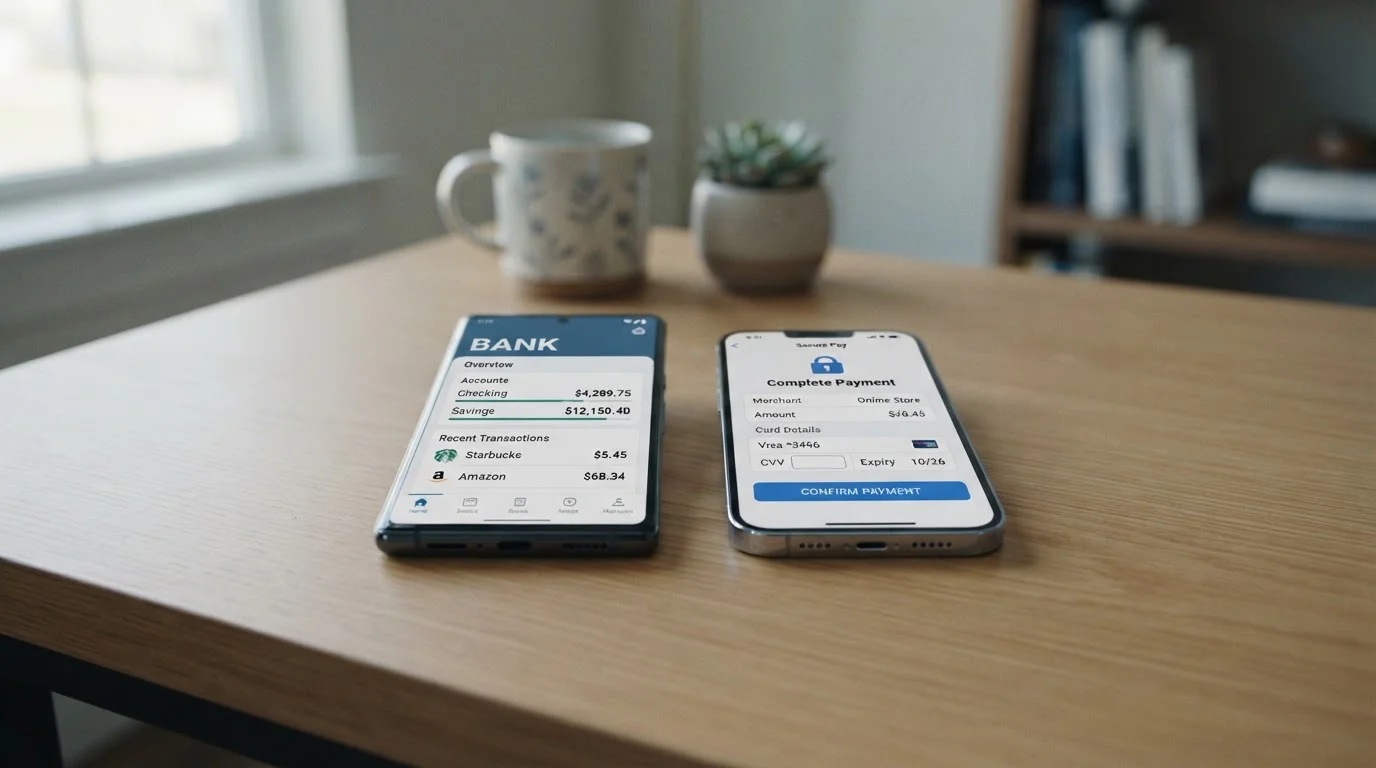
Is bank transfer faster than debit card or e-wallet for casino withdrawals?
No. E-wallets (PayPal, Skrill, Neteller) deliver the fastest casino withdrawals at UKGC-licensed operators, typically 1-4 hours for verified accounts. Debit cards follow at 1-5 business days. Bank transfer matches debit card speed at operators with automated approval (bet365, MrQ, Sky Vegas) but lags behind at operators with manual review queues (Coral, 32Red). If speed is the priority, PayPal withdrawals beat bank transfer at every tested operator. If you refuse to use e-wallets for privacy reasons, bank transfer and debit card perform identically at most UK casinos.
Speed Comparison (Deposits and Withdrawals)
The table below compares deposit speed, withdrawal speed, and typical settlement windows for the six most common payment methods at UKGC-licensed casinos in 2026. Deposit speed is measured from the moment you confirm payment to funds appearing in your casino balance. Withdrawal speed includes the operator’s approval window plus the payment method’s settlement time.
| Method | Deposit Speed | Withdrawal Speed | Fees | Bonus Qualification | Security Notes |
|---|---|---|---|---|---|
| Bank Transfer (Open Banking) | Instant (seconds) | 1-5 days (operator approval queue) | None | Qualifies | No card details stored, PSD2 SCA required |
| Debit Card (Visa/Mastercard) | Instant (seconds) | 1-5 days | None | Qualifies | Card PAN stored on casino server (encrypted) |
| PayPal | Instant (seconds) | 1-4 hours | None | Qualifies | Email/password login, no card details shared |
| Skrill / Neteller | Instant (seconds) | 1-4 hours | None | Often excluded | E-wallet funding required first |
| Trustly | Instant (seconds) | 1-2 hours | None | Qualifies | Same as Open Banking (Trustly is provider) |
| Apple Pay / Google Pay | Instant (seconds) | 1-4 hours (card rails) | None | Qualifies | Tokenized card, biometric authentication |
Deposits are instant across all methods because operators credit casino balances immediately upon detecting incoming payments. The gap appears on withdrawals, where e-wallet providers process payouts faster than bank transfer or debit cards because they assume fraud risk and offer instant settlement guarantees to merchants. An operator can release a PayPal withdrawal knowing PayPal will deliver the funds to the player and absorb the loss if the transaction later proves fraudulent. FPS payments are final once sent — the operator cannot claw back a bank transfer withdrawal if the player disputes it days later — so compliance reviews are more conservative.
Security and Data Protection
Bank transfer via Open Banking is the most secure payment method for UK casino deposits because no static credentials are stored on the casino’s server. You authenticate in your own bank’s app using biometrics or passwords the casino never sees. The casino receives a webhook notification that the payment succeeded but gains no access to your banking login, card PAN, CVV, or account number. If the casino’s database is breached, your banking credentials are not in it.
Debit cards require typing a 16-digit card number, expiry date, and CVV into the casino’s payment form. The casino stores the card PAN (encrypted) to comply with anti-money-laundering rules that require verifying the payment method used for deposits matches the one receiving withdrawals. Encryption protects the data at rest, but the card details exist on the casino’s server. A breach that compromises the encryption keys could expose card numbers. UKGC-licensed operators undergo regular PCI-DSS audits to prevent this, but the attack surface is larger than Open Banking where the credentials never enter the casino’s environment.
E-wallets (PayPal, Skrill, Neteller) sit between bank transfer and debit cards on security. The casino stores your e-wallet email address but not banking or card details. You log into the e-wallet using your email and password (or biometric if the wallet’s app supports it), confirm the payment, and return to the casino. If the casino is breached, the attackers gain your email address, not financial credentials. The risk shifts to the e-wallet account itself — if your PayPal account is compromised, every site linked to it is exposed. Bank transfer avoids this concentration risk because there is no wallet account to compromise; each payment requires fresh authentication in your bank’s app.
Bonus Eligibility
Most UKGC-licensed casino bonuses accept deposits via bank transfer, debit card, PayPal, Trustly, and Apple Pay/Google Pay. Skrill and Neteller are frequently excluded. The exclusion exists because professional bonus hunters use e-wallets to move money between casinos quickly, claim multiple sign-up bonuses, and withdraw before the operator catches on. Skrill and Neteller specifically are flagged in operator terms more often than PayPal, likely because PayPal’s mainstream user base dilutes the bonus-hunter signal.
If bonus eligibility matters, check the operator’s terms before depositing. The typical wording: “Deposits made via Skrill, Neteller, or prepaid cards do not qualify for this offer.” Bank transfer and debit card deposits always qualify unless explicitly excluded. PayPal qualifies at most operators but not all. Trustly qualifies because it is functionally a bank transfer from the operator’s perspective.
The 10x wagering requirement cap effective 19 December 2025 applies to all bonuses at UKGC-licensed operators regardless of deposit method. A £10 bonus can require no more than £100 in qualifying wagers before winnings become withdrawable. Operators cannot impose 20x, 35x, or 50x wagering on bonuses funded by one payment method and lower requirements on another — the cap is universal and method-agnostic.
When Bank Transfer Makes Sense
Bank transfer makes sense when you refuse to store card details on casino servers, when your bank account is your only verified financial instrument (no card, no e-wallet), or when you are depositing large amounts that exceed card transaction limits. Most UK debit cards cap online transactions at £500-£1,000 without prior arrangement with the bank. FPS supports payments up to £1 million per transaction (subject to individual bank limits, typically £25,000-£50,000 for consumer accounts), making bank transfer the practical choice for high-stakes players funding five-figure casino balances.
Bank transfer also avoids the credit card ban that has applied to UK online gambling since 14 April 2020. Credit cards cannot be used for deposits at UKGC-licensed operators, and e-wallet deposits funded by credit card are also prohibited. Debit cards and bank transfers are unaffected because they draw from funds the player already holds rather than extending credit.
For small deposits under £50, debit card or Apple Pay is faster to type than selecting your bank from an Open Banking provider list and authenticating. For withdrawals where speed matters, PayPal beats bank transfer at most operators. For players who want to keep financial data off casino servers entirely, bank transfer via Open Banking is the only payment method that achieves that in the UK market.
UK Gambling Commission Regulation — What Applies Regardless of Payment Method
The UK Gambling Commission (UKGC) licenses and regulates every online casino legally offering services to British players. The UKGC imposes a responsible gambling framework that applies regardless of whether you deposit via bank transfer, debit card, or e-wallet: mandatory GAMSTOP self-exclusion integration, capped wagering requirements, deposit limit prompts, and identity verification before withdrawals. The payment method changes how money moves. The regulatory framework changes what operators are allowed to do with it once it arrives.

UKGC Licensing and Verification
Every operator in this guide holds an active UKGC remote casino licence verifiable on the Gambling Commission public register at gamblingcommission.gov.uk. As of September 2026, 139 businesses held active remote casino licences. Each licence is issued to a specific legal entity (e.g., Hillside UK Gaming ENC for bet365, Platinum Gaming Limited for 32Red) and covers defined activities (remote casino, remote betting, bingo, external lottery).
Licence numbers follow the format 000000-R-000000-000. PricedUp Bet operates under licence 1776. bet365 under licence 055149-R-331499-004. SpinYoo under licence 52894. The register lists the licence holder’s legal name, the licence number, the activities authorised, and the status (active, suspended, revoked). If an operator claims UKGC licensing but does not appear in the register, it is not licensed and you should not deposit.
Offshore casinos holding licences from Curaçao, Malta (but not also UKGC), Gibraltar (but not also UKGC), or other jurisdictions cannot legally advertise to or accept British players without a UKGC licence. Some do anyway. Those operators are not subject to UKGC rules on GAMSTOP, wagering caps, or deposit limits. Players who use them forfeit the regulatory protections this article assumes.
GAMSTOP Self-Exclusion
GAMSTOP is the UK’s free national self-exclusion scheme, launched in April 2018 and mandatory for all UKGC-licensed remote gambling operators. When you register with GAMSTOP, you choose a self-exclusion period — 6 months, 1 year, or 5 years. Every operator holding a UKGC licence must check the GAMSTOP register and refuse you an account for the duration of your exclusion.
The exclusion continues automatically if you take no action at expiry. If you chose 6 months and do not log into GAMSTOP to lift the block when the period ends, the exclusion rolls forward for an additional 7 years. This is intentional: GAMSTOP assumes that if you are not logging in to reactivate gambling after your chosen cooling-off period, you still need protection, so it keeps the block in place rather than letting it expire silently.
GAMSTOP is operator-agnostic. One registration blocks every UKGC-licensed casino, sportsbook, bingo site, and online lottery. You cannot exclude from “just casino” or “just sports betting” — it is all or nothing. Operators that do not hold UKGC licences (Curaçao casinos, international operators serving UK players without authorisation) are not connected to GAMSTOP and will not block you. This is one reason the UKGC treats offshore gambling as a problem: self-exclusion is ineffective when the operator is outside UK jurisdiction.
Can I use bank transfer for both deposits and withdrawals at UK casinos?
Yes. Every UKGC-licensed casino that accepts bank transfer deposits also processes withdrawals back to the player’s bank account via Faster Payments Service. UKGC anti-money-laundering rules require operators to return winnings to the same payment method used for deposit where possible, so if you deposit via bank transfer, the operator will attempt to withdraw to the same bank account. If that account is closed or the withdrawal fails for technical reasons, the operator will contact you to arrange an alternative method, typically debit card or e-wallet if those were also used to deposit, or manual bank transfer to a different account after verifying ownership.
Wagering Requirements Capped at 10x
Since 19 December 2025, UKGC-licensed operators cannot impose wagering requirements above 10 times the bonus amount on any promotional offer. A £10 bonus can require no more than £100 in qualifying wagers before winnings become withdrawable. Previously, operators set requirements of 35x, 40x, 50x, or higher. The 10x cap is mandatory and applies to all bonuses — welcome offers, reload bonuses, free spins winnings (where the spins themselves carry no wagering but the winnings do), and loyalty rewards.
The cap does not mandate that bonuses carry wagering. Operators can offer zero-wagering bonuses (MrQ’s positioning), lower requirements (5x or 8x), or no bonus at all. The cap is an upper limit, not a floor. The rule also bans cross-product promotions that require playing across multiple gambling types — a bonus that requires wagering on both casino games and sports bets is prohibited. Each offer must be self-contained within one product.
Wagering contribution varies by game type. Slots typically contribute 100% of each spin toward clearing wagering requirements. Live dealer table games (blackjack, roulette, baccarat) contribute 10-20% or are excluded entirely. The reasoning is that table games have lower house edges than slots, making it easier to clear wagering profitably. Operators set contribution percentages in bonus terms; these are not UKGC-mandated but are standard across the UK market.
Deposit Limits and Affordability Checks
From 31 October 2025, UKGC-licensed operators must prompt every new customer to set a deposit limit before accepting the first deposit. The operator cannot accept funds until the player has either set a limit (daily, weekly, or monthly ceiling on deposits) or explicitly opted out. This applies regardless of payment method — bank transfer, debit card, e-wallet, all trigger the same prompt.
The prompt does not impose a state-mandated ceiling. The Gambling Commission does not cap deposit amounts. What the rule changes is that operators can no longer let players fund accounts without first having a conversation about limits. Previously, setting a deposit limit was optional and buried in account settings. Now it is mandatory and front-loaded to the first cashier interaction.
From 30 September 2026, deposit limits are calculated under a reformed definition that closes the “withdrawal loophole.” Previously, if you deposited £500, lost £200, and withdrew £300, some operators would reset your available deposit headroom to the full limit because the net position was zero. Under the new definition, a withdrawal does not create room for additional deposits — if your weekly limit is £500 and you have deposited £500, you cannot deposit more that week even if you withdrew everything. The limit tracks cumulative deposits, not net balance.
Affordability checks are required when a player’s gambling spending reaches thresholds that trigger concerns about financial harm. The UKGC does not publish specific thresholds (to avoid operators gaming the system by staying just below the trigger), but industry guidance suggests checks at £1,000 net loss over 24 hours or £2,000 over 90 days. Operators are expected to use Open Banking transaction data, credit reference agency checks, or manual document requests (payslips, bank statements) to verify the player can afford their gambling spend without falling into problem gambling or using funds needed for essentials.
Mobile and Live Casino Banking
Bank transfer deposits and withdrawals work identically on mobile and desktop at every UKGC-licensed operator tested. Open Banking providers (Trustly, Pay by Bank) detect whether you are on a mobile device and redirect to your banking app rather than the mobile web interface. Debit card and e-wallet payments require typing credentials in either environment. The mobile experience is slightly smoother for bank transfer because biometric authentication (Face ID, fingerprint) is faster than typing a 16-digit card number on a phone keyboard.
Live casino games at UK operators are funded from the same casino balance as slots and table games, so the payment method you used to deposit is irrelevant to live dealer access. Every operator in the speed hierarchy section offers live dealer blackjack, roulette, and baccarat. bet365, Casumo, and Sky Vegas have the largest live casino selections among the tested brands. PricedUp Bet and MrQ have smaller live offerings but cover the standard tables. Bank transfer deposits are not excluded from live casino play at any UKGC-licensed operator.
Are there fees for bank transfer deposits or withdrawals at UKGC-licensed casinos?
No. UKGC-licensed operators do not charge fees for bank transfer deposits or withdrawals. UK retail banking regulations prohibit surcharging on domestic payments, and the same rules apply to merchant payments including casino deposits. Your bank may charge fees for FPS payments if you hold a business account or a premium account with bundled services, but retail current accounts at UK high-street banks typically include unlimited free FPS payments. Check your bank’s terms if you hold a non-standard account. The casino side of the transaction is always free.
Common Issues and Troubleshooting
Bank wire transfers (SWIFT, CHAPS) are slower and more expensive than Faster Payments Service transfers. If a UK casino offers “wire transfer” as a withdrawal method separate from “bank transfer,” you are looking at an international payment intended for players outside the UK or for very large withdrawals where FPS transaction limits do not suffice. SWIFT transfers take 3-5 business days and incur fees (typically £15-£25). CHAPS transfers settle same-day but cost £25-£35. FPS is free, instant, and handles up to £1 million per transaction (subject to your bank’s sending limits). Use FPS unless the operator specifically requires wire transfer.
Bank transfer casino bonuses are less common than debit card or e-wallet bonuses, but the 10x wagering cap and cross-product promotion ban effective December 2025 have flattened the UK bonus landscape. Most operators now offer the same welcome bonus regardless of deposit method, with Skrill and Neteller the main exclusions. If you deposit via Open Banking, Pay by Bank, or Trustly, you qualify for the same bonuses available to debit card deposits. Check the operator’s terms before depositing to confirm.
Withdrawals rejected for “payment method mismatch” mean the operator detected you are trying to withdraw to a different bank account, card, or e-wallet than you used to deposit. UKGC anti-money-laundering rules require operators to return funds to the source where possible. If you deposited from HSBC account A and request withdrawal to Lloyds account B, the operator will reject the withdrawal and ask you to verify ownership of account B (upload a bank statement showing your name and account number) before releasing funds. This adds 1-3 business days to the withdrawal window. Withdraw to the same account you deposited from to avoid the delay.
Bank transfer deposits not credited within 5 minutes typically result from a mistyped payment reference. If you initiated a manual FPS payment and your casino balance has not updated, check the payment reference you entered matches exactly what the casino provided. One wrong character and the operator’s system cannot auto-match the payment to your account. Contact live chat with the transaction reference from your bank statement. The operator’s finance team will manually credit your account within a few hours during business hours.
Casino Deposit Methods UK 2026 — Compare Payment Options
Content created by the «casinopayexp» team