
No Registration Casinos for UK Players: Where They Exist, How They Work, and What You're Trading Away
 Available in US
When you search for “online casino no registration UK,” you’re looking for a way to skip the forms, the ID uploads, and the wait—just deposit and play. The promise is everywhere: email-only signup, instant access, no bureaucracy. But if you’re a UK player in 2026, the first thing you need to know is this: no casino licensed by the UK Gambling Commission offers true “no registration” play. The model you’re searching for doesn’t exist within UK regulation.
This guide explains what “no registration casino” actually means in 2026, where UK players can access them (offshore Curaçao-licensed sites), what the verification process really looks like, and what you’re trading away when you step outside the UKGC’s regulatory perimeter. We’ve tested 12 offshore operators and documented exactly when KYC checks kick in at each one.
What Is a No Registration Casino? (The UK Reality in 2026)
The Marketing Promise vs Regulatory Reality
“No registration casino” is marketing shorthand for deferred KYC—not eliminated verification, just postponed. You provide an email address, deposit via crypto or e-wallet, and start playing within 60 seconds. The casino verifies your identity later, usually when you request a withdrawal above £1,500 to £2,500.
This model is genuinely faster than traditional casino registration. At a UKGC-licensed site, you cannot deposit until your name, address, and date of birth are verified—a legal requirement since May 7, 2019. At an offshore casino, you’re playing within minutes, and the paperwork comes later.
The reality: verification is deferred, not absent. Every offshore casino eventually requires ID documents before processing significant withdrawals. The phrase “no registration” describes the front door, not the entire journey.
It helps to understand where the model came from. The frictionless-signup idea was popularised in Scandinavia, where Trustly’s bank-authentication rails let a casino confirm a player’s identity instantly through their online banking login—no forms, because the bank had already done the identity work. That “pay and play” experience set the expectation that casino registration could be near-instant, and offshore operators targeting other markets borrowed the feel of it without the underlying bank verification. What UK players meet today is that borrowed experience: a fast, form-free entry that leans on deferred document checks rather than on bank-verified identity. The UK diverged deliberately. When Licence Condition 2.1.1 moved verification to before the first deposit in May 2019, it closed the door on instant signup at licensed sites precisely because the Commission wanted self-exclusion, age checks and later affordability screening to happen before any money or play, not after. The result is the split you see now—an instant-entry model that is normal elsewhere but structurally impossible inside UK licensing.
Why UKGC-Licensed “No Registration” Casinos Don’t Exist
UK Gambling Commission Licence Condition 2.1.1, effective since May 7, 2019, requires all licensed operators to verify name, address, and date of birth before the first deposit. This isn’t optional—it’s mandatory.
The rule exists for three reasons. GamStop integration comes first: the UK’s self-exclusion register only works if casinos verify identity before play, so an excluded player cannot simply open a fresh account under a new email. Age verification matters too, because UK law prohibits under-18s from gambling and the Commission expects that to be confirmed at the door, not after a few spins. And since February 2025, affordability checks require UKGC licensees to run automated financial vulnerability screening before money changes hands. As of September 2026, all 139 UKGC-licensed casinos require upfront registration, with no exceptions.
What “Deferred KYC” Actually Means
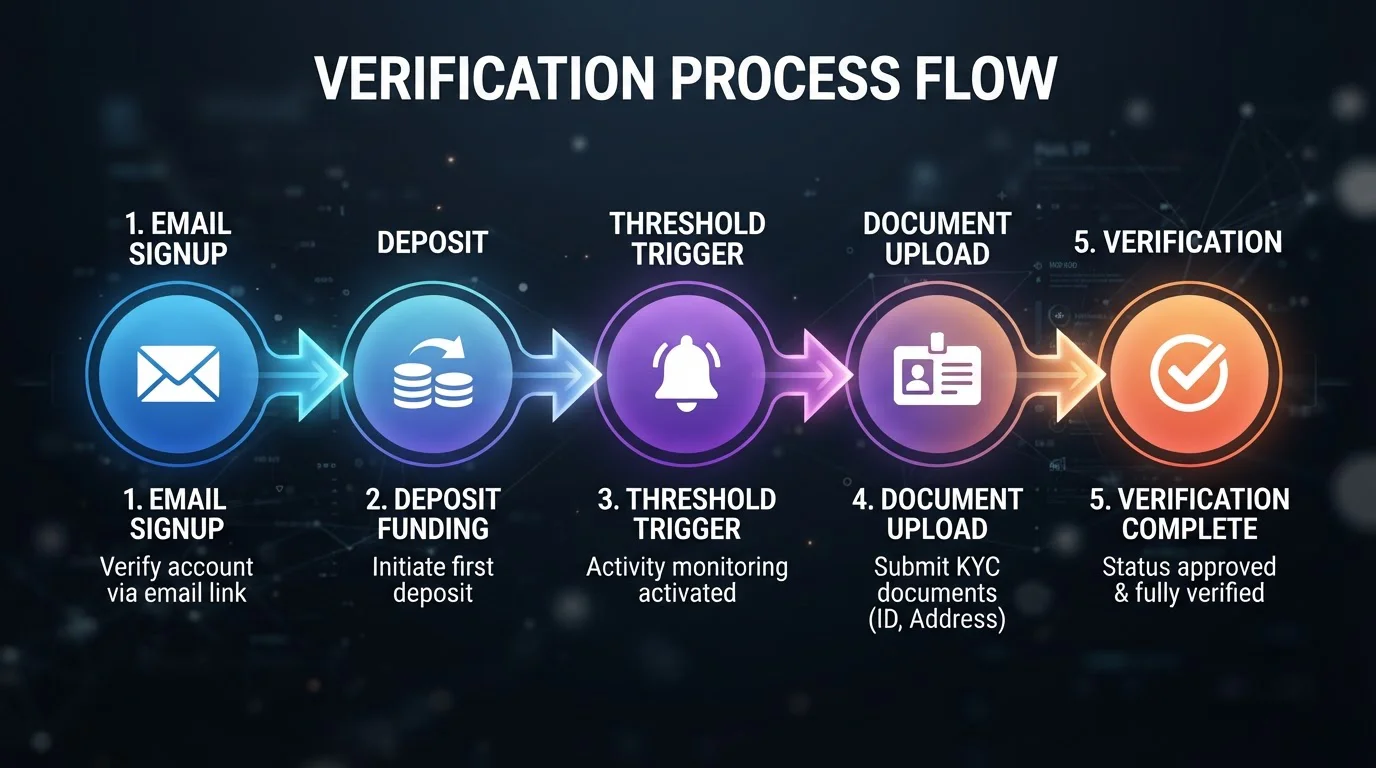
Offshore casinos offer conditional verification. KYC checks are triggered by:
- Withdrawal requests above threshold — Usually £1,500 to £2,500 cumulative
- Suspicious activity — Rapid deposit/withdrawal cycles, multiple cards
- AML compliance — Large deposits trigger source-of-funds checks
- Random audits — Spot checks on a percentage of accounts
When triggered, you’ll need: photo ID (passport/driving licence), proof of address (utility bill within 3 months), and proof of payment method (card photo or e-wallet screenshot). Most operators process verification within 24-72 hours.
Why Pay N Play Doesn’t Work in the UK
Pay N Play is Trustly’s bank-authentication system that verifies identity through your online banking login. It’s common in Scandinavia but cannot operate under UKGC licensing for two linked reasons. Licence Condition 2.1.1 requires explicit identity verification as a step separate from payment processing, so identity can’t be inferred from a bank login alone; and GamStop checks must happen before any transaction, which breaks the seamless deposit-first flow Pay N Play depends on. As of 2026, zero Pay N Play casinos operate for UK players. Trustly is available as a payment method, but you still complete traditional registration first.
FAQ: What’s the difference between no registration and Pay N Play? Pay N Play verifies identity via bank login and creates accounts automatically—but it doesn’t exist for UK players due to UKGC regulations. “No registration casinos” are offshore sites with deferred KYC, not Pay N Play.
FAQ: Why doesn’t the UKGC allow no registration casinos? UKGC requires upfront verification for GamStop self-exclusion (excluded players can’t open new accounts under different emails), age verification (preventing under-18 access), and affordability checks (screening for financial vulnerability since February 2025).
The Legal Position for UK Players in 2026
What the Gambling Act 2005 Actually Says
Sections 33 and 36 of the Gambling Act 2005 criminalize operators providing unlicensed gambling to UK customers—not players. Playing at offshore casinos is not a criminal offence for UK residents. You won’t be prosecuted or fined.
The UKGC can prosecute operators and order ISP domain blocks, but cannot sanction individual players. This legal asymmetry creates a grey market—offshore casinos are unlawful for UK purposes, but UK players accessing them commit no crime.
What You Lose by Playing Offshore
| Protection | UKGC-Licensed | Offshore |
|---|---|---|
| Dispute resolution | Mandatory ADR, free to player, binding on operator | Operator support only, slow Curaçao CGA complaints |
| Fund segregation | Customer funds in separate accounts, protected in insolvency | No mandatory segregation, funds may be lost if operator collapses |
| Affordability checks | Automated screening for financial vulnerability | None—deposit any amount |
| GamStop | Mandatory, blocks all 139 licensees | Not connected, self-exclusion per-site only |
| Stake limits | £5 max per spin (slots) | No limits |
| Wagering caps | 10x maximum (Jan 2026) | Typically 30x-50x |
UKGC casinos operate under 300+ pages of licence conditions. Offshore casinos operate under Curaçao’s lighter framework. The question isn’t whether offshore casinos are “safe”—many pay reliably. The question is whether you’re comfortable without UKGC recourse mechanisms.
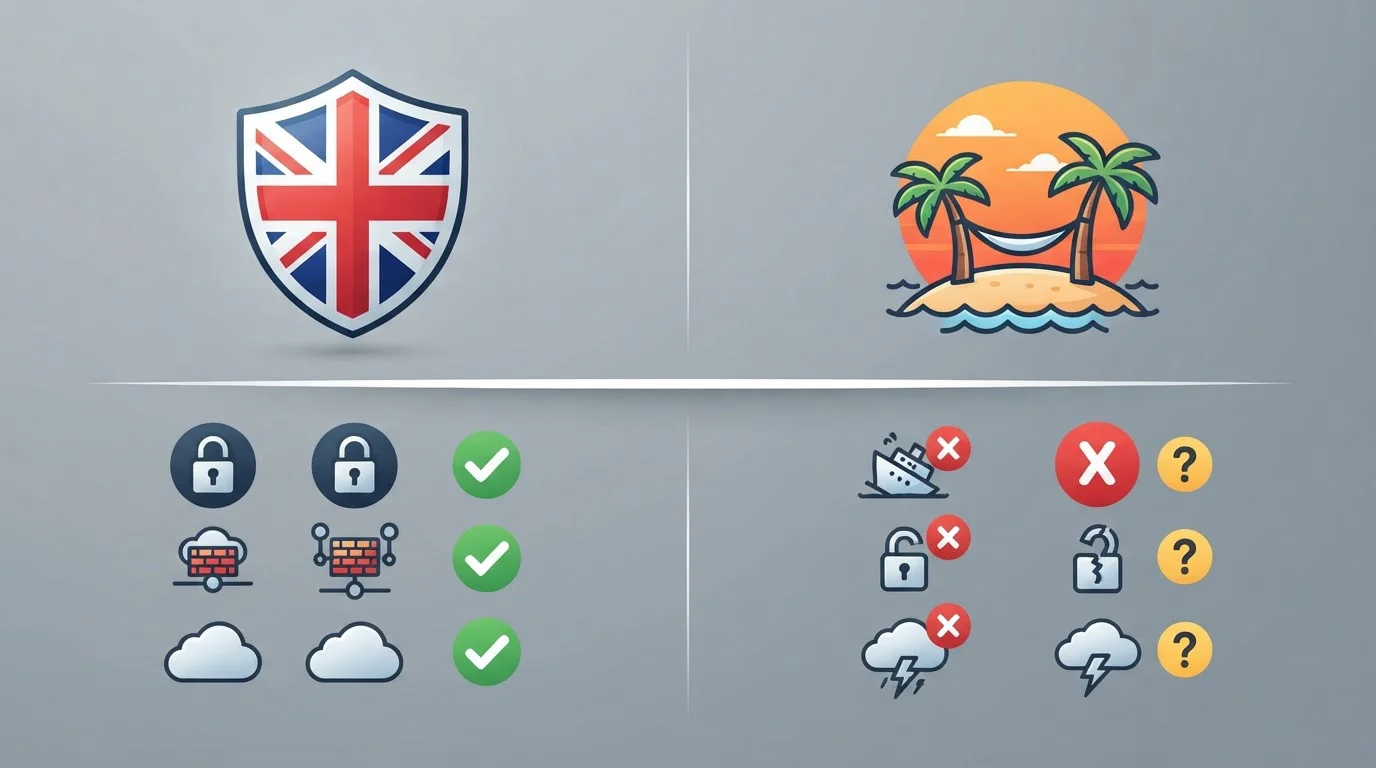
FAQ: Are no registration casinos legal in the UK? For players: yes, you can legally play without criminal consequence. Gambling Act 2005 sections 33/36 criminalize operators, not players. For operators: no, accepting UK customers without UKGC licence is illegal, though enforcement is difficult.
Best No Registration Casinos for UK Players (12 Tested Options)
We’ve tested 12 offshore casinos accepting UK registrations with email-only signup. All hold Curaçao Gaming Authority licences, accept GBP, and offer crypto/e-wallet payments.
Comparison Table
| Operator | License | KYC Threshold | Withdrawal Speed | Min Deposit | Distinguishing Feature |
|---|---|---|---|---|---|
| MadCasino | Curaçao CGA | £1,800 | Crypto 1-3h, Fiat 24-48h | £10 | Lowest threshold |
| Kaasino | Curaçao CGA | £2,000 | Crypto 1-2h, Fiat 12-24h | £20 | Fastest payouts, 35x wagering |
| Kingdom Casino | Curaçao CGA | £2,000 | Crypto 2-4h, Fiat 24-48h | £10 | Balanced mid-tier |
| Lucki Casino | Curaçao CGA | £2,300 | Crypto 1-3h, Fiat 24-48h | £20 | High threshold |
| Jack.com | Curaçao CGA | £2,500 | Crypto 2-4h, Fiat 24-72h | £20 | Highest threshold |
| MyStake | Curaçao CGA | £2,000 | Crypto 2-4h, Fiat 24-48h | £10 | 6,000+ games |
| Tenobet | Curaçao CGA | £2,000 | Crypto 1-3h, Fiat 24-48h | £10 | Sports + casino |
| Donbet | Curaçao CGA OGL/2024/250/0115 | £2,000 | Crypto 1-3h, Fiat 24-48h | £10 | Email + phone, 8-tier VIP |
| Gxmble | Curaçao CGA | £2,000 | Crypto 1-2h, Fiat 24-48h | £20 | Lowest wagering, crypto-first |
| Rolletto | Curaçao CGA | £2,000 | Crypto 2-4h, Fiat 24-48h | £10 | Standard deferred KYC |
| Goldenbet | Curaçao CGA | £2,000 | Crypto 2-4h, Fiat 48-72h | £10 | Additional option |
| Freshbet | Curaçao CGA | £2,000 | Crypto 2-4h, Fiat 24-48h | £10 | 250% welcome bonus |
1. Lucki Casino — Highest KYC Threshold (£2,300)
License: Curaçao CGA | Launched: 2024
Lucki has the second-highest KYC threshold at £2,300 cumulative withdrawals. Welcome offer up to £5,000 (450% match), 6,000+ games, crypto and fiat payments. Withdrawal speeds: 24-48 hours fiat, 1-3 hours crypto.
The catch: Terms list UK as restricted, yet the site accepts UK registrations—creates legal ambiguity.
Who it suits: Players chasing four-figure wins who want maximum deferred verification.
2. Kaasino — Fastest Payouts (35x Wagering)
License: Curaçao CGA | Launched: 2023
£2,000 threshold, but 35x wagering (lowest in offshore market) and 1-2 hour crypto withdrawals make it fastest. £2,500 welcome bonus + 500 free spins across 4 deposits. Smaller library (~3,000 titles) but premium providers. Casino Guru 7.1/10.
Who it suits: Players prioritizing speed over breadth.
3. Kingdom Casino — Balanced Mid-Tier
License: Curaçao CGA | Launched: 2025
£600 bonus + 100 free spins, 30x wagering, £2,000 threshold. Standard offshore range without standout features but consistent across metrics. Crypto 2-4h, fiat 24-48h.
Who it suits: First-time offshore players wanting reliable mid-tier option.
4. Tenobet — Sports and Casino Combined
License: Curaçao CGA | Launched: 2024
Hybrid sportsbook + 5,000+ casino games. 400% bonus up to £5,000, 40x wagering. £2,000 threshold applies to combined casino and sports withdrawals.
Who it suits: Sports bettors locked out of UKGC-licensed books who want casino games.
5. MadCasino — Lowest Threshold (£1,800)
License: Curaçao CGA | Launched: 2023
Lowest KYC threshold at £1,800—useful for testing payout reliability before larger deposits. £1,300-£1,500 bonus + 300 spins, £10 minimum. Terms list UK as restricted yet accepts UK registrations.
Who it suits: Conservative players testing offshore market with early verification.
6. MyStake — Largest Game Library (6,000+ Titles)
License: Curaçao CGA | Launched: 2021
Broadest catalog at 6,000+ games including Plinko, crash games, and niche categories. £1,500 bonus (300% across 3 deposits), 35x wagering. Full crypto suite, GBP support.
Who it suits: Players wanting variety beyond standard slots and live dealer.
7. Donbet — Email + Phone Required
License: Curaçao CGA OGL/2024/250/0115 | Launched: 2020, relaunched 2022
Requires email and phone at registration (more than competitors). 8,000+ games, 8-tier VIP with 5-25% cashback. Post-LOK license verified (OGL/2024/250/0115). TrustPilot 3.9/5 with 70% negative-review response rate.
Who it suits: High-volume players valuing VIP cashback.
8. Rolletto — Standard Deferred KYC
License: Curaçao CGA
Rolletto is the archetypal mid-tier offshore operator: a £2,000 cumulative KYC threshold, a £10 minimum deposit, crypto withdrawals in two to four hours and fiat payouts in 24 to 48 hours. Nothing here is best-in-class, but nothing is alarming either—it behaves the way most of the market does once you look past the marketing. That makes it a reasonable reference point for judging the others: if a casino is meaningfully slower or more opaque than Rolletto, you can see it in the numbers.
Who it suits: Players who want a predictable, middle-of-the-road offshore experience with no surprises in either direction.
9. Goldenbet — Slower Fiat Payouts
License: Curaçao CGA
Goldenbet sits a notch lower on reputation, with fewer independent reviews to lean on and the slowest fiat window of the twelve at 48 to 72 hours. Crypto still clears in two to four hours and the £10 minimum keeps entry cheap, so the penalty only bites if you cash out to a card or bank account. Treat it as a crypto-only option and the slow fiat leg stops mattering.
Who it suits: Crypto players who never intend to touch the fiat withdrawal rail.
10. Freshbet — Headline 250% Bonus
License: Curaçao CGA
Freshbet leads with a 250% welcome bonus up to €1,500, paired with the usual £2,000 threshold, £10 minimum and 24-to-48-hour fiat payouts. As always, the bonus is only as good as the wagering behind it, so read the terms before you claim—an attractive match with a 45x–50x requirement can cost more in grind than it returns. The underlying payment and verification mechanics are standard offshore fare.
Who it suits: Bonus-hunters who will actually read and work through the wagering terms.
11. Jack.com — Highest Threshold, Opaque Licensing
License: Curaçao CGA (licensing details unclear)
Jack.com offers the highest deferred-verification ceiling of the group at £2,500 cumulative, with a £20 minimum and fiat payouts stretching to 72 hours. The catch is transparency: its licensing details are harder to pin down than the rest, which is exactly the kind of ambiguity that matters when a dispute arises and you need to know who actually regulates the site. The high threshold is appealing; the governance question is the reason to be cautious.
Who it suits: Experienced players chasing a high threshold who are willing to verify the licence themselves before depositing.
12. Gxmble — Crypto-First, Lowest Wagering
License: Curaçao CGA
Gxmble is built around crypto, with one-to-two-hour crypto withdrawals—among the fastest here—and the lowest wagering requirements in the set, which is why it scores 8.8/10 for crypto experience. The trade-off is a £20 minimum and a thinner fiat story. If you already hold crypto and value quick, low-friction cashouts over a sprawling game library, it is one of the stronger picks on this list.
Who it suits: Crypto-native players who prize fast withdrawals and light wagering over breadth of games.
What the First 60 Seconds — and the First Withdrawal — Actually Look Like
The gap between how a no-registration casino feels on day one and how it feels on payout day is the single most important thing to understand before you deposit, because the whole appeal lives in that gap.
The front door is genuinely frictionless. You land on the site, click join or deposit, type an email address and a password, and you’re through—sometimes without even confirming the email. There’s no name field, no date-of-birth prompt, no address form and no document upload. If you fund with crypto, you copy a wallet address or scan a QR code, send the coins, and your balance updates once the network confirms the transaction, usually within a few minutes. If you fund with a card or e-wallet, the deposit clears in seconds. From landing page to first spin in under a minute is a realistic expectation, and that speed is real rather than marketing spin.
The back door is where the deferred paperwork arrives. The first time you try to withdraw an amount that pushes your cumulative total past the operator’s threshold—or the first time you attempt a large single cashout—the account effectively converts into a conventional, fully verified one. You’re asked for photo ID, a proof of address dated within the last three months, and often a photo of the card or a screenshot of the e-wallet you used. Until those documents are approved, the withdrawal sits on hold, and approval can take anywhere from a few hours to three days depending on the operator and how clean your documents are. In practice this means the “no registration” label describes the deposit experience, not the cashout experience: the verification you skipped at the start is simply waiting for you at the end, and it arrives at the least convenient possible moment—when you’re trying to take money out.
Two habits make this far less painful. First, verify early: most operators let you upload ID and proof of address immediately after signing up, and clearing verification while your balance is small removes the hold from your eventual withdrawal. Second, keep your first cashout modest. A test withdrawal of a few hundred pounds tells you whether the operator pays cleanly and how long it really takes, long before you trust it with four figures.
Curaçao Licensing After the 2024 LOK Reform
What Changed in December 2024
On December 24, 2024, Curaçao implemented the LOK (Landsverordening op de Kansspelen) reform, ending 30 years of lax oversight. The old master-license model was eliminated, abolishing the cheap, fast 1668/JAZ sublicenses that carried minimal oversight. In their place came direct CGA licensing, under which every operator now holds an individual Online Gaming License (OGL) in the format OGL/2024/####/####. Approval became markedly stricter, with €130k–€150k year-one costs and a 38% rejection rate, and enhanced AML and player-protection obligations are now required, narrowing the gap with Malta and Gibraltar. Old JAZ licenses phase out by December 31, 2026, so legitimate operators should already be transitioning to the OGL format.

How to Verify a Legitimate License
Start at curacaogamingcontrol.com, then find the casino’s license number in the footer or Terms—the post-LOK format is OGL/2024/####/####. Search that number in the register, which confirms whether the licence is active, suspended or revoked, and finally cross-check that the domain you’re on is the one listed under the licence.
Red flags: No license visible, number doesn’t appear in register, domain mismatch, still using old JAZ format without transition timeline.
Of our 12 tested casinos, Donbet (OGL/2024/250/0115) is the only one with confirmed post-LOK license.
FAQ: How do I verify a Curaçao license after LOK reform? Check format OGL/2024/####/#### (post-LOK) vs old 1668/JAZ (phasing out). Visit curacaogamingcontrol.com, search license number from casino footer/Terms. If active and domain matches, it’s legitimate. Old JAZ licenses expire December 31, 2026.
How Verification Actually Works
The Registration Process
Email-only signup takes under 60 seconds: provide email and password, verify email (sometimes skipped), deposit, and play. You haven’t provided name, address, or date of birth yet.
When KYC Checks Are Triggered
Several events trigger verification. The most common is a withdrawal that takes your cumulative total above the operator’s threshold (£1,800–£2,500). A large single deposit of £5,000 or more triggers an immediate AML check, and suspicious patterns—rapid deposit-and-withdrawal cycles, or several cards on one account—will flag you too. A minority of operators request verification at the very first withdrawal regardless of amount, and all of them run random audits, spot-checking a percentage of accounts whether or not anything looks unusual.
What Documents You’ll Need
- Photo ID: Passport, driving licence, national ID
- Proof of address: Utility bill, bank statement, council tax (within 3 months)
- Payment proof: Card photo (first 6 + last 4 digits visible), e-wallet screenshot
Typical Timelines
Fast (12-24h): Crypto-focused operators, clean documents Standard (24-48h): Most mid-tier operators Slow (48-72h+): Lower-tier operators, unclear documents, weekend submissions
Pro tip: Verify immediately after registration—upload ID and proof of address before first deposit. Some operators process preemptive verification faster.
FAQ: Can I withdraw without verifying? Only for amounts below threshold (£1,500-£2,000). Once cumulative withdrawals cross operator’s threshold, verification becomes mandatory. Large single withdrawals (£2,000+) or suspicious activity can trigger KYC anytime. “No registration” means deferred, not eliminated.
FAQ: What documents will I need? Three types: (1) Photo ID (passport/driving licence), (2) Proof of address within 3 months (utility bill/bank statement), (3) Proof of payment (card photo showing first 6 and last 4 digits, or e-wallet screenshot). Crypto deposits require less but large withdrawals may still trigger checks.
FAQ: What’s the average threshold? £1,800 to £2,500 cumulative withdrawals. MadCasino lowest at £1,800, most at £2,000, Lucki £2,300, Jack.com highest at £2,500. Thresholds are cumulative—multiple smaller withdrawals add up.
Bonuses and Free Spins
Typical Welcome Offers
Offshore casinos offer 100%-450% matches with total values £500-£5,000 across multiple deposits. Example: Lucki’s £5,000 (450% split), Kaasino’s £2,500 + 500 spins, Tenobet’s £5,000 (400%).
Wagering Requirements vs UKGC
UKGC capped wagering at 10x maximum (January 19, 2026). Offshore typical range: 30x-50x. Kaasino/MyStake at 35x, Tenobet at 40x, some reach 50x+.
A £100 bonus at 35x requires £3,500 in wagers. At 50x, it’s £5,000. Factor house edge (3-5% on slots), and you’ll lose £105-£250 grinding through before unlocking.
Strategic approach: Prioritize 30x-35x wagering (Kaasino, MyStake, Gxmble). For casual play, skip the bonus—deposit without claiming it, withdraw freely without wagering restrictions.
No Deposit Bonuses: Why They’re Rare
Genuine no-deposit bonuses are almost nonexistent in 2026 due to abuse history. Closest equivalent is free spins on registration (capped at 10p per spin, 40x-50x wagering on winnings—expected value under £1).
If you see “no deposit bonus” headlines, read Terms carefully—most require deposit to unlock.
Crypto Casinos: The Most Anonymous Option
Why Crypto Enables Lighter Verification
Crypto deposits give operators minimal identifying data—just wallet address, no name/address. This creates verification mismatch: card deposits provide data for early checks; crypto deposits don’t, so KYC defers longer.
However, crypto doesn’t eliminate verification—once you cross withdrawal threshold, crypto casinos still request ID and proof of address under Curaçao AML rules.
Supported Cryptocurrencies
Bitcoin (BTC): Most widely accepted, 10min-2h confirmations, £4-£10 fees Ethereum (ETH): 1-5min confirmations, £5-£20 fees during congestion USDT (Tether): Stablecoin pegged to USD (no price volatility), TRC-20 on Tron has under-£1 fees Litecoin (LTC): 2-5min confirmations, under-£1 fees XRP (Ripple): Under-10-second confirmations, under-£0.10 fees
Choosing: Bitcoin for anonymity, XRP/Litecoin for speed, USDT for price stability, USDT on Tron for lowest fees.

Withdrawal Speed Advantages
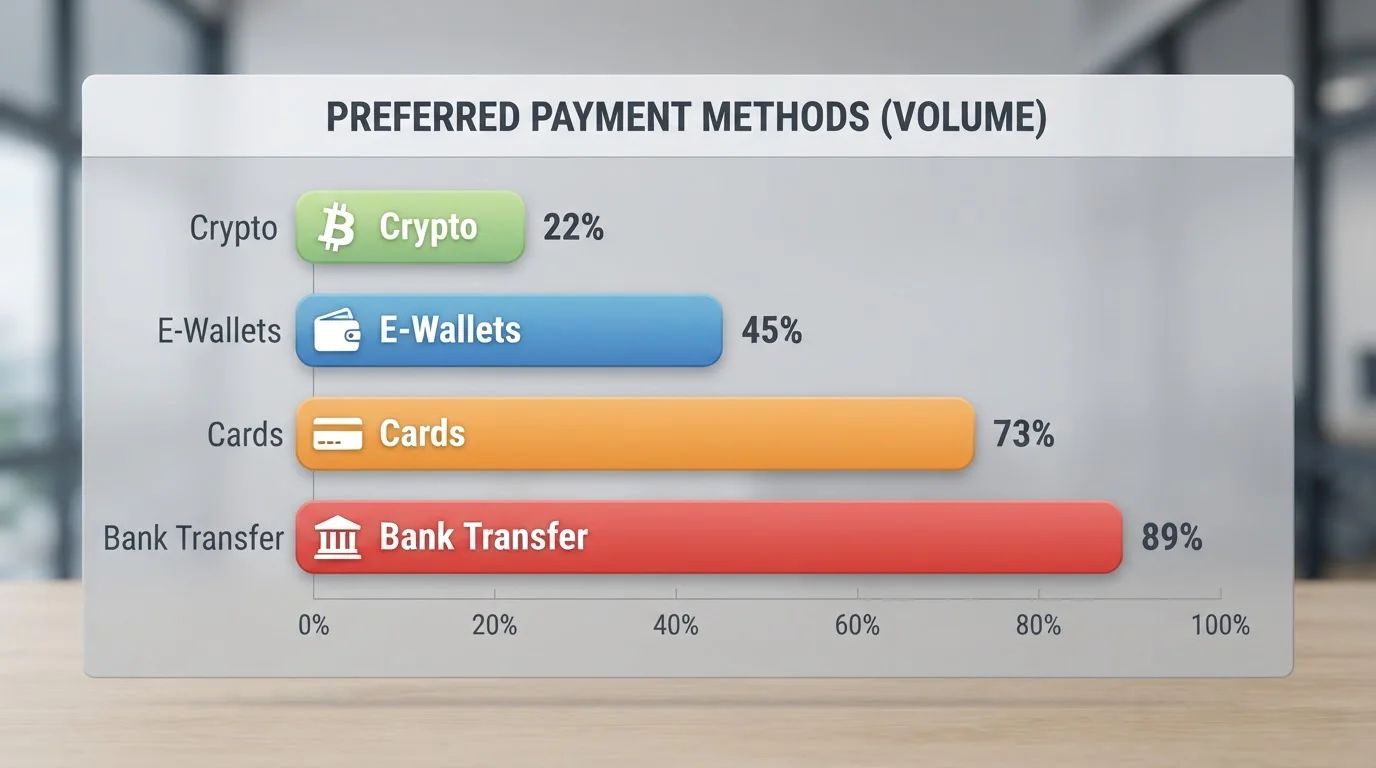
Crypto withdrawals are 3x-10x faster than fiat:
- Crypto: 1-4h at fast operators, 2-6h mid-tier, 4-12h slower
- E-wallets: 12-48h
- Cards: 24-72h
- Bank transfer: 48-120h
Managing Volatility and Fees in Practice
Choosing a coin is really a choice about which risk you’re willing to carry. Bitcoin and Ethereum give you the widest acceptance and, in Bitcoin’s case, the strongest claim to anonymity, but their prices move, so the pounds-equivalent of your balance can drift up or down while you play. Litecoin and XRP solve the speed-and-fee problem—XRP settles in under ten seconds for a fraction of a penny—but they carry the same price volatility. Stablecoins such as USDT remove the price swing by pegging to the US dollar, and when sent over the Tron network (TRC-20) the transfer fee is typically under a pound, which is why cost-conscious players who want predictability default to it.
Two operational mistakes cost players more than any exchange spread. The first is sending a coin over the wrong network—paying with an ERC-20 token when the casino expects TRC-20, for example—which can delay or lose the funds entirely; always match the network the cashier specifies. The second is ignoring confirmation times when the market is busy: Ethereum fees spike during congestion, and a deposit sent with too low a fee can sit unconfirmed for hours. For a smooth round trip, keep a small buffer of the coin you use for fees, confirm the deposit address and network every time, and withdraw back to the same wallet you deposited from to avoid tripping anti-money-laundering flags.
FAQ: Are crypto casinos safer for anonymity? Crypto offers more anonymity (operators know wallet address, not name) but not more safety. Verification still triggers at withdrawal thresholds under Curaçao AML. Safety trade-offs (no UKGC dispute resolution, no fund segregation) are identical whether crypto or fiat—crypto only changes when verification happens, not whether casino is trustworthy.
Why UKGC Restrictions Drive Players Offshore
Affordability Checks (February 2025)
UKGC mandates automated financial vulnerability screening via credit reference agencies and open banking. Invisible for clean credit, intrusive for high debt/irregular income. Flags high credit utilization, missed payments, CCJs, income-below-spending patterns.
Offshore casinos have no affordability requirements—deposit any amount regardless of income.
Stake Limits (£5 Max Per Spin)
UKGC caps: £5 per spin for adults, £2 for under-25s on slots. For high-rollers previously wagering £10-£50 per spin, it’s a dealbreaker. Offshore casinos have no limits—wager £100+ per spin.
Wagering Caps (10x Maximum)
UKGC bonuses: small amounts (£50-£200) with 10x wagering. Offshore: large amounts (£2,000-£5,000) with 35x-50x. For recreational players, UKGC model is better (achievable clearance). For high-volume players, offshore offers more total value if you can grind through.
GamStop
GamStop blocks all 139 UKGC licensees. Offshore casinos aren’t connected—self-exclusion is per-site only, not shared.
Our position: If you self-excluded due to gambling harm, do not use offshore casinos to bypass GamStop. Contact GamCare (0808 8020 133) instead.
FAQ: Can I use GamStop at offshore casino? No. GamStop only covers UKGC-licensed sites. Offshore casinos aren’t connected, so GamStop block doesn’t apply. If you self-excluded due to gambling harm, we strongly advise against using offshore sites. Contact GamCare (0808 8020 133) for support.
Payment Methods and Withdrawal Speed
Crypto: 1-3h (Bitcoin, Ethereum, USDT, Litecoin, XRP)—fastest option E-wallets (Skrill, Neteller): 12-48h—middle ground Cards: 24-72h casino processing + 3-5 days bank credit = 4-8 days total Bank transfers: 48-120h—slowest
Trustly’s Role: Available at UK casinos but only as payment method, not Pay N Play mechanism. UKGC Licence Condition 2.1.1 blocks Pay N Play model.
Tax, Currency and the Hidden Costs UK Players Overlook
Gambling winnings are not taxed in the UK. That rule applies to the player regardless of where the casino is licensed, so a win at an offshore Curaçao site is no more taxable than a win at a UKGC-licensed one—there is no gambling-winnings tax to declare. This is one of the few areas where playing offshore carries no extra penalty.
The costs that do bite are the quieter ones. Most offshore operators price in euros or US dollars even when they accept GBP, so every deposit and withdrawal can involve a currency conversion. Whether that conversion happens at the casino, at your card issuer or inside your e-wallet, each hop tends to apply a spread of a few percent, and on a round trip of depositing and later withdrawing you can lose more to exchange margins than you would to any headline fee. If you fund in crypto, the volatility is its own hidden cost: the value of the coins you deposit can move meaningfully between the moment you buy them and the moment you cash out, which is why stablecoins such as USDT exist and why players who dislike that uncertainty gravitate to them.
Payment friction is the third overlooked cost. A number of UK banks decline or flag gambling transactions to offshore merchants, and some customers deliberately use the gambling-block feature their bank offers. A declined card, a payment that lands as a cash advance, or an e-wallet that charges for an instant bank transfer can all add cost or delay that never appears in the casino’s own fee table. None of these are reasons on their own to avoid offshore play, but they change the real economics: the “free” fast deposit can quietly cost several percent by the time the money has travelled from your bank, through a currency conversion, into the casino and back out again.
The practical takeaway is to count the round trip, not the deposit. Before you commit real money, work out what it costs to get £100 in and the resulting balance back out through your chosen method, including conversions and any bank charges, and compare that against the convenience you’re buying.
What Happens If Something Goes Wrong
No UKGC Dispute Resolution
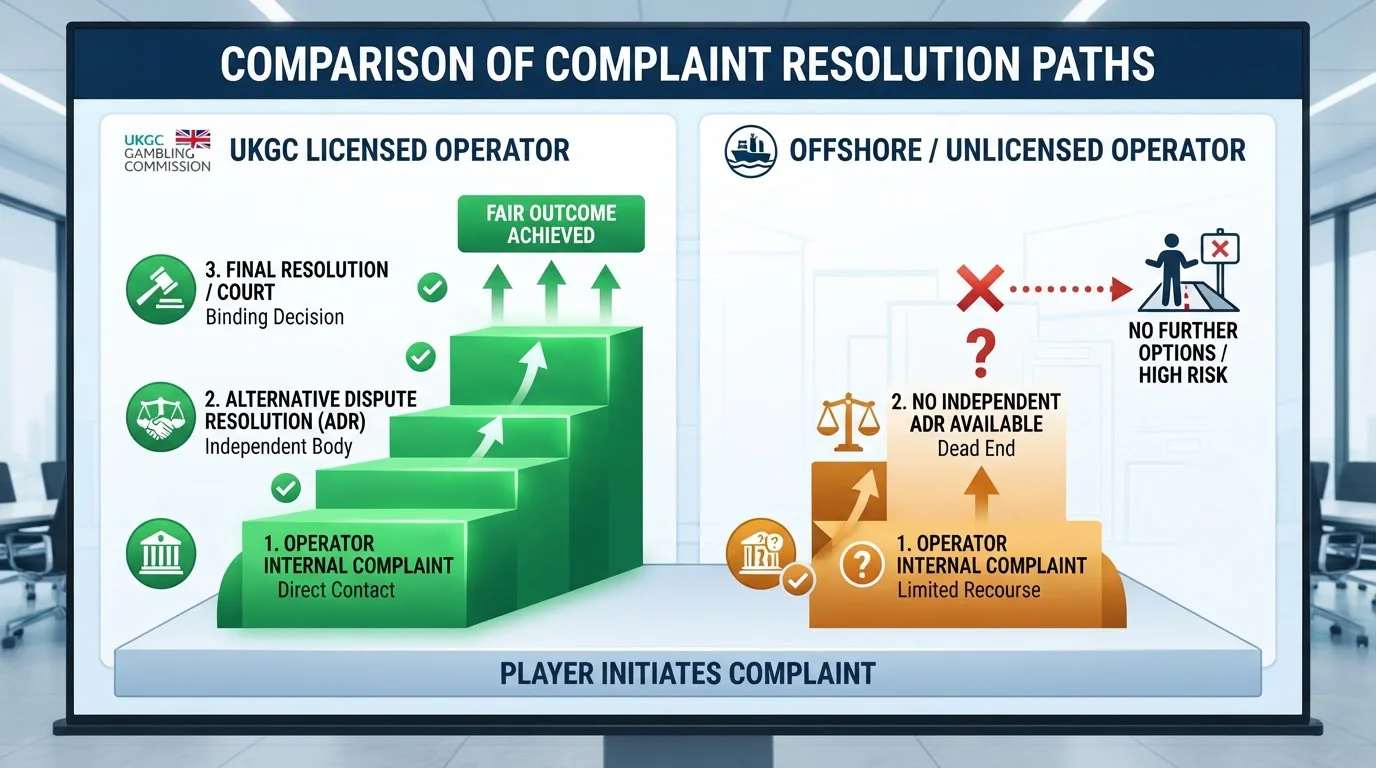
UKGC casinos: escalate to independent ADR (free, binding), then UKGC investigation. Offshore casinos: customer support only, slow Curaçao CGA complaints (weeks-months, inconsistent, often favors operator), no independent adjudicator.
Fund Segregation Differences
UKGC: customer funds in segregated accounts, protected in insolvency. Offshore: no mandatory segregation—balance may be commingled with operating capital, lost if casino collapses.
When to Avoid Offshore Casinos
Red flags: no license visible, TrustPilot under 3.0/5 with unresolved withdrawal complaints, vague Terms clauses, unresponsive support, geo-blocking inconsistencies.
FAQ: What if I have a dispute? Limited recourse: (1) Contact casino support, (2) Complain to Curaçao CGA (slow, often favors operator), (3) Post on public forums (Trustpilot, Casino Guru) for pressure. No free adjudicator or UKGC escalation. Best protection: Check reviews before depositing—avoid operators with sub-3.0 ratings or many unresolved complaints.
How to Choose a Safe Casino
Verify the License
Check footer for OGL/2024/####/#### (post-LOK) or 1668/JAZ (phasing out). Visit curacaogamingcontrol.com, search license, confirm active and domain matches.
Check Withdrawal Threshold Transparency
Reputable operators publish or document KYC thresholds. Transparent thresholds (Lucki £2,300, Kaasino £2,000) more trustworthy than vague “at our discretion.”
Read Independent Reviews
Check Trustpilot, Casino Guru, AskGamblers. Green flags: 3.5/5+ on Trustpilot with 100+ reviews, “above average” on Casino Guru (7.0/10+), operator responds to complaints. Red flags: under 3.0/5, unresolved withdrawal complaints, no response to complaints.
Test Customer Support
Ask specific questions before depositing: “What’s your KYC threshold?” “How long do crypto withdrawals take?” Responsive, detailed answers within 5 minutes = green flag. Wait over 15 minutes or evasive responses = red flag.
Responsible Gambling Without GamStop
Self-Exclusion Tools
Offshore casinos offer voluntary tools (account closure, self-exclusion periods, deposit limits, loss limits) but quality varies. Critical limitation: self-exclusion at one casino doesn’t block others—no shared database like GamStop.
Setting Personal Limits
- Budget: only deposit what you can afford to lose
- Time limits: use phone timers, stop when they go off
- Never chase losses—deposit more to “win it back” leads to problem gambling
- Use casino’s deposit/loss limits at maximum you can afford
When to Seek Help
Signs you need help: chasing losses repeatedly, lying about gambling, neglecting responsibilities, gambling with rent/bill money, feeling unable to stop, mood swings tied to outcomes, thinking about gambling constantly.
GamCare: 0808 8020 133 (free, confidential, 24/7) BeGambleAware: begambleaware.org Gamban: Software blocking gambling sites Gamblers Anonymous UK: In-person/online support groups
If you’re reading this thinking “maybe I should check,” that’s a sign to reach out. Early intervention is easier and more effective.
Offshore No-Registration Play: Access Without a Safety Net
“No registration casino UK” describes offshore Curaçao-licensed casinos deferring verification until £1,800-£2,500 withdrawal thresholds. They offer faster access than UKGC sites but without consumer protections: no UKGC dispute resolution, no fund segregation, no affordability checks, no GamStop.
The reality is nuanced:
Offshore casinos are accessible and carry no criminal risk for UK players. Thousands use them daily. Payment processors handle transactions. The UKGC warns but cannot prosecute players.
Offshore casinos operate without UKGC safety net. If disputes arise, you lack independent ADR and guaranteed fund protection. You’re relying on operator reputation, not enforceable licence conditions.
Offshore casinos appeal to players frustrated with UKGC restrictions—£5 stake limits, 10x wagering caps, affordability checks, GamStop blocks.
Offshore casinos also attract vulnerable players bypassing GamStop or avoiding affordability checks. For these players, offshore gambling is more dangerous because no protective friction exists.
Your choice should be informed:
- If you’re chasing £5+ stakes or bypassing regretted GamStop exclusion, offshore casinos provide access. Understand you’re gambling without a safety net.
- If you’re bypassing GamStop because gambling harmed you, stop. Contact GamCare (0808 8020 133).
- If you’re testing offshore casinos, start small—deposit £20-£50, play, request withdrawal under £500, see if operator pays cleanly.
- If you value consumer protection, stay with UKGC casinos. Dispute resolution infrastructure is genuinely effective.
Of 12 tested operators, Kaasino, Donbet, and MyStake have strongest credentials: verified licenses, positive reviews, transparent thresholds, responsive support. Lucki and Jack.com offer highest thresholds but carry more risk. Others occupy the middle: functional but less-proven.
Verify license, read reviews, test support, withdraw frequently. Offshore gambling in 2026 is a grey market where protection depends on operator reputation, not regulatory enforcement. Choose carefully.
No Registration and No KYC Casinos UK 2026 — What to Know
Content created by the «casinopayexp» team