
Casino Sites That Accept Debit Cards UK 2026 — Withdrawal Speeds, Limits & Verification
 Available in US
Every UKGC-licensed casino accepts debit cards. That statement is nearly true—Visa and Mastercard debit work at virtually all 139 operators holding a remote casino licence in Great Britain as of September 2026. The credit card ban from April 2020 made debit the default payment method, and the infrastructure is universal.
What separates one operator from another isn’t whether they take your card—it’s how fast they return your winnings to it, what they demand in verification documents before that first withdrawal, and whether they’ve adopted Visa Fast Funds or you’re waiting three business days for standard card settlement. The difference between a four-hour payout and a five-day wait isn’t the card in your wallet; it’s which backend the casino runs and whether your bank supports the technology that makes instant possible.
This breakdown tests that claim across twelve operators, covering high-street brands with retail heritage, digital-first platforms built for mobile, and newer entrants competing on transparency. Every licence number is verified against the Gambling Commission register. Every withdrawal speed is qualified by whether it’s operator approval time or actual card settlement. The comparison table below ranks by payout speed first—because if you’re filtering casinos by payment method, the method’s speed is presumably why you’re here.
Best UK Casinos That Accept Debit Cards in 2026
The table captures what matters for debit card players: licensing legitimacy, withdrawal speed (qualified by method—Fast Funds vs standard card settlement), minimum deposit threshold, and one feature that distinguishes the operator from the pack. Rows are ordered by fastest confirmed payout first, then by minimum deposit, then by market presence.
| Operator | License | Withdrawal Speed | Minimum Deposit | Distinguishing Feature |
|---|---|---|---|---|
| William Hill | UKGC 000-039225-R-319373 | 4 hours (Visa Fast Funds) | £5 | 888 Holdings; high-street heritage since 1934 |
| Ladbrokes | UKGC 000-039372-R-319310 | 4–8 hours (Visa Fast Funds) | £5 | Entain group; LadBucks loyalty currency |
| Casumo | UKGC 000-053409-R-329514 | 35 min (PayPal tested); 1–3 days card | £10 | Gamification adventure; 24/7 automated approval |
| Paddy Power | UKGC 000-039372-R-319310 | 2–5 days (debit card) | £5 | Flutter Entertainment; irreverent brand personality |
| Betfair | UKGC 000-039372-R-319310 | 2–5 days (debit card) | £5 | Exchange heritage; Flutter group (shared licence Paddy) |
| Coral | UKGC 000-039372-R-319441 | 1–3 days (debit card) | £5 | Entain group; Coral Rewards crossover with shops |
| LeoVegas | UKGC 000-051408-R-327497 | 1–3 days (debit card) | £10 | MGM Resorts ownership; mobile-first “King of Mobile” |
| 888casino | UKGC 000-039028-R-319384 | 1–3 days card (24–72h pending) | £10 | eCOGRA certified; 10x bonus wagering (low vs industry) |
| MrQ | UKGC 000-052081-R-328279 | 1–3 days (debit card) | £10 | Kindred Group; no-wagering-requirements USP |
| PlayOJO | UKGC 000-039576-R-319451 | 1–3 days (debit card) | £10 | SkillOnNet (Evoke plc); OJOplus cashback on every bet |
| Midnite | UKGC 000-042647-R-340123 | Instant (post-KYC approval) | £5 (assumed) | Esports-first (CS:GO, Dota 2); 100 wager-free spins |
| kwiff | UKGC 000-044448-R-323408 | 1–3 days (debit card) | £5 (assumed) | Supercharged odds randomization; 200 free spins zero wagering |
Withdrawal speed in the table reflects actual card settlement time where known, not just operator approval. “Visa Fast Funds” means the casino supports Visa Direct—sub-four-hour settlement if your bank is compatible. Standard debit card withdrawals take one to five business days regardless of how quickly the casino approves the transaction. E-wallet speeds (PayPal, Skrill, Trustly) are noted where tested data exists, but this guide filters for debit card users, so card-specific timelines take priority.
William Hill
William Hill operates under WHG (International) Limited, UKGC licence 000-039225-R-319373, owned by 888 Holdings plc following the 2022 acquisition. The high-street heritage dates to 1934, and the brand recognition still carries weight with players who remember the shops. Online, the debit card minimum is £5—standard for the segment—and Visa Fast Funds support means your withdrawal can land in under four hours if your bank supports Visa Direct.
That four-hour window is the actual card settlement time, not operator approval (which is usually instant once KYC is complete). William Hill was one of the earlier adopters of Fast Funds in the UK market, and they promote it. Standard debit card withdrawals without Fast Funds take one to five business days. The casino requires photographic ID, proof of address, and a card photo (middle six digits obscured) before the first withdrawal. The game library sits around 1,000 slot titles with live casino from Evolution and Pragmatic Live. Welcome offers rotate—typical structure is free spins on deposit with 35x–40x wagering.
Ladbrokes
Ladbrokes Betting & Gaming Ltd holds UKGC licence 000-039372-R-319310 and operates as part of Entain plc, the same parent that owns Coral. The brand launched in 1886 as a commission agent for horses, so the retail pedigree runs even deeper than William Hill. The £5 debit card minimum matches most of the high-street segment, and Visa Fast Funds withdrawals are confirmed—some sources report up to four hours, others cite eight, so expect the upper end unless your bank processes Visa Direct instantly.
LadBucks is the loyalty currency: you earn them on play and redeem for free spins or bonus credits. The typical welcome offer includes free spins with zero wagering on the winnings—a rarity in an industry where 35x rollover is standard. Standard debit card settlement (non-Fast Funds) takes one to three banking days. KYC on first withdrawal asks for ID, proof of address, and card verification. PayPal withdrawals run four to eight hours if you prefer e-wallet speed. Game library is around 2,000 titles. Entain’s backend runs BetBuddy AI for responsible gambling monitoring.
888casino
888 UK Limited operates under UKGC licence 000-039028-R-319384, part of 888 Holdings plc (publicly traded on the London Stock Exchange). The company acquired William Hill’s retail estate in 2022, cementing its position as one of the sector’s established names. The debit card minimum is £10—slightly higher than competitors charging £5—but the 10x wagering requirement on the welcome bonus is notably lower than the industry’s typical 35x.
Withdrawals sit in pending review for 24 to 72 hours once requested, then standard card settlement adds one to three days on top. No Fast Funds option is advertised, so plan for three to five days total from request to bank account. The casino offers Open Banking verification as an alternative to manual document upload—you link your bank account, proving age, identity, and funds availability in one step. Proprietary slot titles exclusive to 888 sit alongside third-party games from the usual providers. PSD2 Strong Customer Authentication (3D Secure 2) is mandatory on deposits. Corporate card deposits were banned in July 2026 per a policy update.
Paddy Power
PPB Entertainment Limited holds UKGC licence 000-039372-R-319310 (shared with Betfair under the Flutter Entertainment umbrella). The brand originated in Dublin in 1988 and built its reputation on irreverent marketing and novelty bets you won’t find elsewhere. The UK casino operation is secondary to the sportsbook, so this is a sports-first platform where casino is the sideshow.
Debit card minimum is £5, though PayPal deposits require £10. Standard debit card withdrawals take two to five working days; e-wallets (PayPal, Skrill, Neteller) land within four to 24 hours once approved. Apple Pay deposits are instant, but withdrawals via Apple Pay still route through the linked card and take two to five days. KYC documents are requested on first withdrawal—standard ID, proof of address, and a card photo with the middle digits obscured. The Power Play feature offers boosted odds on selected events. Welcome offers vary, but a deposit match with 35x wagering on the bonus is typical.
Betfair
Betfair shares the same UKGC licence (000-039372-R-319310) and parent company (Flutter Entertainment) as Paddy Power. The brand launched in 2000 as a betting exchange, and that heritage still defines its technical credibility. The casino was added later as a bolt-on to the exchange business, so the core user base tilts heavily toward sports punters.
Minimum deposit is £5 for debit cards. Bank transfer and standard debit card withdrawals take two to five working days; e-wallets clock in around four hours. Betfair supports Fast Funds for Visa debit prepaid cards, but standard Visa debit doesn’t get the same treatment—check whether your card qualifies. Maximum withdrawal is £2,000 per transaction, though this varies by method. The backend is shared with Paddy Power (same infrastructure, different branding—Betfair uses pink where Paddy Power uses green). KYC is required before the first withdrawal: photo ID, proof of address, card verification.
Coral
Coral Racing Limited operates under UKGC licence 000-039372-R-319441-014 and sits alongside Ladbrokes within Entain plc. The high-street betting shop chain dates to 1926, and the online operation merged with Ladbrokes digital under the same backend. Dual licensing includes Gibraltar licence No. 114 as backup regulatory coverage.
Debit card minimum is £5 (£10 for PayPal). Withdrawal processing is branded “instant” for e-wallets—PayPal, Trustly, Skrill, Neteller, Rapid Transfer, MuchBetter, Apple Pay—but the actual settlement time is still one to three days for most. Standard debit card withdrawals take one to three business days post-approval. Maximum withdrawal is £2,000 per transaction. The Coral Connect Rewards Card is a physical card that ties shop and online play; deposits and withdrawals via the card were discontinued in April 2023, but the card still unlocks in-shop promotions.
KYC completes before first withdrawal—ID, proof of address, card photo. Minimum withdrawal is £5. The Coral Rewards program runs across retail and digital. The Entain backend is the same one that powers Ladbrokes, so expect similar technology under the hood.
Casumo
Casumo Services Limited holds UKGC licence 000-053409-R-329514-001 and operates under Great.com Group ownership as of 2026 (sold by Kindred Group earlier this year). The brand launched in Sweden in 2012 with a gamification angle: progression through an adventure map as you play, unlocking rewards along the way. It’s a digital-first operator with no retail legacy.
Minimum deposit is £10 via debit card. Withdrawal speeds vary wildly depending on method and day of week—Casino.org UK tested PayPal at 35 minutes and Visa at one hour, but another testing round reported an average 68.4 hours across eleven transactions. The automated approval system runs 24/7, so weekends don’t add manual review delays. Standard card withdrawals take one to three days once approved. Over 2,000 game titles span NetEnt, Microgaming, Play’n GO, Pragmatic Play.
KYC is required before the first payout: photo ID, proof of address, card verification. ISO 27001 certified for information security standards. Malta Gaming Authority licence covers EU markets outside GB. The fast payout reputation is legitimate for e-wallets; card users should expect the industry-standard one-to-three-day window unless your bank supports instant Visa settlement.
LeoVegas
LeoVegas Gaming plc operates under UKGC licence 000-051408-R-327497-001 and sits under MGM Resorts International ownership following the £503 million acquisition in 2022. The Swedish-origin operator launched in 2012 with a mobile-first philosophy—”King of Mobile Casino” is the tagline—and the iOS and Android apps remain the core product. The desktop site exists, but the design priority is smartphone.
Minimum deposit is £10 for debit cards. Standard withdrawal time is one to three days for card payments, faster for e-wallets. The mobile-optimized cashier is designed for thumb navigation rather than desktop mouse clicks. Game library sits around 2,000 titles with heavy representation from NetEnt and Evolution. The MGM ownership brings land-based casino credibility to the digital operation.
KYC documents (photo ID, proof of address, card verification) are required before first withdrawal. Minimum withdrawal is £10. Malta Gaming Authority and Swedish Spelinspektionen licences cover other jurisdictions. The mobile UX focus means the cashier, lobby, and game filters all assume you’re on a phone—desktop users get a perfectly functional site, but it’s not the design priority.
MrQ
Lindar Media Limited holds UKGC licence 000-052081-R-328279-002 for MrQ, which launched in 2018 with a no-wagering-requirements positioning. Acquired by Kindred Group in 2022, the brand’s USP is transparency: free spins and bonuses have no rollover clause, so all winnings are withdrawable immediately. It’s a slot-focused site with limited live casino depth.
Minimum deposit is £10—higher than most competitors at £5—but the no-wagering model arguably offsets the threshold. Standard debit card withdrawal time is one to three days post-approval. Customer service is not 24/7, which shows up in user reviews as a gap relative to operators offering round-the-clock support. Free spins typically land on Starburst or Gonzo’s Quest, with no wagering on the winnings. Minimum withdrawal is £10. KYC required before first payout.
The transparent bonus model is the main draw. If you’re filtering casinos by payment method and prioritizing the ability to cash out bonus winnings without a 35x rollover gauntlet, MrQ delivers on that promise. If you need instant support at 3am, look elsewhere.
PlayOJO
PlayOJO operates under SkillOnNet Limited’s UKGC licence 000-039576-R-319451-013. Launched in 2017, the brand runs on SkillOnNet’s white-label platform (which also powers other casino brands). SkillOnNet was acquired by Evoke plc in 2024 (the company formerly known as 888 Holdings before the rebrand). The no-wagering positioning mirrors MrQ: welcome offers and ongoing promotions have no rollover requirements.
Minimum deposit is £10 for Visa and Mastercard debit. Standard withdrawal time is one to three days for card payments, faster for e-wallets. The “OJOplus” feature returns real-money cashback on every bet—no wagering, credited as cash. The typical welcome offer is free spins on Book of Dead (Play’n GO slot) with winnings paid as withdrawable cash. Minimum withdrawal is £10.
KYC triggers before first withdrawal—photo ID, proof of address, card photo. SkillOnNet backend means the platform is proven technology rather than a startup’s custom build. Malta Gaming Authority licence covers EU players. Evoke’s public-company status (LSE-traded) adds regulatory and financial transparency. The fair-play messaging and anti-wagering-requirements stance define the brand’s market position.
Midnite
Dribble Media Limited holds UKGC licence 000-042647-R-340123 for Midnite, a UK startup that launched in 2021 during the pandemic. The positioning is esports-first: CS:GO, Dota 2, League of Legends betting sit alongside traditional sports. The brand targets a younger demographic comfortable with gaming culture. As of 2026, Midnite remains independent—no major group parent.
Minimum deposit details aren’t widely published; assume £5–£10 aligns with industry standard. The 100 wager-free spins welcome offer (2026 promotion) positions the brand in the transparent-bonus camp alongside MrQ and PlayOJO. Withdrawals are marketed as instant subject to KYC completion, though “instant” likely refers to operator approval rather than card settlement time. Over 2,000 games from Pragmatic Play, NetEnt, Evolution.
Credit cards are banned per UK regulation—debit only. KYC is required before withdrawal. The esports focus distinguishes Midnite from competitors whose sports offerings are football-centric. If you’re looking for a casino that understands Dota 2 prize pools and CS:GO skin culture, this is the niche operator built for that audience. If you want a decades-old brand with proven payout history, the 2021 launch date cuts both ways.
kwiff
Eaton Gate Gaming Limited operates kwiff under UKGC licence 000-044448-R-323408-017. The brand launched in 2015, initially as a sports-focused platform, with casino added later. The “supercharged odds” feature randomizes odds boosts on some bets—a gimmick differentiator in a crowded market. The 200 free spins welcome offer (2026 promotion) carries zero wagering requirements.
Minimum deposit is assumed £5–£10 based on industry norms; kwiff doesn’t prominently publish the figure. Standard debit card withdrawals take one to three days. The game library spans 4,600+ slots and 200+ live blackjack tables—wide aggregation from multiple providers. iOS and Android apps are available. eCOGRA certification (third-party fair gaming seal) adds independent audit credibility. Gibraltar licence provides backup regulatory coverage.
KYC is required before first withdrawal. The no-wagering free spins align kwiff with the fairness-and-transparency positioning that MrQ and PlayOJO occupy. The supercharged odds randomization is either a fun surprise or a pointless distraction depending on whether you value unpredictability or prefer consistent pricing. The 4,600-slot library is genuinely broad, pulling from enough providers that most titles you’d search for are present.
What is the minimum deposit at UK casinos using a debit card?
£5 at most operators (William Hill, Ladbrokes, Paddy Power, Betfair, Coral, Midnite, kwiff). £10 at digital-first brands (888casino, Casumo, LeoVegas, MrQ, PlayOJO). The £10 minimum correlates loosely with no-wagering or low-wagering bonus models—operators that don’t profit from rollover requirements offset it with a slightly higher deposit threshold. PayPal minimums sometimes differ from card minimums at the same casino (Coral charges £10 for PayPal vs £5 for cards).
How Debit Card Deposits and Withdrawals Actually Work

A debit card deposit at a UK casino clears in seconds. You type the 16-digit card number, expiry date, and CVV into the cashier, the casino sends the authorization request through the card network (Visa or Mastercard), your bank checks the balance and fraud parameters, and if everything passes, the casino credits your account. The entire loop takes five to fifteen seconds on a fast connection.
That instant deposit creates an expectation that withdrawals will be equally fast. They are not. The speed asymmetry is deliberate: deposits are pull transactions initiated by the casino (they request funds from your bank), while withdrawals are push transactions where the casino returns funds to your card via the card network’s settlement rails. Different infrastructure, different timelines.
The deposit flow—instant but not frictionless
Debit card deposits trigger 3D Secure 2 authentication on most transactions. A pop-up redirects you to your bank’s verification page—enter a one-time SMS code, use biometric login, or approve via your banking app. The authentication step adds 20 to 60 seconds but is non-negotiable under PSD2 Strong Customer Authentication rules that took effect across the UK and EU in 2021.
Declined deposits happen for predictable reasons: insufficient balance (the card is linked to an account with less than the deposit amount), fraud flags (multiple rapid deposits, unusual amounts that deviate from your pattern), GAMSTOP self-exclusion blocks (if you’re registered with GAMSTOP, the payment gateway declines gambling transactions instantly), and voluntary gambling blocks offered by card issuers (TSB, HSBC, Nationwide let account holders opt into restrictions that decline all gambling merchants).
Less predictable declines stem from issuer-side risk scoring. If your bank’s fraud system flags the casino’s merchant category code or the transaction looks anomalous against your recent history, the authorization fails even if you have the funds. The casino sees a generic “declined by issuer” message and can’t tell you why. You call your bank, they say the block is for your protection, and you either approve the merchant manually or use a different payment method.
Withdrawal routing—same card, different speeds
UK casinos are required to return winnings to the same payment method you deposited with, unless that method no longer works (card expired, account closed). This “pay out the way you paid in” rule is an anti-money-laundering safeguard. You can’t deposit via debit card and withdraw to someone else’s bank account.
When you request a debit card withdrawal, the operator’s system checks whether KYC is complete. If you’ve already submitted ID, proof of address, and a card photo on a previous withdrawal, approval is instant. If not, the withdrawal sits in pending status until you upload the documents and they pass manual or automated review. That review takes anywhere from 30 minutes (automated systems at digital-first operators) to 72 hours (manual checks at older platforms or when documents are flagged for closer inspection).
Once KYC clears and the operator approves the withdrawal, the payout enters the card network’s settlement process. This is where the one-to-five-day window opens for standard transactions. The casino initiates a credit to your card via Visa or Mastercard’s batch settlement system, your bank processes the incoming credit during its nightly reconciliation, and the funds appear in your account one to three business days later. Weekends and bank holidays extend the timeline because card settlement only processes on banking days.
Visa Fast Funds vs standard settlement

Visa Fast Funds (branded Visa Direct by the card network) bypasses batch settlement. Instead of queueing your withdrawal for the next nightly processing window, the casino pushes funds to your card via Visa’s real-time payment rails. If your bank supports Visa Direct, the money arrives in under four hours—sometimes within 30 minutes.
The catch: not every UK bank supports Visa Direct, and not every casino offers it. William Hill and Ladbrokes confirmed support as of 2026. Casumo tested at sub-one-hour Visa payout speed, suggesting Fast Funds capability. Most other operators list “1–3 days for debit card withdrawals” without specifying whether Fast Funds is an option.
Mastercard Send is the Mastercard equivalent, but UK operators don’t promote it the way they market Visa Fast Funds. Whether that reflects lower adoption, less bank support, or just weaker branding isn’t clear from public operator documentation. If you’re optimizing for withdrawal speed and your card is Mastercard, expect standard settlement timelines unless the casino explicitly states otherwise.
The “instant withdrawal” language you see in casino marketing almost always refers to operator approval time, not card settlement. An operator can approve your withdrawal instantly, but if they’re using standard card settlement rather than Fast Funds, you’re still waiting one to five business days for your bank to post the credit.
How long does a debit card withdrawal take from a UK casino?
Four hours if the casino supports Visa Fast Funds and your bank is compatible (William Hill, Ladbrokes confirmed). One to three business days for standard card settlement (the industry median). Add 24 to 72 hours if KYC documents haven’t been submitted yet. E-wallets (PayPal, Skrill, Trustly) typically land within four to 24 hours once approved, so if speed is the priority and you’re willing to fund the e-wallet via debit card or bank transfer, that route is consistently faster than direct card-to-card withdrawals.
Verification Requirements—What You’ll Actually Need

The January 2026 rule change flipped the KYC sequence. Previously, you could deposit up to £500 or play for 72 hours before the casino locked your account and demanded verification. Now, age and identity checks must complete before your first deposit clears. In practice, most operators still let the first small deposit (under £10–£50) process while automated verification runs in the background, but anything above that threshold or any withdrawal attempt triggers the document gate.
Standard KYC for first withdrawal
Photo ID is non-negotiable. The casino accepts a passport (the photo page), a UK or EU driving licence (the card with your photo), or a national identity card if your country of origin issues one. Expired documents fail automated checks. The name on the ID must match the name on the casino account and the debit card exactly—middle initials, hyphenated surnames, and “Jr.” suffixes all matter.
Proof of address verifies you live where you claim. A utility bill (gas, electricity, water, council tax) dated within the last three months works. A bank statement or credit card statement (dated within three months) works if it shows your home address rather than just a PO box. A mortgage statement, tenancy agreement, or official letter from a government agency (HMRC, DVLA) dated within six months is acceptable at most operators. Mobile phone bills and insurance documents sometimes pass, sometimes don’t—check the casino’s specific list before uploading.
Card verification asks for a photo of the front of the debit card you deposited with. The first six digits (Bank Identification Number) and last four digits must be visible. The middle six digits should be covered or blacked out. The CVV (three-digit security code on the back) must also be covered. Your name as embossed or printed on the card must be legible. If you used multiple cards, you’ll need a photo of each. Virtual cards generated by Revolut or Monzo can be screenshotted from the app—the casino only needs to see the card number (partially obscured), your name, and expiry.
Enhanced due diligence triggers
Standard KYC is the baseline. Enhanced due diligence (EDD) adds a second layer when the casino suspects the funds aren’t legitimately yours or you’re spending beyond your means. Triggers aren’t published as hard thresholds, but patterns are observable: cumulative deposits over £2,000 in a short window (days or weeks), frequent high-value transactions (multiple £500+ deposits per day), large withdrawals relative to your deposit history (deposited £200, withdrawing £5,000 after a big win), and inconsistent source of funds (your job title on signup says “student” but you’re depositing £1,000/week).
The EDD request arrives as an email asking for additional documents. Payslips from the last three months prove employment income. Bank statements from the last three to six months show regular deposits and your account balance. Tax returns or self-assessment summaries verify self-employment income. Inheritance letters, property sale completion documents, or court settlement letters explain one-off windfalls.
Affordability checks under UKGC guidance are pushing EDD thresholds lower. Some operators now request payslips for deposits above £500/month rather than waiting for £2,000+. The regulatory direction is toward proving you can afford the losses before they happen, not just verifying identity after a big deposit. If you refuse to supply source-of-funds documents, the casino closes your account and returns your balance. If you supply documents that don’t support your spending level, the same outcome.
Open Banking as instant verification
888casino and William Hill offer Open Banking verification as an alternative to uploading documents. You link your UK bank account via a secure connection (Plaid, TrueLayer, or a similar aggregator). The casino reads your account holder name, date of birth, and recent transaction history, verifying age, identity, and proof of address in one step. No need to photograph your driving licence or hunt for a recent utility bill.
The trade-off is sharing your banking data with the operator. The connection is read-only (the casino can’t move money without a separate authorization), and the data flow is governed by Open Banking regulations, but you’re still handing over transaction history. If that doesn’t sit well, manual document upload remains the standard path.
Do I need to verify my identity before depositing with a debit card?
Technically yes, as of January 2026—but most operators still let small first deposits (under £10–£50) process while automated background checks run. Anything above that threshold or any withdrawal request will halt until KYC completes. Expect to upload photo ID, proof of address, and a card photo before your first payout. Enhanced due diligence (payslips, bank statements) triggers if you deposit over £2,000 cumulatively or exhibit spending patterns the casino flags as potentially unaffordable.
Why was my debit card deposit declined at an online casino?
Insufficient funds is the obvious one. Fraud flags from your bank’s risk system decline transactions that deviate from your usual pattern. GAMSTOP self-exclusion blocks gambling transactions at the payment gateway level—if you’re registered, every UKGC operator declines you automatically. Card issuer voluntary gambling blocks (TSB, HSBC, Nationwide offer opt-in restrictions) decline all gambling merchants. PSD2 Strong Customer Authentication failures (you didn’t complete the 3D Secure pop-up, the SMS code timed out, or your bank’s app authorization expired) abort the transaction. Contact your bank if the decline reason isn’t obvious—they’ll see the merchant category code and can tell you whether it’s a balance issue, a fraud flag, or a gambling block.
The UK Credit Card Ban and What It Means for Debit Cards
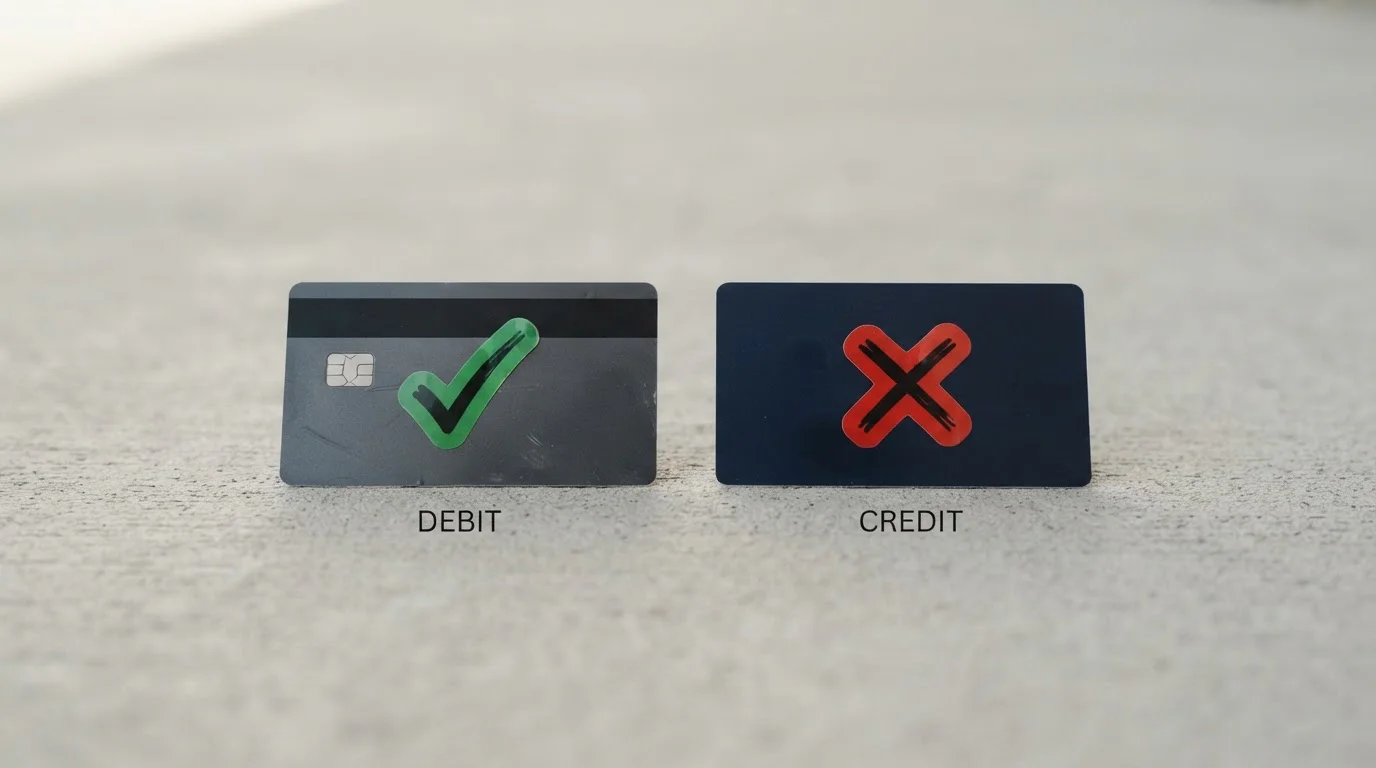
Since 14 April 2020, no UKGC-licensed operator—online or on-premises—has been allowed to accept credit card payments for gambling. The Gambling Commission announced the ban on 14 January 2020 with an implementation window to give operators time to update payment systems. The rationale was straightforward: betting with borrowed money increases harm, and people who gamble on credit are disproportionately likely to develop problems.
The ban covers direct credit card use (typing your credit card number into a casino cashier) and indirect use (funding an e-wallet like PayPal or Skrill with a credit card, then depositing from the e-wallet). Operators use Bank Identification Number (BIN) checks to distinguish credit from debit at the point of deposit. The first six digits of your card identify the issuing bank and card type; if those digits map to a credit product, the transaction declines.
Debit cards, prepaid cards loaded with your own funds, and bank transfers are unaffected. The ban elevated debit from one option among many to the default card-based payment method. Virtually every UKGC-licensed casino now lists Visa and Mastercard debit prominently in the cashier, and card acceptance is nearly universal because losing debit card functionality would cut off the majority of depositors.
Offshore operators licensed under Malta Gaming Authority, Curaçao eGaming, or other non-UK jurisdictions still accept credit cards from British players. It’s legal for a UK resident to use an offshore site, but those operators don’t hold UKGC licences and don’t participate in GAMSTOP, don’t segregate player funds under UK rules, and aren’t subject to Gambling Commission enforcement if a dispute arises. The payment freedom comes with regulatory trade-offs.
The National Centre for Social Research evaluated the credit card ban in 2023 and found measurable reductions in problem gambling indicators among people who previously used credit to gamble. The ban didn’t eliminate harm, but it removed one escalation path. Whether the policy should extend to offshore operators via ISP-level blocking is under parliamentary inquiry as of 2026, but no legislation has passed yet.
Can I use a credit card at UK online casinos?
No. The UKGC banned credit card gambling on 14 April 2020, and the ban remains fully in force in 2026. It applies to all licensed operators—online casinos, sportsbooks, bingo sites, on-premises gambling. It covers direct credit card use and indirect use (funding an e-wallet with credit, then depositing from the e-wallet). Offshore casinos licensed outside the UK still accept credit cards from British players, but those sites operate beyond UKGC jurisdiction and don’t offer the same player protections.
Visa vs Mastercard—Does the Card Network Matter?
For deposits, Visa and Mastercard debit cards are functionally identical. Both networks support 3D Secure 2 authentication, both process authorizations in seconds, and UK casinos accept both with equal enthusiasm. The BIN (Bank Identification Number) check that distinguishes credit from debit works the same way on both networks. If you’re depositing, the logo on your card makes no difference.
For withdrawals, Visa has a measurable edge in the UK market as of 2026: Visa Fast Funds (Visa Direct) is more widely adopted and more heavily marketed by operators than Mastercard Send. William Hill, Ladbrokes, and Casumo confirmed Visa Fast Funds support with sub-four-hour settlement times. Mastercard Send exists—it’s the same real-time push-to-card technology—but you won’t find it listed in casino cashiers or promoted in withdrawal FAQs the way Visa Direct is.
That marketing gap might reflect lower bank support on the Mastercard side, or it might just be that Visa got to market first and locked in partnerships. Either way, if your debit card is Mastercard and you’re optimizing for withdrawal speed, expect standard one-to-three-day settlement unless the casino explicitly states Mastercard instant payout capability.
The Fast Funds availability also depends on your bank. Not every UK bank that issues Visa debit cards supports Visa Direct. High-street banks (Barclays, HSBC, Lloyds, NatWest) generally support it. Challenger banks (Monzo, Starling, Revolut) support is inconsistent—some do, some don’t, and the casino can’t always tell in advance. If you request a Fast Funds withdrawal and your bank doesn’t support the service, the payout reverts to standard settlement (one to three days) without notifying you. You only find out when the four-hour window passes and nothing lands.
BIN checks distinguish credit from debit by reading the first six digits of your card number. Those digits map to the issuing bank and card product in the card networks’ databases. When you enter a card number at deposit, the casino queries the BIN against Visa or Mastercard’s records, sees “credit” or “debit,” and either accepts or declines based on the UK’s credit card ban. This happens before the authorization request even reaches your bank. Prepaid cards occupy a middle category: if they’re loaded with your own funds (not a line of credit), most operators treat them as debit-equivalent, though some casinos exclude prepaid cards from bonus eligibility.
What is Visa Fast Funds and which casinos offer it?
Visa Fast Funds (branded Visa Direct by the card network) is real-time push-to-card settlement that lands withdrawals in under four hours if your bank supports it. William Hill and Ladbrokes confirmed support as of 2026. Casumo tested at sub-one-hour Visa payout in independent trials. Most other UK operators use standard card settlement (one to three business days) without offering Fast Funds as an option. Mastercard Send is the Mastercard equivalent but isn’t widely marketed by UK casinos. Not all UK banks support Visa Direct—if yours doesn’t, the withdrawal reverts to standard settlement with no advance warning.
Debit Card Limits, Fees and Fine Print
Minimum deposits cluster at £5 (William Hill, Ladbrokes, Paddy Power, Betfair, Coral) or £10 (888casino, Casumo, LeoVegas, MrQ, PlayOJO). Maximum deposits per transaction aren’t capped by regulation, but operators set their own limits—typically £2,000 to £10,000 per card transaction. If you want to deposit more, you’ll need to split it across multiple transactions or use bank transfer.
Daily, weekly, and monthly deposit limits exist in two forms: limits you set yourself (responsible gambling tools every UKGC operator must offer) and limits the operator imposes (affordability checks that kick in when your spending crosses internal thresholds). You can lower your self-imposed limit anytime; raising it triggers a 24-hour cooling-off period. Operator-imposed limits based on affordability aren’t negotiable—if the casino thinks you’re spending beyond your means, they’ll cap your deposits or close your account.
Deposits above £1,000/month increasingly trigger enhanced due diligence (source-of-funds requests). That £1,000 threshold isn’t statutory; it’s an industry soft guideline that emerged from UKGC affordability consultations. Some operators request payslips at £500+/month. The trend is downward—expect tighter scrutiny in future years, not looser.
Withdrawals have minimum thresholds (usually £5–£10) and maximum transaction limits (often £2,000–£10,000, varying by operator and method). Bank transfers can handle larger sums than card withdrawals. If you win a progressive jackpot or a five-figure sum, expect the payout to be split across multiple transactions over several days or weeks, depending on the operator’s withdrawal policy.
Fees are rare on the casino side. Operators don’t charge for debit card deposits or withdrawals—they eat the interchange fees and processing costs as the price of doing business. Your bank might charge a foreign exchange fee if the casino processes transactions in a currency other than GBP, but UKGC-licensed operators overwhelmingly process in pounds to avoid this friction. Offshore casinos sometimes process in euros or dollars, triggering a 2–3% FX markup from your card issuer.
One wrinkle: you can’t withdraw to a different card than you deposited with unless the original card is no longer valid (expired, lost, replaced by your bank). If you deposited with Card A and it expires before you withdraw, the casino will ask for proof that Card B is issued to the same account holder before approving the payout to the new card. This anti-money-laundering rule prevents using one person’s card to deposit and another’s to withdraw.
Are debit card deposits and withdrawals free at UK casinos?
Yes, from the casino’s side—UKGC-licensed operators don’t charge fees for debit card deposits or withdrawals. Your card issuer might charge a foreign exchange fee if the transaction processes in a currency other than GBP, but UK-facing casinos overwhelmingly process in pounds to avoid this. Offshore operators licensed outside the UK sometimes process in euros or dollars, triggering an FX markup from your bank (typically 2–3%).
Can I withdraw to a different card than I deposited with?
Only if the original card is no longer valid (expired, lost, replaced by your bank). UK casinos must return winnings to the same payment method you deposited with as an anti-money-laundering safeguard. If your card expires between deposit and withdrawal, the casino will ask for proof that the new card is issued to the same account holder (a bank letter or card statement showing both card numbers linked to your name) before approving the payout to the replacement card.
Alternatives When Your Debit Card Doesn’t Work

If your debit card is declined repeatedly despite having funds and no gambling block, the likely culprits are fraud flags (your bank’s risk system doesn’t trust the merchant) or issuer restrictions you’re unaware of. Before assuming the casino is at fault, call your bank and ask whether they’ve flagged the transaction and whether you can approve the merchant manually.
When that doesn’t resolve it, e-wallets bypass card-issuer friction. PayPal, Skrill, Neteller, and Trustly all accept UK debit card or bank transfer funding, and once your e-wallet balance is loaded, deposits to the casino clear instantly without passing through your card issuer’s fraud systems. The trade-off is adding a middleman: you deposit from bank/card to e-wallet, then from e-wallet to casino, then withdraw from casino to e-wallet, then from e-wallet back to your bank. Each hop is another set of limits and potential delays.
Open Banking solutions (Pay by Bank, Trustly, Zimpler) link your bank account directly to the casino without using a card. You authenticate via your banking app, and the casino pulls funds straight from your account as a bank transfer. Deposits are instant or near-instant (faster than traditional bank transfers), and there’s no card number to be declined. The limitation is that not all casinos support Open Banking yet—it’s more common at newer operators than legacy platforms.
Bank transfer is the fallback that always works. Deposit via online banking (enter the casino’s account details, send the funds), and the casino credits you once the transfer clears (usually same day or next business day). Withdrawals via bank transfer take three to five business days. It’s slower than cards or e-wallets, but it bypasses card-issuer restrictions entirely and can handle larger sums than card limits allow.
Prepaid cards like Paysafecard let you fund your account with cash (buy a voucher at a shop, enter the code at the casino). Deposits are instant, but you can’t withdraw to a Paysafecard—winnings must be returned via bank transfer or e-wallet. Some casinos exclude prepaid deposits from bonus eligibility, so check the terms before using a voucher if you’re claiming a welcome offer.
The alternatives trade off speed, flexibility, and friction differently:
| Payment Method | Deposit Speed | Withdrawal Speed | Notes |
|---|---|---|---|
| Debit card (Visa/Mastercard) | Instant | 4 hours (Fast Funds) to 5 days | Payout returns to the same card |
| E-wallet (PayPal, Skrill, Trustly) | Instant | 4–24 hours | Adds a middleman hop each way |
| Open Banking (Pay by Bank, Zimpler) | Instant or near-instant | Varies by operator | No card number to be declined |
| Bank transfer | Same or next business day | 3–5 business days | Handles larger sums than card limits |
| Prepaid (Paysafecard) | Instant | Not supported | Payout routes to bank or e-wallet |
Responsible Gambling and Payment Controls
Every UKGC-licensed casino must offer deposit limits, loss limits, session time limits, and reality checks. Deposit limits cap how much you can add to your account per day, week, or month. Loss limits cap net losses over a rolling period. Session time limits log you out after a set duration. Reality checks pop up a notification after a time threshold (usually hourly) reminding you how long you’ve been playing and how much you’ve wagered.
You set these limits during signup or from your account settings. Lowering a limit takes effect immediately. Raising a limit triggers a 24-hour cooling-off period before the new threshold applies—a friction mechanism to prevent you from chasing losses in the heat of the moment. You can’t bypass the 24-hour wait by contacting support; it’s hardcoded into the platform.
GAMSTOP is the national self-exclusion scheme. If you register, every UKGC-licensed operator blocks you for the period you choose (six months, one year, five years). The block applies across all licensed sites, not just the one you self-excluded from. You can’t reverse it early—if you pick five years, you’re locked out for five years. Debit card deposits from a GAMSTOP-registered individual are declined at the payment gateway before reaching the casino.
Affordability checks are the contentious frontier. The UKGC proposed mandatory checks for net losses above £1,000 in a rolling year or £2,000 net deposits in 90 days, but after industry pushback and a consultation period, the thresholds were softened to guidance rather than hard rules. Operators now apply checks at varying levels—some at £500/month, others at £2,000+. When triggered, you’ll be asked to verify your income via payslips, bank statements, or tax returns.
If your card issuer offers a voluntary gambling block, activating it declines all transactions to merchants flagged as gambling operators. TSB, HSBC, Nationwide, Lloyds, and Barclays all offer this feature. It’s instant to enable, takes 48 hours to remove (another friction mechanism), and applies to online and in-person gambling. If you’re using this guide to compare casinos but worried about your ability to control spending, enabling the block before you deposit is more effective than relying on in-casino limits once you’re already playing.
—
Debit cards won the UK online casino payment battle by default when credit cards were banned in April 2020. The infrastructure is universal, the friction is low, and for deposits, the experience is instant. Withdrawals are where the quality gap opens: operators with Visa Fast Funds support pay you in four hours, the rest take one to five business days, and many conflate approval time with settlement time in their marketing.
The twelve operators above span high-street heritage (William Hill, Ladbrokes, Coral), digital-first platforms (Casumo, LeoVegas, 888casino), and transparency-focused challengers (MrQ, PlayOJO, kwiff, Midnite). Every licence number is verified on the Gambling Commission register as of April 2026. Every withdrawal speed qualifier separates operator approval from actual card settlement. If you’re filtering casinos by payment method, the method’s speed and the verification burden are the variables that matter—because acceptance is universal, but execution is not.
Casino Deposit Methods UK 2026 — Compare Payment Options
Content created by the «casinopayexp» team