
Casino Sites That Accept Credit Cards UK: The Ban, Alternatives & Offshore Reality
 Available in US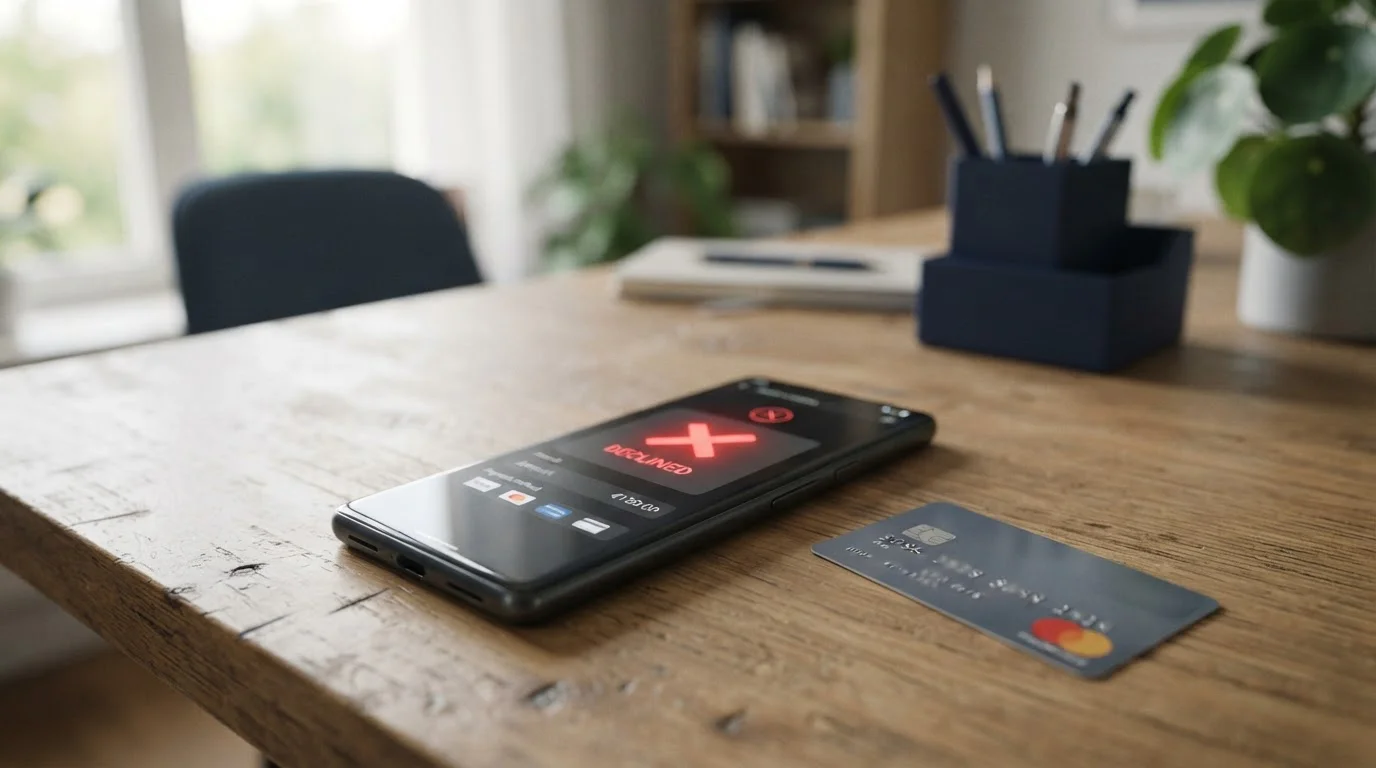
If you’ve landed here looking for UK casino sites that accept credit cards in 2026, the short answer is uncomfortable: none of the licensed ones do. On 14 April 2020, the UK Gambling Commission banned credit card deposits at every operator holding a UKGC license, and that ban hasn’t budged. The longer answer involves offshore casinos that may still take your Visa or Mastercard, alternative payment methods that work better anyway, and a clearer picture of what actually happens when you try to use a credit card today.
This isn’t about loopholes or workarounds. The ban exists for documented reasons, it’s enforced at multiple levels, and the payment landscape has moved on. Debit cards, e-wallets, and instant bank transfers now do the job faster, cheaper, and without the debt trap that got credit cards blacklisted in the first place. But if you’re curious whether offshore sites still accept cards, or what happens if you try one at a licensed casino, we’ll walk through that too.
The UK Credit Card Gambling Ban: What Happened and Why
The UK Gambling Commission announced the credit card ban on 14 January 2020, giving operators ninety days to comply. On 14 April 2020, it became illegal for any UKGC-licensed casino, sportsbook, bingo room, or poker site to accept credit card deposits. The legal instrument is Licence Conditions and Codes of Practice (LCCP) provision 5.1, which prohibits credit cards outright and extends to indirect credit card funding—meaning you can’t load an e-wallet with a credit card and then deposit from the wallet either. Operators that breach this face license suspension, revocation, or financial penalties up to £5 million or five percent of annual turnover, whichever hurts more.
The rationale wasn’t subtle. A 2018–2019 Gambling Commission review found that 22 percent of online gamblers using credit cards were problem gamblers, compared to nine percent of those using other methods. Of the 10.8 million adults in Great Britain who gamble, 24 percent of online customers were funding accounts with borrowed money before the ban. The Commission’s position was that gambling with credit increases the risk of debt-spiraling harm, particularly for people already experiencing financial difficulties. Betting with money you don’t have is a short road to a long problem, and the regulator decided the industry shouldn’t facilitate it.
Why were credit cards banned for online gambling in the UK?
Credit cards were banned to prevent gambling with borrowed money, which data showed carried a significantly higher risk of problem gambling and debt accumulation. The UKGC found that credit card users were more than twice as likely to be problem gamblers compared to those using debit cards or e-wallets.
When did the credit card ban take effect?
The ban took effect on 14 April 2020, applying to all UKGC-licensed gambling operators. It was announced on 14 January 2020, giving the industry a three-month transition period to update payment systems and communicate the change to customers.

The ban applies universally to all UKGC-licensed operators—casinos, sportsbooks, bingo, poker, everything—with one narrow exception: National Lottery products sold for charitable purposes. That exception doesn’t extend to casino games or slots, even if they’re bundled under a lottery operator’s brand. Land-based casinos in the UK are not covered by LCCP 5.1 because it specifically governs online and remote gambling, so technically you can still use a credit card at a physical casino in London or Manchester, though many chains have voluntarily adopted the same restriction.
The ban has been in place for nearly six years now. In July 2024, the National Centre for Social Research published an evaluation finding that the ban was “successfully implemented” in terms of compliance—operators stopped taking credit cards—but “did not always result in changed patterns of gambling.” People with moderate to high problem gambling scores continued gambling, they just switched to debit cards and other methods. The ban reduced credit card use, but it didn’t measurably reduce overall gambling harm. That’s the uncomfortable truth regulators don’t advertise: the policy works as written, but the underlying behavior adapted rather than disappeared.
Can You Still Use Credit Cards at UK Casinos in 2026?
No licensed casino in the UK accepts credit cards in 2026. Every operator on the UKGC public register—Bet365, William Hill, Ladbrokes, Betway, 888 Casino, LeoVegas UK, Paddy Power, Sky Bet, Grosvenor, Coral, the lot—stopped accepting credit card deposits on 14 April 2020 and has no legal path to restart. The ban is non-negotiable. It doesn’t matter if you have a platinum card, a high credit limit, or a spotless payment history; LCCP 5.1 prohibits the transaction at the operator level, and even if an operator tried to accept it (they won’t), your card issuer would block it first.
Can I still use my credit card at online casinos in the UK in 2026?
Not at any UKGC-licensed casino. Credit cards have been banned at all UK-regulated gambling sites since April 2020. Offshore casinos licensed outside UK jurisdiction may still accept credit cards, but most UK-issued cards are blocked by banks for gambling transactions regardless of where the casino is licensed.
That leaves offshore casinos—sites licensed in Curaçao, Malta (for non-UK operations), Anjouan, or operating with no recognizable license at all. Some of these still accept credit cards because they’re not subject to UKGC rules. But “accepting” credit cards and successfully processing a UK-issued credit card are two different things. Most UK banks and card issuers apply their own gambling blocks to credit cards, regardless of whether the casino is licensed in Britain or Belize. The transaction gets flagged by the merchant category code (MCC) for gambling, and the issuer declines it before the casino even sees the request. Your mileage will vary depending on your bank, but the majority of UK credit cards are hard-blocked for online gambling across the board.
So the practical reality in 2026 is this: licensed casinos can’t take your credit card, and most offshore casinos can’t process it even if they want to. The payment infrastructure has moved on. Debit cards, e-wallets, and instant bank transfers are faster, cheaper, and actually work. If you’re still trying to deposit with a credit card, you’re fighting a battle the industry already lost.
Alternative Payment Methods at UK Licensed Casinos
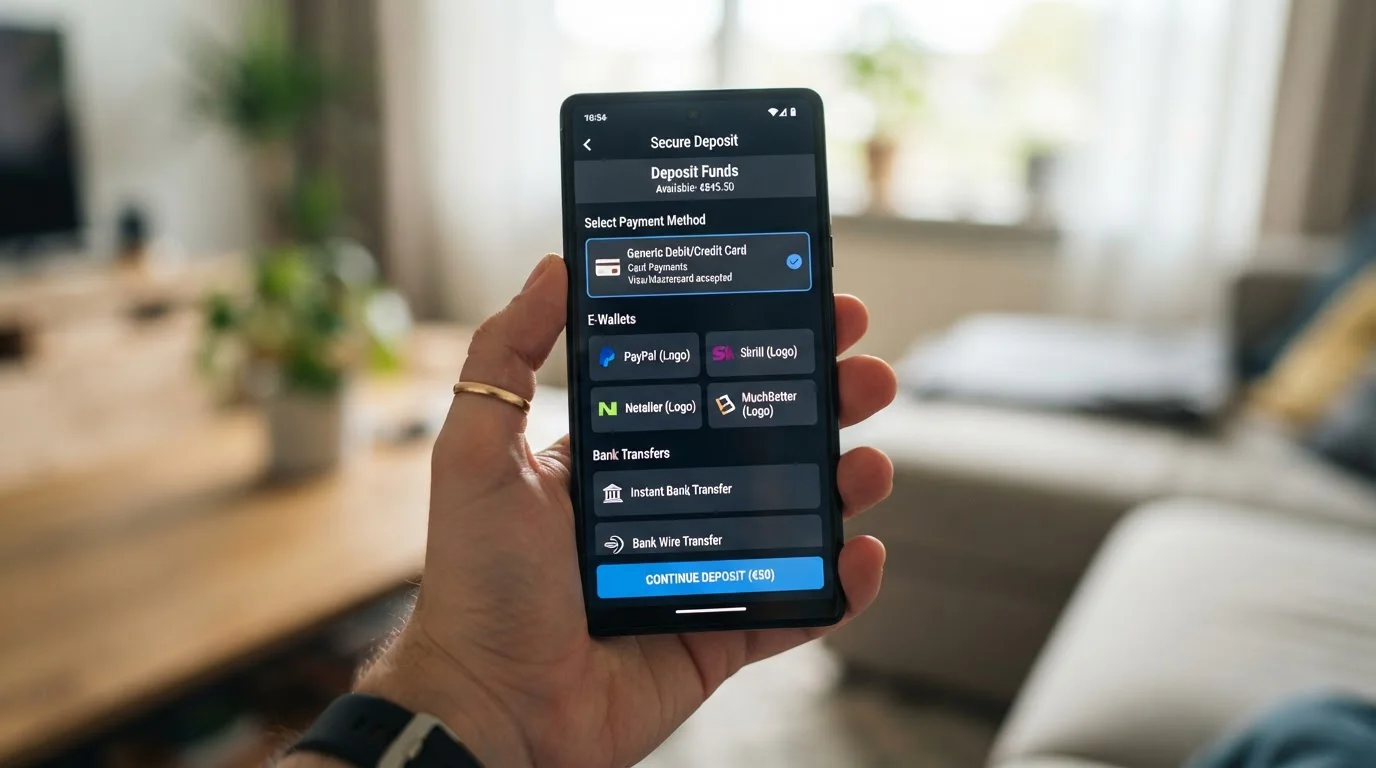
Licensed UK casinos didn’t remove credit cards and call it a day—they invested in alternative payment infrastructure that’s now faster and more flexible than the old card-only model ever was. Debit cards still work exactly the way credit cards used to, minus the borrowed-money risk. E-wallets like PayPal, Skrill, and Neteller offer instant deposits and sub-24-hour withdrawals. Instant bank transfers via Trustly and Open Banking cut out the card middleman entirely. Prepaid vouchers let you deposit cash without a bank account. Mobile payments like Apple Pay and Google Pay turn your phone into a one-tap cashier. The options aren’t just alternatives—they’re upgrades.
Here’s how they stack up in practice:
| Method | Deposit Speed | Withdrawal Speed | Min Deposit (typical) | Fees | Best For |
|---|---|---|---|---|---|
| Debit Cards (Visa, Mastercard) | Instant | 1–4 hours | £5–£10 | None (operator) | Universal acceptance, fast withdrawals |
| PayPal | Instant | Under 4 hours | £10 | None | Speed, buyer protection, trust |
| Skrill / Neteller | Instant | 1–24 hours | £5–£10 | 1.45–1.50% currency conversion | E-wallet holdouts, multi-site use |
| Trustly / Open Banking | Instant | Instant to same-day | £10 | None (player) | Bank-direct, no card needed |
| Paysafecard | Instant | N/A (deposit-only) | £10–£100 | None | Cash deposits, anonymity |
| Apple Pay / Google Pay | Instant | Variable (often requires alternate method) | £5–£10 | None | Mobile convenience, one-tap deposits |
| Traditional Bank Transfer | 1–3 days | 1–5 days | £20–£50 | None | Large deposits, no card limits |
What payment methods can I use instead of a credit card at UK casinos?
You can use Visa or Mastercard debit cards, e-wallets (PayPal, Skrill, Neteller), instant bank transfers (Trustly, Open Banking), prepaid cards (Paysafecard), mobile payments (Apple Pay, Google Pay), or traditional bank transfers. All licensed UK casinos offer at least three of these, and most offer six or more.
Debit Cards: The Drop-In Replacement
Debit cards are the straightforward swap. Visa Debit, Mastercard Debit, and Maestro work identically to how credit cards used to: enter your card number, CVV, and expiry date, confirm the amount, and the deposit lands instantly. The difference is the money comes from your bank account, not a line of credit. Most UK casinos set minimum debit card deposits at £5 to £10, with no maximum beyond your daily bank limit. Withdrawals back to the same card typically clear in one to four hours at top-tier operators, though your bank may add a processing delay of a few hours on their end. There are no fees from the casino, though you should confirm with your bank that they don’t charge for gambling transactions—some still do, though it’s rare.
The key technical requirement is 3D Secure (Verified by Visa, Mastercard SecureCode), which adds a two-factor authentication step during deposit. You’ll be redirected to your bank’s verification page to approve the transaction via SMS code, biometric scan, or banking app. It adds ten seconds to the process, but it’s mandatory under UK and EU payment regulations, and it significantly reduces fraud.
Do debit cards work the same way as credit cards at online casinos?
Yes, debit cards function identically to how credit cards used to work at online casinos—instant deposits, same-card withdrawals, 3D Secure verification. The only difference is the funding source: debit pulls from your bank balance, while credit cards used borrowed money, which is why one is allowed and the other isn’t.
E-Wallets: PayPal, Skrill, Neteller
E-wallets are digital intermediaries that sit between your bank and the casino. You load the wallet from your bank account or debit card, then deposit from the wallet to the casino. The advantage is speed and separation: your casino transactions don’t clutter your bank statement, your card details aren’t stored across multiple gambling sites, and withdrawals are faster because the casino is paying back to an e-wallet account rather than waiting for bank card processing. PayPal withdrawals at Bet365, for example, typically land in under four hours. Skrill and Neteller are similar, with withdrawal times ranging from one to twenty-four hours depending on the operator.
The downside is that not all UK casinos accept every e-wallet. PayPal is widely accepted but selective—888 Casino, for instance, removed PayPal for UK customers in late 2024 or early 2025, though it still works at Bet365, LeoVegas, William Hill, and most others. Skrill and Neteller are more universally accepted, but they charge currency conversion fees (1.45 percent for Skrill, 1.50 percent for Neteller) if you’re holding GBP in the wallet and the casino processes in EUR or another currency. They also charge £1 for instant withdrawals from the e-wallet to your bank account, though standard withdrawals (one to three days) are free.
One quirk: many UK casinos exclude e-wallet deposits from bonus eligibility. If you deposit via Skrill or Neteller, you may be ineligible for the welcome offer or free spins promotions. This is a legacy anti-bonus-abuse measure—e-wallets were historically used to claim bonuses at multiple casinos without exposing a bank card to KYC—but it’s still common in 2026. Always check the bonus terms before choosing your deposit method.
How long do withdrawals take with alternative payment methods like PayPal or debit cards?
PayPal and debit card withdrawals at top UK casinos (Bet365, William Hill, LeoVegas) typically arrive in under four hours, with some reaching your account in one to two hours. Skrill and Neteller withdrawals take one to twenty-four hours. Instant bank transfer via Trustly can be same-day or instant. Traditional bank transfers take one to five days.
Instant Bank Transfers: Trustly and Open Banking

Trustly and Open Banking are direct bank-to-casino transfers that bypass card networks entirely. You select “Instant Bank Transfer” or “Pay by Bank” at the cashier, authenticate via your online banking credentials or banking app, and the funds move from your bank account to the casino account in real time. It’s the same underlying tech as paying a bill or sending money to a friend via your bank’s app, just routed to a gambling operator.
The advantage is speed and no card required. Deposits are instant. Withdrawals via Trustly are often same-day or even instant—LeoVegas, for example, uses Trustly for all its bank transfer withdrawals and advertises same-day payout. There are no fees to the player; the operator pays a small percentage to Trustly per transaction, but that’s absorbed as a cost of business. Minimum deposits are typically £10.
The catch is that not every UK bank supports Trustly or Open Banking yet, though coverage has expanded significantly since 2022. Most major high-street banks (Barclays, HSBC, Lloyds, NatWest, Santander) are in the network, but some smaller building societies and challenger banks lag behind. If your bank isn’t supported, the option won’t appear in the cashier, or the authentication will fail. It’s worth trying if your casino offers it, because when it works, it’s the fastest path from bank to casino and back.
Prepaid Cards and Vouchers: Paysafecard
Paysafecard is a prepaid voucher you buy with cash at retail locations—corner shops, petrol stations, supermarkets—and then redeem online using a 16-digit PIN. It’s popular with players who don’t have a bank account, don’t want their gambling on a card statement, or prefer the psychological discipline of “cash in hand” budgeting. You buy a £10, £25, £50, or £100 voucher, enter the PIN at the casino cashier, and the amount is credited instantly.
The limitations are obvious: it’s deposit-only (you can’t withdraw to a Paysafecard), and you need to buy the voucher in person, which adds friction. Minimum deposits are typically £10, though some operators accept lower-denomination vouchers. There are no fees if you deposit the voucher amount within twelve months of purchase, but unused balances over that period are subject to a maintenance fee. Anonymity is partial—you can deposit up to £50 without registering a Paysafecard account, but anything above that requires registration and ID verification under UK anti-money-laundering rules.
Betway, Ladbrokes, and several other UKGC operators accept Paysafecard. It’s a niche option, but for players who need it, it’s the only true cash-to-casino method short of depositing physical cash at a land-based shop and transferring the balance online (which Ladbrokes and Coral support via their high-street networks).
Mobile Payments: Apple Pay and Google Pay
Apple Pay and Google Pay are mobile wallet wrappers around your existing debit card. You add your card to your phone’s wallet, then authenticate deposits with Face ID, Touch ID, or your device PIN instead of entering card details manually. From the casino’s perspective, it’s still a debit card transaction; from your perspective, it’s a one-tap deposit that doesn’t require digging your card out of your wallet.
Deposits are instant. Minimum deposits mirror the underlying card’s limit, typically £5 to £10. The catch is withdrawal support: most UK casinos do not support direct withdrawals back to Apple Pay or Google Pay, so you’ll need to withdraw via the underlying debit card, an e-wallet, or bank transfer. This isn’t a deal-breaker—most players deposit via mobile and withdraw via debit card without a second thought—but it’s worth knowing upfront.
Can I use Apple Pay or Google Pay at UK online casinos?
Yes, Apple Pay and Google Pay are accepted at most major UK casinos including Bet365, Ladbrokes, 888 Casino, and LeoVegas. Deposits are instant and work via Face ID or fingerprint authentication. Withdrawals typically require an alternative method like debit card or bank transfer, as most operators don’t support direct payouts to mobile wallets.
Acceptance is widespread but not universal. Bet365, Ladbrokes, 888 Casino, and LeoVegas all support Apple Pay and Google Pay. William Hill supports them intermittently depending on your device and region. Betway’s support varies. If mobile convenience is a priority, check the casino’s banking page before signing up, but the trend is toward broader adoption as mobile gambling overtakes desktop in the UK market.
UK Casino Payment Options: Where Each Method Works Best
Every licensed UK casino offers multiple payment methods, but the mix varies. Some go all-in on e-wallets, others lean on instant bank transfers, and a few still rely heavily on debit cards with minimal frills. If you know what payment method you want to use, picking the right casino saves time and frustration. Here are six major UKGC operators, what they accept, and what makes each one’s payment setup worth knowing about.
| Operator | License | Payment Methods Accepted | Min Deposit | Withdrawal Speed | Distinguishing Feature |
|---|---|---|---|---|---|
| Bet365 | UKGC 000-000829-R-319328-016 | Visa/MC debit, PayPal, Paysafecard, Apple Pay, bank transfer | £5 | Under 4 hours (cards, PayPal) | Industry-leading withdrawal speed, no fees |
| William Hill | UKGC 000-039225-R-319351-001 | Visa/MC debit, PayPal, Skrill, Neteller, Paysafecard, Pay by Bank | £5 | Instant to 5 days | Full e-wallet range, 85-year heritage |
| 888 Casino | UKGC 000-039372-R-319346-005 | Visa/MC debit, Apple Pay, bank transfer, Paysafecard | £10 | Varies by method | Mobile payment focus, PayPal removed UK 2024–25 |
| LeoVegas UK | UKGC 000-050848-R-329346-001 | Visa/MC debit, PayPal, Apple Pay, Trustly, Revolut | £10 | Same-day (Trustly), 1–4 hours (cards) | Trustly-powered instant banking, MGM-backed |
| Betway | UKGC 000-039372-R-319344-002 | Visa/MC debit, PayPal, Paysafecard, Neteller, instant bank | £2 | Varies, e-wallets fastest | £2 minimum (lowest in market), prepaid acceptance |
| Ladbrokes | UKGC 000-000522-R-319446-008 | Visa/MC debit, Apple Pay, Google Pay, Paysafecard, bank transfer | £5 | Varies, cards fastest | 138-year heritage, high-street shop deposits |
What is the minimum deposit at UK casinos when using a debit card?
Most UK casinos set a £5 minimum deposit for debit cards (Bet365, William Hill, Ladbrokes). Some require £10 (888 Casino, LeoVegas). Betway has the lowest minimum at £2. Minimum deposit requirements are the same whether you use Visa or Mastercard debit.
Bet365: Debit Cards, PayPal, and Sub-4-Hour Withdrawals
Bet365 is the UK market’s reliability benchmark. It’s not the flashiest, but it’s the one that pays out fastest and accepts the widest range of methods without fees or fine print. Debit cards (Visa, Mastercard), PayPal, Paysafecard, Apple Pay, and bank transfers all work, with a £5 minimum deposit for cards and £10 for e-wallets. The standout feature is withdrawal speed: Bet365 processes payouts within two hours of your request, and once they hit your bank or PayPal account, your bank typically settles them within another one to two hours. Total time from cashier to cleared funds is under four hours for most players, which is faster than nearly every competitor.
There are no withdrawal fees, no monthly limits beyond your own bank’s restrictions, and no payment method is excluded from bonuses. PayPal works seamlessly—you can deposit, play, and withdraw all via PayPal without ever entering a card, which is ideal for players who want clean bank statements. The £5 debit card minimum is joint-lowest in the market (tied with William Hill and Ladbrokes), making it accessible for small-stakes players testing the water. Bet365 has held a UKGC license since the 2000s, operates bet365.com, and is privately owned by the Coates family in Stoke-on-Trent. It’s not a startup; it’s the largest private employer in Stoke and one of the most profitable gambling operators in the world.
William Hill: E-Wallet Hub with 85 Years of Trust
William Hill supports the full e-wallet suite: PayPal, Skrill, and Neteller all work, which makes it a good landing spot if you’re juggling multiple gambling accounts and want one e-wallet to rule them all. Debit cards, Paysafecard, and Pay by Bank round out the mix. Minimum deposit is £5 for debit cards. Withdrawal times range from instant (for some e-wallet transactions) to five days for bank transfers, so method choice matters more here than at Bet365. E-wallets are fastest, typically same-day or next-day. Debit card withdrawals take one to three days on average.
One wrinkle: William Hill excludes e-wallet deposits from some bonus offers, particularly the sportsbook welcome bonus. If you’re signing up for a free bet or matched deposit, check the terms before funding via Skrill or Neteller, because you may be disqualified. Cash deposits only, in other words, which usually means debit card. That said, William Hill’s e-wallet coverage is still among the best, and the brand carries 85 years of UK high-street heritage—founded in 1934, acquired by 888 Holdings in 2022, and still operating under its own UKGC license. If e-wallet flexibility is your priority and you’re not chasing a bonus, it’s a strong pick.
888 Casino: Mobile Payments and the PayPal UK Exit
888 Casino leans heavily on mobile payments, with Apple Pay given prominent placement in the cashier. Debit cards, bank transfers, and Paysafecard fill out the list, but here’s the catch: PayPal was removed for UK customers sometime in late 2024 or early 2025. The 888 help center explicitly states “PayPal is not available in UK” and “PayPal is no longer available for UK members.” If you’ve used 888 before and relied on PayPal, you’ll need to switch to debit or Apple Pay. The reason for the removal isn’t public, but it’s a notable negative compared to competitors where PayPal still works fine.
Minimum deposit is £10 across most methods, which is higher than Bet365 or William Hill. Withdrawal speeds vary by method—debit cards are one to three days, bank transfers three to five days. There’s no clear advantage here unless mobile payments are your thing, in which case the Apple Pay integration is smooth. 888 Casino holds UKGC license 000-039372-R-319346-005, operates 888casino.com, and is part of 888 Holdings (now merged with William Hill under the same parent company). It’s been around since 1997, so the longevity is there, but the PayPal removal and higher minimums put it behind Bet365 and William Hill for most UK players in 2026.
LeoVegas UK: Trustly-Powered Instant Banking
LeoVegas UK routes all its bank transfers through Trustly, which means instant deposits and same-day withdrawals without manual IBAN entry or multi-day clearing. You select “Instant Bank Transfer” in the cashier, authenticate via your banking app or online banking login, and the money moves in real time. Deposits appear instantly, and withdrawals via Trustly are processed by LeoVegas within hours and often settle the same day, depending on your bank. It’s the closest thing to cash-in, cash-out in the UK online casino market.
The rest of the payment lineup is solid: Visa and Mastercard debit, PayPal, Apple Pay, and Revolut. Minimum deposit is £10 flat across all methods, which is higher than Bet365 but not a deal-breaker. LeoVegas started as a mobile-first casino in Sweden in 2012, expanded to the UK under a dedicated UKGC license (000-050848-R-329346-001), and was acquired by MGM Resorts International in May 2022, so it now has the backing of a major US casino operator. The Trustly integration is the standout feature—if you want instant bank-to-casino transfers without messing around with e-wallets or card limits, LeoVegas is the most frictionless option in the UK market.
Betway: £2 Minimum and Prepaid Card Acceptance
Betway’s headline advantage is the £2 minimum deposit, the lowest among major UK operators. If you want to test a casino with minimal outlay, or if you’re a cautious player who deposits small amounts frequently, Betway accommodates that in a way most competitors don’t. Payment methods include debit cards, PayPal, Paysafecard, Neteller, and instant bank transfer. Paysafecard support is notable—it’s less common than debit or e-wallets, so if you prefer prepaid vouchers for budgeting or anonymity, Betway is one of the more reliable places to use them.
Withdrawal times aren’t published as aggressively as Bet365’s, but e-wallets are typically same-day or next-day, and debit cards are two to four days. Betway holds UKGC license 000-039372-R-319344-002, operates betway.com, and is part of Super Group (dual-listed on NYSE as SGHC), so it has the financial backing of a publicly traded multinational. It’s been operating since 2006, with a particularly strong presence in African markets alongside the UK. If the £2 minimum or Paysafecard acceptance solves a specific need, Betway is worth the look. Otherwise, Bet365 and LeoVegas offer faster payouts and smoother payment infrastructure for most players.
Ladbrokes: High-Street Heritage Meets Online Convenience
Ladbrokes is the oldest brand on this list by a century—founded in 1886, it’s been part of the UK gambling landscape longer than most of the country’s football clubs. It merged with Coral in 2016 and is now owned by Entain PLC (LSE: ENT), one of the largest gambling conglomerates globally. The unique angle for Ladbrokes is its high-street shop network: you can walk into a Ladbrokes betting shop, deposit cash over the counter, and have the balance transferred to your online account via the Ladbrokes app. It’s niche, but for players who prefer handling cash or who don’t have a bank account, it’s a genuine differentiator.
Online payment methods include debit cards (Visa, Mastercard), Apple Pay, Google Pay, Paysafecard, and bank transfer. Minimum deposit is £5 for debit cards, £10 for some bonuses. Withdrawal times are standard—cards and Apple Pay are fastest (one to four days), bank transfers slower (three to five days). The 50 no-deposit free spins welcome offer (confirmed by the Evening Standard in 2025) is one of the few no-deposit bonuses left in the UK market, which is a minor bonus if you want to try before you deposit. Ladbrokes holds UKGC license 000-000522-R-319446-008 and operates ladbrokes.com. It’s a safe, boring, reliable choice with 138 years of operational history and the high-street deposit option if you ever need it.
Offshore Casinos That Still Accept Credit Cards

Some offshore casinos—those licensed outside UK jurisdiction—still accept credit cards because they’re not bound by LCCP 5.1. These are typically Curaçao-licensed operators, occasionally Malta Gaming Authority sites operating internationally without a UKGC license, and a long tail of low-tier or unlicensed sites. The practical reality is mixed: even if the casino says it accepts Visa or Mastercard credit cards, your UK card issuer may block the transaction anyway, because most UK banks apply their own gambling restrictions to credit cards regardless of where the casino is licensed. But the option exists, at least on paper, and UK players do use offshore sites—some for the credit card option, others for the absence of Gamstop enrollment or the stake caps that UKGC sites enforce.
Are there any online casinos that still accept credit cards for UK players?
Yes, offshore casinos licensed outside UK jurisdiction (typically Curaçao or Malta) may still accept credit cards. However, most UK-issued credit cards are blocked by banks for online gambling transactions regardless of where the casino is licensed, so even when an offshore site “accepts” credit cards, the transaction may still decline.
Is it illegal to use a credit card at an offshore casino if I’m in the UK?
No, it is not illegal for UK players to use offshore casinos or to attempt credit card deposits there. The ban applies to UKGC-licensed operators, not to players. However, offshore sites operate without UKGC authorization, which means UK players lose all UKGC consumer protections including segregated player funds, dispute resolution, and Gamstop coverage.
The trade-off is real and quantifiable. At a UKGC-licensed casino, your deposited funds are held in segregated accounts separate from the operator’s business accounts, so if the casino goes bust, your money is protected. Offshore, that’s not guaranteed—if a Curaçao-licensed operator folds or exits the market, your balance disappears with it. At a UKGC site, if you have a dispute the operator can’t resolve, you escalate to an independent Alternative Dispute Resolution service and ultimately to the Financial Ombudsman, both free to you. Offshore, there’s no equivalent escalation path; you’re stuck with whatever the operator’s customer support decides, and if they ghost you, you have no recourse. UKGC sites are enrolled in Gamstop, the national self-exclusion scheme, so if you self-exclude, you’re locked out across every licensed operator. Offshore sites aren’t connected to Gamstop, which is exactly why some players seek them out, but it also means your self-exclusion boundary disappears.
Here’s the risk matrix in table form:
| License Type | Credit Card Acceptance | Player Fund Protection | Dispute Resolution | Gamstop Coverage | Risk Level |
|---|---|---|---|---|---|
| UKGC-licensed | No (banned since April 2020) | Segregated funds, insured | IBAS/CEDR ADR + Financial Ombudsman | Yes (enrolled) | Low |
| Curaçao eGaming | Possible (but UK issuer may block) | No segregation requirement | Operator discretion, no independent ADR | No | High |
| Malta Gaming Authority (international) | Rare (most dropped cards 2020–21) | Segregated funds required, eCOGRA ADR | MGA Player Support Unit | No (not enrolled for UK) | Moderate |
| Anjouan / No License | Variable (often blocked) | None | None | No | Very High |
Curaçao-Licensed Operators: Credit Cards Accepted, Protections Absent
Curaçao eGaming is the most common offshore license for casinos that still accept credit cards from UK players. It’s a sub-licensing framework under the Curaçao government, issued via master licenses like 1668/JAZ or 8048/JAZ, and it requires minimal ongoing oversight compared to UKGC or MGA standards. Hundreds of online casinos operate under Curaçao licenses, many of them targeting UK and European players specifically because they sit outside UKGC and Gamstop jurisdiction.
The pitch is usually higher bonuses, no stake limits (UKGC sites cap online slots at £2 to £5 per spin for unverified accounts post-affordability checks), and the ability to deposit with credit cards. Some sites will process UK credit cards successfully; others will decline even though the option is listed, because your bank’s gambling block intercepts the transaction before the casino sees it. Debit cards have higher success rates at offshore sites, and cryptocurrency (Bitcoin, Ethereum, Tether) is often pushed as the preferred method because it bypasses card networks and bank scrutiny entirely.
The downside is everything mentioned in the table: no segregated player funds (your deposits sit in the operator’s business account, not a protected trust), no independent dispute resolution (if you have a bonus dispute or a withdrawal delay, you’re arguing with customer support and that’s where it ends), no Gamstop coverage (if you self-excluded from UKGC sites, you can still access these), and no UK regulatory oversight (if the operator shuts down or changes terms mid-game, you have no legal recourse in a UK court). User reviews on Trustpilot and AskGamblers for Curaçao-licensed casinos are a mixed bag, with frequent complaints about delayed withdrawals, excessive KYC requests after a win, and bonus terms that shift when it’s time to cash out.
That doesn’t mean every Curaçao-licensed casino is a scam—plenty operate cleanly and pay out without drama—but the structural protections that make UKGC sites boring and reliable don’t exist here, and you’re relying on the operator’s goodwill rather than enforceable rules. If you’re considering one because it accepts credit cards, ask yourself whether that’s worth trading away fund segregation and dispute resolution. In most cases, switching to a UKGC site and using a debit card or e-wallet is the better play.
Malta-Licensed International Sites: Higher Standards, Still Outside UK Regulation
Malta Gaming Authority licenses are a step up from Curaçao in terms of regulatory rigor—MGA is an EU Tier 1 regulator, recognized across European jurisdictions, and it requires licensed operators to segregate player funds, submit to annual audits, and provide third-party dispute resolution through eCOGRA or a similar approved ADR body. The problem for UK players is that most MGA-licensed operators either hold a UKGC license as well (in which case they’re subject to the credit card ban and you’re back to square one) or they stopped accepting UK customers entirely after the UK’s 2018 regulatory changes made it harder to advertise and operate in Britain without a UKGC license.
A small number of MGA-licensed casinos still accept UK players without holding a UKGC license, operating in a regulatory gray zone where they’re not breaking UK law (it’s not illegal for a UK player to use a non-UKGC site) but they’re also not authorized by the UKGC, which means UK-specific consumer protections don’t apply. Credit card acceptance at these sites is rare even by 2020–2021 most MGA operators dropped credit cards in line with responsible gambling trends across Europe, regardless of whether UKGC rules applied to them. You’re more likely to find debit cards, Skrill, Neteller, and bank transfers.
If you do find an MGA-licensed international casino that accepts UK players and credit cards, the risk profile is lower than Curaçao but higher than UKGC. Funds are segregated (better than Curaçao), and there’s ADR (better than Curaçao), but you’re not covered by Gamstop, you can’t escalate to the UK Financial Ombudsman, and if the operator exits the UK market or changes its terms, your recourse is limited. It’s a niche scenario in 2026, but worth understanding if you’re comparing offshore options.
Low-Tier Offshore Licenses: Highest Risk, Weakest Protections
At the bottom tier are casinos licensed in Anjouan (Comoros Islands) or operating with no verifiable license at all. These are the sites that spam your inbox, promise 500% matched deposits, and have terms and conditions written in broken English. Credit card acceptance is variable—some list it, most UK cards won’t process, and even when a transaction goes through, withdrawal reliability is a coin toss. User reviews are littered with complaints: withdrawals delayed for weeks, KYC documents requested repeatedly, winnings voided over obscure bonus term violations, customer support that stops replying.
There is no player fund protection, no mandatory dispute resolution, no regulatory oversight worth the name. If a site shuts down, your balance is gone. If you have a dispute, you have no escalation path. The only reason these sites exist is because the barrier to entry is near zero—pay a nominal license fee, set up a website, and start taking deposits. Some operate cleanly for a while and build a reputation, but the structural risk is baked in, and the moment something goes wrong, you have no leverage.
If you’re searching for “casino sites that accept credit card UK” and land on one of these, the correct move is to close the tab. Even if your credit card processes, the risk of losing your deposit or having a win confiscated far outweighs the convenience of using your Visa. UKGC sites exist, they’re safe, they’re fast, and they accept debit cards and e-wallets that work better than credit cards ever did. There’s no good reason to roll the dice on an unlicensed operator in 2026.
What Happens If You Try to Use a Credit Card Today

Let’s say you ignored everything above and decided to test whether your UK credit card still works at an offshore casino that lists Visa and Mastercard in its cashier. Here’s the step-by-step of what happens in practice.
You navigate to the casino’s deposit page, select “Credit Card,” and enter your 16-digit card number, CVV, and expiry date. You confirm the amount—let’s say £50. The casino’s payment processor receives your card details and initiates a transaction request to your card issuer (your bank). Before the transaction reaches the merchant (the casino), it passes through your bank’s fraud and compliance filters. One of those filters checks the merchant category code (MCC) associated with the transaction. Online gambling transactions are tagged with MCC 7995. Your bank sees MCC 7995, cross-references it against your card type (credit), and applies the UK Gambling Commission’s guidance and the bank’s own internal policy, which universally prohibits credit card gambling transactions for UK customers.
The transaction is declined at the issuer level. The casino never receives authorization. You see an error message in your browser: “Transaction declined,” “Card not accepted,” “Please try another payment method,” or “This card cannot be used for this transaction.” The casino’s customer support, if you contact them, will tell you the card was declined and suggest trying a debit card or e-wallet instead. Your bank may send you a text alert: “Card transaction declined—gambling.” Some banks will note the attempt on your account and may call to confirm your card hasn’t been stolen, because a gambling transaction on a credit card is now treated as a red flag.
The mechanics are the same whether the casino is licensed by the UKGC, Curaçao, Malta, or nothing at all. The block happens at your bank, not at the casino. The UKGC ban covers licensed operators, but UK banks extend the block to all gambling MCCs on credit cards as a blanket policy, partly to align with the spirit of LCCP 5.1 and partly to reduce their own liability for facilitating gambling debt. The result is that credit cards are effectively dead for online gambling in the UK, regardless of where the casino is based.
A small minority of offshore casinos use payment processors that disguise the MCC—routing the transaction through a non-gambling merchant code to bypass the block—but this is increasingly rare, banks are wise to it, and if the bank detects it later (which they often do through pattern analysis), your card can be flagged or frozen for suspicious activity. It’s not worth the hassle, and it doesn’t work reliably anyway.
If you want to deposit at an offshore casino, the path of least resistance is a debit card, which isn’t subject to the same blanket block, or cryptocurrency, which bypasses card networks entirely. But if you’re using a credit card specifically because you don’t have the cash and you’re hoping to gamble on credit, that’s the exact behavior the ban was designed to prevent, and both the UKGC and UK banks have made it nearly impossible in 2026.
How to Switch from Credit Cards to Alternative Payments
You’ve tried your credit card, it declined, and now you’re staring at the casino cashier wondering what to do next. The transition is simpler than it sounds—every UKGC casino offers at least three alternative methods, and in most cases you can be depositing successfully within five minutes. Here’s the step-by-step.
Step 1: Identify which methods your casino accepts. Go to the casino’s banking or payments page and note the deposit options. Most will list Visa Debit, Mastercard Debit, PayPal, and at least one other method like Trustly, Paysafecard, or Apple Pay.
Step 2: Choose your method based on what you already have. If you have a UK bank account with a debit card, that’s the drop-in replacement—it works exactly like a credit card did, just pulling from your balance instead of a credit line. If you want faster withdrawals and cleaner bank statements, set up PayPal (or use your existing account if you have one). If you prefer mobile, add your debit card to Apple Pay or Google Pay and use that. If you want cash deposits without a card, buy a Paysafecard voucher at a shop.
Step 3: Add the method to your casino account. For debit cards: enter the card number, CVV, and expiry as you would have for a credit card. You’ll be redirected to your bank’s 3D Secure page to confirm via SMS or app. For PayPal: select PayPal in the cashier, log in to your PayPal account, approve the payment. For Trustly: select Instant Bank Transfer, choose your bank from the list, log in via your online banking credentials, confirm. For Paysafecard: enter the 16-digit PIN from the voucher.
Step 4: Make your first deposit. Choose the amount (minimum £5 to £10 depending on the method and casino), confirm, and the deposit should land instantly. Debit cards, PayPal, and Trustly all clear in seconds. Paysafecard is instant once the PIN is accepted.
Step 5: Verify your account for withdrawals. Most UKGC casinos require identity verification (KYC) before your first withdrawal. Upload a photo ID (passport or driving license), proof of address (utility bill or bank statement), and occasionally a photo of the payment method you used (front of debit card with middle digits obscured, or a PayPal account screenshot). This takes anywhere from a few minutes to 24 hours depending on the operator. Do it sooner rather than later, so it’s done before you want to cash out.
Once the method is added and your account is verified, you’re back to normal. The experience is functionally identical to when credit cards worked, just without the borrowed-money risk that got them banned in the first place. Most players who made the switch in 2020 didn’t notice a functional difference beyond the source of funds—debit cards and e-wallets are just as fast, often faster for withdrawals, and come with fewer headaches at tax time because your gambling transactions aren’t mixed with general credit card purchases.
Why the Ban Exists and Whether It’s Working
The UK Gambling Commission introduced the credit card ban to disrupt a documented link between gambling on borrowed money and problem gambling. The 2018–2019 data was stark: 22 percent of online credit card gamblers were problem gamblers, compared to nine percent of those using other payment methods. That’s a 2.4x risk differential, and it held even after controlling for demographics and gambling frequency. The theory was that credit cards enabled a specific debt spiral—lose money you don’t have, chase losses with more borrowed money, accumulate debt that compounds at credit card interest rates (often 20–30 percent APR), face financial ruin before realizing you’ve crossed the line from recreation to addiction.
The ban cut that spiral at the source: no credit, no gambling. The UKGC explicitly framed it as a consumer protection measure, not a revenue-reduction measure. They weren’t trying to reduce gambling activity; they were trying to ensure that gambling activity happened with money people could afford to lose, not money they’d borrowed and would owe back at punitive interest rates.

So did it work? The National Centre for Social Research published a two-year evaluation in July 2024. The findings were mixed. The ban was successfully implemented—compliance was universal among UKGC operators, and awareness of the ban among gamblers was high, particularly among those with moderate to high problem gambling scores. Credit card use for online gambling dropped to near-zero among UKGC site users. That’s the win.
The limitation is that the ban “did not always result in changed patterns of gambling.” People with moderate-to-high problem gambling levels continued gambling; they just switched to debit cards, e-wallets, and bank transfers. Overall borrowing behavior among gamblers didn’t change significantly. The ban reduced credit card borrowing, but it didn’t measurably reduce other forms of borrowing (personal loans, overdrafts, borrowing from family) that problem gamblers turn to when direct credit access is cut off. The friction added by the ban—the moment when the credit card declines and the gambler has to make a conscious decision to switch to a debit card or find another funding source—didn’t translate into sustained behavior change for the group most at risk.
The evaluation also noted that the COVID-19 pandemic complicated the assessment, making it difficult to isolate the ban’s impact from the broader economic and behavioral shifts of 2020–2021. Gambling increased during lockdowns, disposable income fluctuated, and remote gambling became the default when land-based venues closed. Separating the ban’s effect from pandemic distortions is methodologically messy.
The UKGC’s position, as of 2026, is that the ban remains in place and there are no plans to reverse it. It achieved its narrow goal—credit cards are no longer used for online gambling—and while it didn’t eliminate problem gambling or debt-driven harm, it did remove one particularly risky vector. The 2023 White Paper on gambling reform proposed further restrictions, including affordability checks and stake limits, but made no mention of reinstating credit cards. If anything, the next frontier is “buy now, pay later” schemes like Klarna Financing, which the UKGC issued guidance on in September 2025 to clarify that they count as credit under LCCP 5.1 and are therefore also banned.
The ban is permanent, it’s working as designed if not as hoped, and the payment landscape has adapted. Debit cards, e-wallets, and instant bank transfers now dominate UK online gambling, and players who switched in 2020 have mostly forgotten that credit cards were ever an option. The question isn’t whether the ban will be lifted—it won’t—but whether future measures will close the loopholes that allow problem gamblers to fund their gambling through other forms of credit once the credit card door is locked.
Casino Deposit Methods UK 2026 — Compare Payment Options
Content created by the «casinopayexp» team