
Casinos That Accept Dogecoin for UK Players: The Complete 2026 Map
 Available in US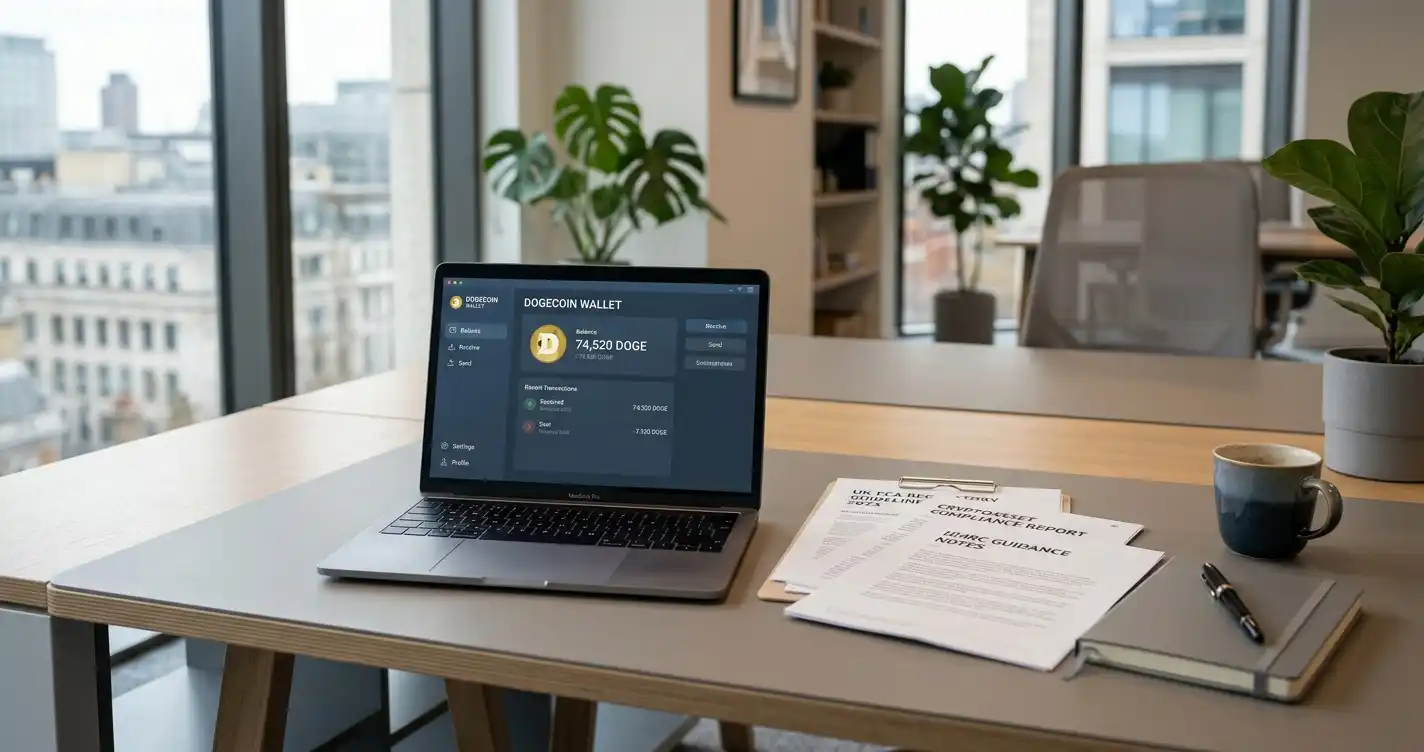
UK players asking where they can gamble with Dogecoin face a regulatory divide that no competitor’s listicle honestly addresses up front. UKGC-licensed operators—every household name holding a British licence—cannot and do not accept cryptocurrency deposits. The Gambling Commission’s source-of-funds transparency requirements conflict with pseudonymous wallet addresses. No exceptions, no workarounds, no “pending approval.”
What exists instead: offshore casinos licensed in Curaçao, Anjouan, and similar jurisdictions that accept Dogecoin deposits from UK players. These operate outside the UK Gambling Commission’s jurisdiction, which means two things simultaneously. Fast withdrawals and minimal paperwork. Zero UK consumer protections.
The UKGC opened discussions in February 2026 about potentially allowing cryptocurrency under strict AML frameworks tied to the Financial Conduct Authority, but no implementation timeline exists. Until then, Dogecoin gambling for UK players means choosing offshore operators and understanding what you trade for that choice.
This is not buried in a disclaimer. It is the starting reality.
The UKGC vs Offshore Divide: What UK Players Need to Know

Competitors frame offshore casinos as “an alternative.” The truth is blunter: they are the only option for crypto, and they operate in a different legal universe.
Why UKGC-Licensed Casinos Don’t Accept Crypto
The Gambling Commission’s Licence Conditions and Codes of Practice mandate full identity verification tied to traceable financial accounts. When a UK player deposits £100 via Visa, the operator sees the cardholder name, billing address, bank sort code, and transaction history. The system links the deposit to a verified identity and a regulated financial institution.
Dogecoin wallet addresses provide none of that. A string of alphanumeric characters on a blockchain is pseudonymous, not anonymous, but it does not automatically tie to a passport, a utility bill, or a bank account. The Commission requires operators to demonstrate source of funds and conduct affordability checks. A crypto wallet satisfies neither requirement without additional KYC layers that would negate the speed and privacy advantages players seek from crypto in the first place.
This is not ideology. It is a technical incompatibility between the UKGC’s anti-money-laundering framework and blockchain architecture. Offshore operators outside UK jurisdiction face no such requirement, so they accept crypto. UKGC licensees cannot.
What Offshore Licensing Means (Curaçao, Anjouan)
Curaçao underwent major licensing reform effective December 24, 2024. The old master-license system ended. The new Curaçao Gaming Authority issues direct B2C and B2B licenses under the National Ordinance on Games of Hazard. First-year licensing costs run €130,000–€150,000, and the rejection rate hit 38% in the first transition year. This is not a rubber-stamp jurisdiction anymore, but it is not the UKGC either.
Anjouan licenses from the Comoros Islands sit further down the credibility ladder. Lower compliance burden, minimal international recognition, and a track record of hosting operators who would struggle to obtain Curaçao approval.
Both jurisdictions share one trait: they do not impose the UKGC’s consumer protection mandates. No mandatory connection to GamStop. No segregated player funds. No Alternative Dispute Resolution participation. No UK legal recourse if a dispute goes sideways.
Offshore licensing is real licensing—these are not unregulated rogue sites—but the regulatory standards differ fundamentally from what UK players experience at Entain or Flutter properties.
The GamStop Gap
GamStop is the UK’s free national self-exclusion scheme. Every UKGC licensee must query the GamStop database at account registration. If a match appears, the account does not open.
Offshore operators have no access to the GamStop database. Data protection rules prevent it, and no legal obligation exists for them to check. A UK player who self-excluded for five years through GamStop can register at an offshore Dogecoin casino without triggering any block.
This is marketed as a feature. Search “Dogecoin casinos not on GamStop” and the results are affiliate sites positioning this gap as a benefit. For some players, that framing matches their intent. For others—those who self-excluded because gambling became a problem—it represents the exact protection gap they were trying to close.
UK law regulates operators, not players. Using offshore casinos during a GamStop exclusion carries no criminal liability. The regulation targets the entities offering the service, and offshore operators sit outside that regulatory reach.
What UK consumer protections do I lose using offshore Dogecoin casinos?
You lose five structural protections built into the UKGC framework. First: GamStop self-exclusion, which blocks access across all UK-licensed operators but does not extend offshore. Second: segregated player funds, meaning your balance sits in a separate account protected if the operator collapses; offshore operators are not required to maintain segregation. Third: mandatory Alternative Dispute Resolution, which gives you a free escalation path if the casino refuses a withdrawal; offshore operators may offer ADR voluntarily, but no regulator compels it. Fourth: UKGC-mandated responsible gambling tools, including deposit limits, reality checks, and time-outs; offshore sites may offer these, but compliance is not monitored. Fifth: UK legal recourse—if a UKGC licensee breaches terms, you can escalate to the Commission and ultimately to UK courts; offshore operators answer to their home jurisdiction, not yours.
What you gain: transaction speed measured in minutes, not days. Withdrawal limits that disappear after verification instead of the affordability-check caps tightening at UK sites. Privacy, in the sense that your gambling activity does not route through UK banks that may flag or restrict accounts. Lower fees. And access during a GamStop exclusion, which is a feature or a bug depending on why you self-excluded.
The trade-off is not theoretical. Stake.com closed UK operations in March 2025 after the UKGC revoked TGP Europe Limited’s license for compliance failures. Players with balances on Stake.uk.com faced withdrawal delays during the wind-down. The main Stake.com site (Curaçao-licensed) now blocks UK IP addresses. Offshore regulation offers less protection when things go wrong, and things do go wrong.
Casinos That Accept Dogecoin from UK Players in 2026
Six operators verified as accepting Dogecoin deposits from UK players in 2026, listed with licensing details and distinguishing features. Stake.com, which dominated competitor lists through 2024, exited the UK market in March 2025. The operators below were confirmed operational and accepting UK registrations as of October 2026.
| Operator | License | Game Count | Welcome Bonus | Dogecoin Withdrawal Speed | Launched |
|---|---|---|---|---|---|
| Wreckbet Casino | Curaçao CGA (Igloo Ventures SRL) | 4,000–6,000 | 100% up to £500 + 80 spins | Under 24 hours | 2026 |
| Ninlay Casino | Anjouan (Rabidi N.V.) | 8,000+ | 250% + 250 spins | 1–24 hours | 2024 |
| Betlix Casino | Offshore (BlockBets Entertainment) | 7,000+ | 325% up to £3,000 + 250 spins | Under 24 hours | 2026 |
| BC.Game | Anjouan | 9,000+ | 470% up to $1,600 + 400 spins | Minutes to hours | 2017 |
| Cloudbet | Curaçao CGA | Not disclosed | Up to $2,500 (30 days) | Under 1 hour (verified accounts) | 2013 |
| FortuneJack | Offshore | 3,120+ | Up to 6 BTC + 250 spins | 1–24 hours | 2014 |
Wreckbet Casino
The newest entrant, launched in 2026 under the reformed Curaçao licensing structure. Igloo Ventures SRL operates the site on a direct Curaçao Gaming Authority license obtained after the December 2024 reform that ended the old master-license subletting system. The game library runs between 4,000 and 6,000 titles from NetEnt, Evolution Gaming, and other established providers. Wreckbet positions itself as a hybrid operator: it accepts Dogecoin, Bitcoin, and Ethereum alongside Visa, Mastercard, and traditional banking methods. GBP is a supported currency, and the welcome bonus scales in pounds rather than crypto-denominated figures.
Registration requires an email address. No passport scan, no proof of address, no bank statement upload at signup. Identity checks may surface later if you request a large withdrawal. Two-factor authentication is available but not mandatory. The 100% match up to £500 plus 80 free spins sits in the middle of the competitive range—less aggressive than Betlix’s 325% offer, more straightforward than BC.Game’s tiered structure.
Wreckbet’s distinguishing trait is its 2026 launch timing. It entered the market after Curaçao’s licensing cleanup, so it built compliance infrastructure from scratch under the stricter CGA framework rather than transitioning from a legacy sublicense. Whether that translates to better operational hygiene is unknowable without a compliance audit, but the regulatory foundation differs from operators who launched pre-reform and retrofitted compliance later.
BC.Game
The longest track record in this list. BC.Game launched in 2017, predating the crypto casino boom by several years. It holds an Anjouan license for international operations; some promotional materials claim UKGC licensing, but the UKGC public register shows no matching entry, and the operational reality is offshore.
This is a crypto-native platform, not a hybrid. Deposits, withdrawals, bonuses, and balances are denominated in cryptocurrency. You do not convert DOGE to GBP; you gamble in DOGE. The game library exceeds 9,000 titles, with slots from Pragmatic Play and live dealer tables from Evolution Gaming. The standout offering is “BC Originals”—proprietary games including Crash, Plinko, and Mines that use provably fair cryptographic verification. Players can independently verify game outcomes using server and client seeds published on the blockchain.
The welcome bonus structure is complicated: 470% up to $1,600 plus 400 free spins, but the percentage and caps vary depending on which promotional campaign is active when you register. BC.Game also runs a token-based rewards economy. Wagering generates BCD tokens that unlock cashback and VIP perks. The token economy adds a layer of gamification absent from competitors, but it also means understanding another set of conversion rates and redemption mechanics.
Withdrawal speed depends on verification status. Email-only accounts face tighter limits. Fully verified accounts see faster processing. The platform targets crypto enthusiasts who prioritize blockchain-based gaming over traditional casino experiences retrofitted with crypto payment rails.
Cloudbet
Operating since 2013, Cloudbet holds the longest continuous track record among the six. The Curaçao license predates the December 2024 reform, and the operator successfully transitioned to the new CGA direct-licensing structure. It accepts 30+ cryptocurrencies—Dogecoin, Bitcoin, Ethereum, Litecoin, Tether, and two dozen others—making it the broadest crypto gateway in this comparison.
The welcome bonus spreads up to $2,500 over the first 30 days rather than stacking everything on a single deposit. Daily cash drops run as ongoing promotions. The distinguishing feature: no withdrawal ceiling once your account is fully verified. Most operators cap daily or weekly withdrawals at £5,000 to £10,000. Cloudbet advertises uncapped withdrawals post-verification, though verification itself can take days and may require multiple document resubmissions if the first pass does not satisfy compliance.
Cloudbet operates a unified wallet across casino, sportsbook, and esports sections. One deposit address funds all three. Withdrawals to crypto wallets typically process within an hour for verified accounts. The operator positions itself as a serious platform for high-volume players rather than casual depositors chasing a flashy welcome bonus.
The catch: Cloudbet’s KYC process is more thorough than email-only competitors. Passport, proof of address, and sometimes a source-of-funds declaration are standard at higher withdrawal thresholds. This erodes some of the privacy appeal that draws players to crypto casinos in the first place, but it reflects Cloudbet’s attempt to occupy a middle ground between regulatory wild west and UKGC-level oversight.
FortuneJack
Launched in 2014, FortuneJack operates without clear disclosure of its licensing jurisdiction beyond “offshore.” The site accepts Dogecoin, Bitcoin, Ethereum, Litecoin, and several others. Game library sits at 3,120+ titles, smaller than the 7,000–9,000 counts at newer competitors, but the focus is on provably fair games—dice, video poker, and proprietary table games with cryptographic outcome verification.
The welcome bonus scales up to 6 BTC plus 250 free spins over four deposits. Denominating the offer in Bitcoin rather than fiat equivalent positions FortuneJack as crypto-first. Players who think in BTC terms rather than GBP terms are the target audience. The loyalty program runs on wagering milestones with escalating perks.
FortuneJack’s provably fair system publishes server seeds, client seeds, and nonce values for each bet. Players can independently verify that outcomes were not manipulated after the fact by hashing the seeds and comparing the result to the published game outcome. This transparency appeals to players who distrust traditional RNG implementations, though it requires technical literacy to verify manually.
The operator has less UK-facing marketing than Wreckbet or Ninlay. No GBP-denominated bonuses, no British domain variants, no localized customer support hours. It serves UK players as part of a global user base rather than tailoring the experience to British regulatory or cultural expectations.
Ninlay Casino
Operated by Rabidi N.V. under the NovaForge brand structure, Ninlay launched in 2024 with an Anjouan license. The visual theme is cyberpunk—neon grids, futuristic UI, angular typography—which distinguishes it from the generic crypto casino aesthetic of spinning coins and blockchain graphics. The game library exceeds 8,000 titles, among the largest in this comparison.
Ninlay accepts Dogecoin, Bitcoin, Ethereum, Litecoin, and Tether alongside traditional payment methods. The welcome package offers 250% up to £3,750 plus 250 free spins, though the exact figures shift based on regional site variants (ninlaycasino.uk, ninlay-au.com, ninlay.ca). Rabidi N.V. operates multiple casino brands, and Ninlay represents its crypto-friendly offering within the portfolio.
Withdrawal processing time varies. Crypto withdrawals claim 1–24 hour windows, but player reports on independent forums suggest the longer end of that range is more common for first-time withdrawals pending manual review. Verification requirements surface at different thresholds depending on account activity. Email-only signups work for small-stakes players; four-figure withdrawals typically trigger KYC requests.
The cyberpunk aesthetic is polarizing. Players who want a traditional casino interface with card suits and roulette wheels will find Ninlay’s design off-brand. Players drawn to the crypto-native identity see the visual theme as a signal that the operator understands its niche rather than slapping crypto payments onto a legacy platform.
Betlix Casino
Launched in 2026 by BlockBets Entertainment Limitada, Betlix operates under an offshore license without clear jurisdictional disclosure across sources. The platform combines 7,000+ slots with live casino tables and a sportsbook, positioning itself as a combined gambling hub rather than casino-only. Cryptocurrencies accepted include Bitcoin, Ethereum, and Dogecoin, with traditional card and e-wallet options also available.
The welcome package scales up to 325% and £3,000 plus 250 free spins across the first several deposits. That 325% figure is the highest in this comparison, but the structure is a “sticky bonus”—wagering requirements calculate on deposit plus bonus combined, and the bonus itself cannot be withdrawn, only the winnings generated from it. Standard wagering sits at 35x for the welcome offer and 40x for subsequent bonuses. Players accustomed to UKGC sites where wagering is now capped at 10x (effective January 2026) will find these numbers punitive.
Betlix’s VIP ranks and loyalty program run on a points-per-wager model. Tier progression unlocks faster withdrawals, higher limits, and dedicated account managers. The sportsbook integration means players who split activity between casino and sports betting do not need separate accounts or wallet transfers between platforms.
As a 2026 entrant, Betlix lacks the operational history to assess reliability. No public record of how it handles disputes, how responsive customer support proves under load, or whether withdrawal processing matches the advertised timelines when volume spikes. Newer operators carry unknowable risk until enough players cycle through the full deposit-play-withdraw-dispute loop to establish a track record.
Which casinos accept Dogecoin from UK players in 2026?
Six offshore operators accept Dogecoin from UK players: Wreckbet Casino (Curaçao, launched 2026), Ninlay Casino (Anjouan, launched 2024), Betlix Casino (offshore, launched 2026), BC.Game (Anjouan, operating since 2017), Cloudbet (Curaçao, operating since 2013), and FortuneJack (offshore, operating since 2014). All hold licenses outside UKGC jurisdiction, operate without UK consumer protections, and do not connect to the GamStop self-exclusion database. Stake.com, previously dominant in this category, closed UK operations in March 2025.
How to Deposit and Withdraw Dogecoin at Online Casinos

The mechanical process is simple. The friction points are not.
Step 1: Getting Dogecoin (Wallet Setup and Acquisition)
You cannot deposit Dogecoin to a casino without owning Dogecoin first. That requires two components: a wallet to store it and an exchange to buy it.
Wallet options:
- Software wallets like Trust Wallet or Exodus run on your phone or desktop. Free, quick setup, private keys stored on your device. If you lose the device and did not back up your recovery phrase, the DOGE is gone permanently.
- Hardware wallets like Ledger store private keys on a physical device offline. More secure against hacking, but they cost £50–£150 and add a layer of friction to deposits and withdrawals.
- Exchange wallets like Coinbase or Binance hold your DOGE on their platform. Convenient for buying and sending to a casino, but you do not control the private keys—the exchange does. If the exchange freezes your account or collapses, you cannot access your funds.
Buying Dogecoin: UK players typically use Coinbase, Binance, or Kraken. You create an account, complete KYC verification (passport, proof of address), deposit GBP via bank transfer, and exchange it for DOGE. The fiat-to-crypto on-ramp is where pseudonymity ends. The exchange knows your identity, your bank details, and your transaction history. Some UK banks flag or decline transfers to crypto exchanges; Barclays, NatWest, and HSBC have all restricted crypto transactions at various points, though policies shift.
Once you own DOGE, you control a wallet address—a string like DH5yaieqoZN36fDVciNyRueRGvGLR3mr7L. That address is where your DOGE lives. You send it from there to the casino’s deposit address.
Step 2: Making Your First Deposit
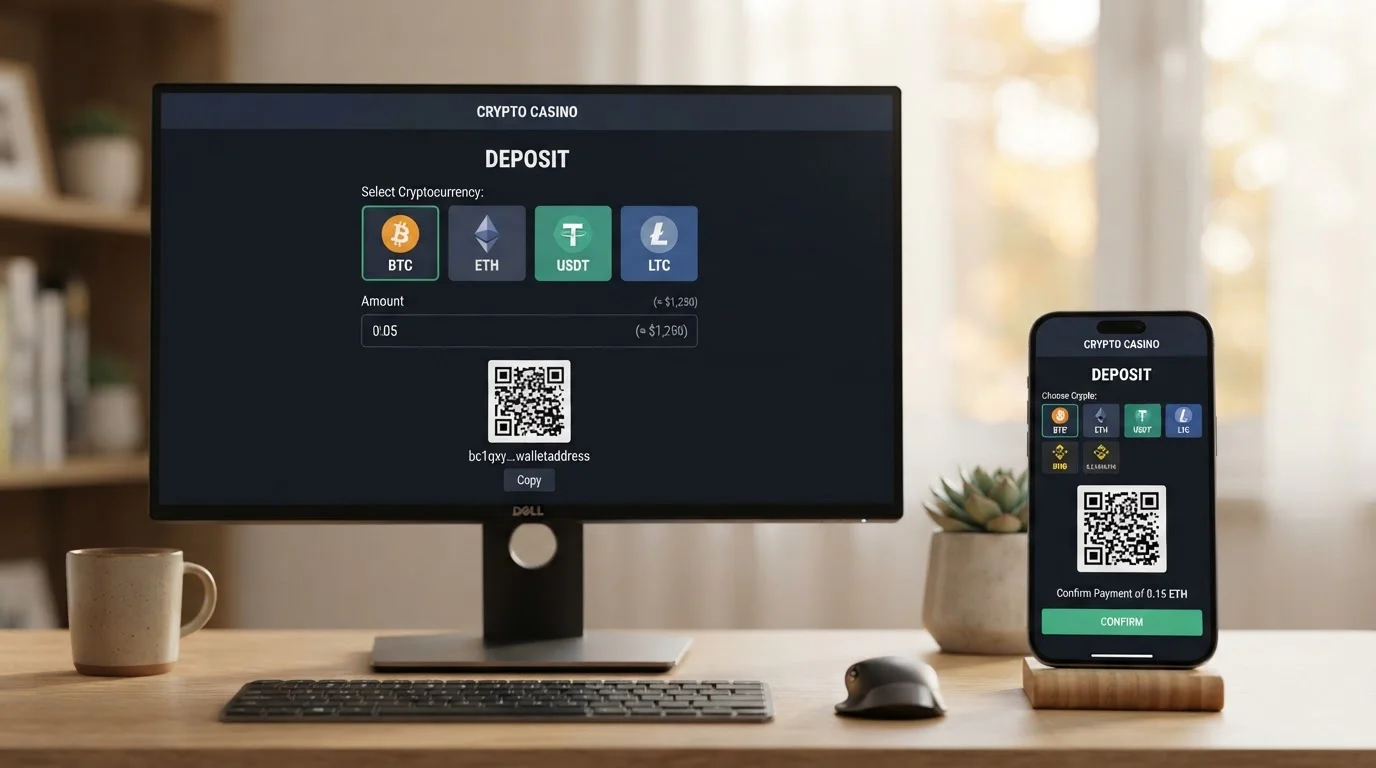
Log into the casino cashier. Select Dogecoin as your deposit method. The casino generates a unique deposit address for your account. Copy that address exactly—one wrong character and the DOGE goes to an address no one controls, irreversibly lost.
Open your wallet. Paste the casino’s deposit address into the “send” field. Enter the amount of DOGE you want to deposit. The wallet calculates the network fee—typically $0.20 to $0.50 regardless of the amount sent. Confirm the transaction.
Dogecoin’s block time is approximately one minute. The casino credits your account after one or two block confirmations, which usually means 1–2 minutes of waiting. Some operators credit instantly on the first confirmation; others require two. The deposit confirmation appears in your casino account balance, denominated in DOGE or converted to the casino’s base currency depending on the platform.
What can go wrong:
- Pasting the wrong address. No undo button. The DOGE is gone.
- Sending to an old deposit address if the casino rotates addresses per session. Most casinos warn you to use the freshly generated address; ignoring that warning can route funds to a deprecated wallet.
- Network congestion. Rare for Dogecoin given low transaction volume compared to Bitcoin or Ethereum, but if the network is under spam attack, confirmations slow.
Step 3: Withdrawing Your Winnings
Request a withdrawal in the casino cashier. Enter your personal Dogecoin wallet address—the one you control, not the deposit address the casino gave you. Specify the amount. The casino processes the request.
Processing time depends on the operator and your verification status. Crypto-native operators like BC.Game or Cloudbet often process withdrawals within minutes for verified accounts. Hybrid operators like Wreckbet or Ninlay may batch withdrawals and process them at set intervals, meaning 6–24 hour delays. First-time withdrawals almost always face manual review, which can stretch to 48 hours.
Once the casino broadcasts the transaction to the Dogecoin network, it appears in your wallet after 1–2 block confirmations. The network fee is paid by the casino (deducted from your withdrawal amount) or absorbed as a cost of business depending on the operator’s policy.
What can go wrong:
- Entering your own wallet address incorrectly. Same irreversibility problem as deposits.
- Withdrawal limits. Unverified accounts face daily or weekly caps, often £1,000–£2,000. Requesting more triggers a KYC requirement.
- Volatility. You deposited £100 worth of DOGE when the price was $0.08 per DOGE (1,250 DOGE). You win and withdraw 2,500 DOGE. If DOGE’s price dropped to $0.06 by withdrawal time, your 2,500 DOGE is worth £150, not £200. Volatility cuts both ways.
Step 4: Transaction Speeds and Fees Compared
The speed advantage is real. Bank transfers at UKGC-licensed casinos take 3–5 business days for withdrawals. Debit cards, 1–3 days. E-wallets like PayPal or Skrill, 12–24 hours at best. Dogecoin withdrawals, once the casino processes them, appear in your wallet in 1–2 minutes.
| Payment Method | Deposit Speed | Withdrawal Speed | Typical Fees |
|---|---|---|---|
| Dogecoin | 1–2 minutes (network confirmation) | Minutes to 24 hours (operator processing + 1–2 min network) | $0.20–$0.50 per transaction |
| Bitcoin | 10–60 minutes (network congestion-dependent) | Minutes to 24 hours (operator) + 10–60 min (network) | $1–$5+ per transaction |
| Bank Transfer (UKGC sites) | 1–3 business days | 3–5 business days | Free (sometimes £2–£5 for expedited) |
| Debit Card (UKGC sites) | Instant | 1–3 business days | Free to player (operator pays ~2.5–4% to processor) |
| E-Wallet (UKGC sites) | Instant | 12–24 hours | Free to player (operator pays 1.5–3%) |
Dogecoin’s 1-minute block time makes it faster than Bitcoin’s 10-minute blocks for confirmation. The $0.20–$0.50 fee is fixed regardless of whether you send 100 DOGE or 10,000 DOGE, which beats Visa’s percentage-based fees at higher amounts. But the fee does not scale down: sending $5 worth of DOGE costs the same $0.30 as sending $5,000.
The speed comparison breaks down at the operator-processing layer. A UKGC-licensed casino processing a debit card withdrawal in 24 hours is faster than an offshore Dogecoin casino that sits on your withdrawal for 48 hours during manual review. Network speed matters, but operator policy matters more.
How fast are Dogecoin deposits and withdrawals at online casinos?
Dogecoin deposits confirm in 1–2 minutes due to Dogecoin’s one-minute block time and typical one-to-two confirmation requirements. Withdrawals depend on operator processing times—crypto-native casinos often process within an hour for verified accounts, while hybrid operators may take 6–24 hours. Once broadcast, the Dogecoin network delivers funds to your wallet in 1–2 minutes.
How much do Dogecoin casino transactions cost?
Dogecoin network fees are $0.20–$0.50 per transaction regardless of amount, significantly lower than Bitcoin ($1–$5+) and traditional payment processor fees (2.5–4% on card transactions). Some casinos absorb the withdrawal fee; others deduct it from your payout.
Do I need a Dogecoin wallet to gamble at crypto casinos?
Yes. You need a Dogecoin wallet to send deposits to the casino’s address and to receive withdrawals. Software wallets (Trust Wallet, Exodus) or hardware wallets (Ledger) are required. Exchange wallets work but mean you do not control the private keys.
Dogecoin Casino Bonuses and Promotions

Offshore operators use bonuses to compete for players that UK-licensed casinos cannot legally serve. The offers look generous. The terms often are not.
Welcome bonuses at Dogecoin casinos range from 100% (Wreckbet, Cloudbet) to 325% (Betlix) to 470% (BC.Game). UKGC-licensed casinos, by comparison, cluster around 100% and are now capped by the 10x wagering limit imposed in January 2026. Offshore operators face no such cap. Wagering requirements of 35x to 50x are common. Betlix’s 325% welcome offer carries 35x wagering on deposit plus bonus combined, meaning a £100 deposit with a £325 bonus requires £14,875 in total wagers before you can withdraw winnings.
Crypto-denominated bonuses add a volatility layer. If the bonus is credited in DOGE and DOGE’s price climbs 20% during the wagering period, the fiat value of your bonus increases. If it drops 20%, the value shrinks. Sticky bonus structures mean the bonus itself never withdraws—only the winnings generated from it clear once wagering is complete.
Some operators exclude certain games from wagering contributions. Slots usually count 100%, live dealer games 10% or less, table games vary. Reading the terms is not optional; the fine print determines whether a 325% bonus is a value-add or a withdrawal trap.
Free spins offers (80 to 400 in this comparison) tie to specific slots and often carry separate wagering requirements from the deposit bonus. Maximum bet limits while wagering a bonus ($5 to $10 per spin) are common and enforced by software. Exceeding the limit can void the bonus and associated winnings.
KYC verification timing matters. Some operators let you deposit and wager without verification but require it before processing your first withdrawal. If you wagered through a 35x requirement and then discover the operator needs three business days to verify your documents, that is three days of waiting with funds locked in your account. Other operators front-load verification, requiring ID upload before your first deposit.
Promotions beyond the welcome offer—reload bonuses, cashback, loyalty programs—vary widely. BC.Game’s BCD token economy rewards consistent wagering. Cloudbet’s daily cash drops provide recurring value without wagering requirements. FortuneJack runs sports betting promotions that integrate with casino play. Wreckbet and Betlix lean on tiered VIP programs with escalating perks.
The core question: does the bonus term offset the value? A 100% bonus with 10x wagering (UKGC standard) is more valuable than a 325% bonus with 40x wagering if you intend to withdraw winnings rather than gamble until the balance hits zero. Offshore bonuses look larger because they can afford to be—higher wagering requirements and stickier structures mean fewer players complete them.
Games Available at Dogecoin Casinos

The game portfolio at offshore Dogecoin casinos mirrors what UK players see at UKGC-licensed sites, with one addition: provably fair games unique to crypto platforms.
Slots
Slots dominate the libraries. Wreckbet’s 4,000–6,000 games, Betlix’s 7,000+, Ninlay’s 8,000+, BC.Game’s 9,000+. Providers include NetEnt, Pragmatic Play, Play’n GO, Microgaming, and others whose content appears at both offshore and UK-licensed operators. Starburst, Book of Dead, Gates of Olympus, Gonzo’s Quest—the same titles rotate through welcome bonus free spins offers across both regulatory universes.
Stake limits differ. UKGC-licensed casinos impose £5 per spin caps for players aged 25+ and £2 for those aged 18-24, effective since 2025. Offshore operators impose no such limits. High rollers who want to spin £50 or £100 per click find that freedom offshore, though volatility at those stakes burns through balances quickly.
RTP (return to player) percentages are set by game providers, not operators, so the same slot pays the same theoretical return whether you play it at a UKGC casino or an offshore Dogecoin site. What differs: UK sites display RTP prominently (regulatory requirement), while offshore sites may bury it in game info screens.
Live Dealer Games
Evolution Gaming, Pragmatic Play Live, and Ezugi supply live dealer tables to both UKGC and offshore operators. Blackjack, roulette, baccarat, poker variants, game shows like Crazy Time and Monopoly Live. The dealers, studios, and game mechanics are identical. The regulatory framework governing disputes is not.
Betting limits at live tables vary. Some offshore operators offer lower minimums (£0.10–£1) to attract casual players. Others run high-limit tables for whales, with maximum bets reaching £10,000+ per hand. UKGC-licensed sites tend to cap at lower maximums due to affordability check requirements.
Live dealer games contribute minimally to bonus wagering. A £100 live blackjack bet might contribute £10 toward a 35x requirement, making these games inefficient for clearing bonuses. Slots remain the optimal wagering vehicle, which is why offshore operators structure terms that way.
Table Games
RNG-based blackjack, roulette, baccarat, poker, and bingo appear across the six operators. These run faster than live dealer equivalents—no waiting for other players, no dealer shuffle time—but lack the visual confirmation of physical cards and wheels. Offshore operators lean harder on RNG table games than UKGC sites because the latter have shifted player preference toward live dealer for trust reasons.
Provably Fair Games
This is the category unique to crypto casinos. BC.Game’s Crash, Plinko, and Mines. FortuneJack’s provably fair dice and video poker. These games publish server seeds (generated before the round), client seeds (provided by the player or auto-generated), and nonce values (increments per bet). The outcome is determined by hashing these inputs. After the round, the operator reveals the server seed. Players can independently verify that the published seed matches the one used to generate the outcome, proving the operator did not manipulate results after seeing the player’s bet.
The cryptographic verification works like this: SHA-256 hashing of server_seed + client_seed + nonce produces a deterministic output. That output maps to a game result (Crash multiplier, Plinko drop path, Mines tile positions). If the operator changed the server seed after your bet, the hash would not match. The system is transparent and auditable, unlike RNG-based games where you trust the operator’s claim that the RNG is fair.
Provably fair games appeal to players who distrust traditional RNG implementations. The trade-off: you must understand hashing and seed verification to independently audit results. Most players do not. They trust the system exists rather than verifying it themselves, which returns them to the trust-based model provably fair was designed to escape.
What are the risks of using Dogecoin at online casinos?
Market volatility is the primary operational risk. Dogecoin’s price fluctuates daily. Depositing at $0.08 per DOGE and withdrawing at $0.06 means a 25% fiat-value loss even if your DOGE balance increased. Regulatory risk: offshore operators can exit markets suddenly, as Stake.com demonstrated in March 2025. Transaction irreversibility: sending DOGE to the wrong address means permanent loss with no chargeback mechanism. Offshore operators lack UK consumer protections—no GamStop, no ADR, no segregated funds, no UK legal recourse if disputes arise.
Mobile Dogecoin Gambling
Every operator in this comparison runs on mobile browsers. No app downloads required. Type the casino URL into Chrome or Safari on your phone, log in, deposit Dogecoin from your mobile wallet app, and play. Responsive design adapts the layout to smaller screens.
Dedicated iOS or Android apps exist for some operators, but app store policies complicate distribution. Apple’s App Store prohibits real-money gambling apps for operators without licenses recognized by the app store’s region. Google Play allows gambling apps in some jurisdictions but not others. The result: most offshore Dogecoin casinos distribute APK files (Android) outside the Play Store or skip native apps entirely and optimize the web version instead.
Mobile wallet apps (Trust Wallet, Exodus) run on the same devices, making the deposit and withdrawal flow seamless. Open the casino in one browser tab, copy the deposit address, switch to your wallet app, paste, send. The entire loop happens on your phone without desktop friction.
Game selection on mobile matches desktop. Slots, live dealer, table games, and provably fair options all render on mobile. Live dealer games consume more data (video streaming), which matters on metered mobile connections. Slots and RNG table games are lightweight.
Two-factor authentication (2FA) on mobile adds a security layer. Most operators support Google Authenticator or SMS codes. Losing your phone without 2FA backup codes can lock you out of your account, so storing those codes separately is not optional.
New Dogecoin Casinos in 2026
Wreckbet and Betlix both launched in 2026, positioning themselves in the post-Curaçao-reform landscape. The December 2024 licensing reform cleaned out sublicense holders who could not meet the new Curaçao Gaming Authority’s standards. Operators launching in 2026 build under the stricter CGA framework from day one rather than retrofitting compliance onto legacy systems.
The trade-off: newer operators lack operational history. Wreckbet and Betlix have no public track record of how they handle withdrawal disputes, how responsive customer support proves under load, or whether processing times match advertised claims when volume spikes. Older operators like Cloudbet (2013) and FortuneJack (2014) have survived multiple market cycles, regulatory shifts, and competitor exits. That longevity signals something, even if it does not guarantee future performance.
New entrants compete on bonuses (Betlix’s 325% offer) and game library size (Wreckbet’s 6,000 titles, Betlix’s 7,000+). Established operators compete on trust signals (Cloudbet’s uncapped withdrawals, BC.Game’s provably fair Originals, FortuneJack’s cryptographic seed verification). The optimal choice depends on whether you prioritize the highest welcome bonus or the lowest operational risk.
The 2026 entrants also reflect the post-Stake.com UK market gap. Stake’s March 2025 exit left a hole in the offshore crypto casino market for UK players. Wreckbet and Betlix position themselves to capture that displaced user base. Whether they succeed depends on execution—withdrawal speed, customer support quality, KYC friction—not marketing copy.
Alternatives to Dogecoin at Crypto Casinos
Every Dogecoin casino in this comparison accepts multiple cryptocurrencies. If the operator does not support DOGE, or if you prefer a different coin, five alternatives appear across the platforms.
| Cryptocurrency | Block Time | Typical Fee | Best For |
|---|---|---|---|
| Dogecoin (DOGE) | ~1 minute | $0.20–$0.50 | Fast small-to-medium deposits, meme coin community |
| Bitcoin (BTC) | ~10 minutes | $1–$5+ | Large deposits, long-term holders, highest liquidity |
| Ethereum (ETH) | ~15 seconds | $0.50–$5+ (gas-dependent) | Smart contract interactions, DeFi integration |
| Litecoin (LTC) | ~2.5 minutes | $0.01–$0.10 | Faster than BTC, lower fees than ETH, underrated |
| Tether (USDT) | Varies by chain | $0.50–$20+ (depends on network) | Price stability, avoids volatility risk |
Bitcoin dominates in name recognition and liquidity, but fees and confirmation times exceed Dogecoin’s. Litecoin splits the difference—faster than Bitcoin, cheaper than Ethereum, but less cultural cachet than DOGE. Ethereum’s gas fees spike during network congestion, making it expensive for small deposits. Tether (a stablecoin pegged to the US dollar) eliminates volatility but reintroduces some of the centralization that crypto purists avoid.
Operators that accept 30+ cryptocurrencies (Cloudbet) let players choose based on fees, speed, and portfolio composition. Players holding BTC from years ago may prefer to gamble in BTC without converting. Players buying crypto specifically to gamble may choose DOGE or LTC for lower fees.
The blockchain you choose does not affect game RTP, bonus terms, or operator licensing. It affects transaction speed, fees, and volatility exposure. Picking the wrong coin for your deposit size costs more in fees than necessary, but it does not change the house edge on blackjack.
Safety, Legitimacy, and Responsible Gambling

Offshore operators range from legitimate businesses that happen to operate outside UK jurisdiction to outright scams that clone legitimate site designs and vanish with deposits. Verification is not optional.
How to Verify a Dogecoin Casino Is Legitimate
Start with license verification. Curaçao-licensed operators should display a CGA seal linking to the Curaçao Gaming Control Board’s validator. Click the seal. If it does not link to an official government page confirming the license, the seal is fake. Anjouan licenses are harder to verify because the Comoros Islands’ gaming authority has minimal online infrastructure, but the license number should appear in the casino’s footer and terms.
Check domain age via WHOIS lookup. A domain registered three weeks ago claiming to have operated since 2017 is lying. SSL encryption (the padlock icon in your browser’s URL bar) is baseline security. No SSL means your login credentials and wallet addresses transmit in plaintext.
Test customer support before depositing. Open a live chat or send an email asking a specific question about withdrawal limits or KYC requirements. If no one responds within 24 hours, or if the response is copy-pasted nonsense, support will not improve after you deposit.
Search independent forums—AskGamblers, Trustpilot, Reddit’s r/BitcoinCasino—for player reviews. Look for patterns: multiple complaints about frozen withdrawals, delayed KYC, or unresponsive support signal problems. Single negative reviews can be outliers, but ten players reporting the same issue is a pattern.
Start with a small deposit. Send 100–500 DOGE, wager it lightly (avoid bonus complications), and request a withdrawal. If the operator processes the withdrawal within the advertised timeframe and the DOGE arrives in your wallet, the basic infrastructure works. If the operator stalls, demands unexpected documents, or goes silent, do not deposit more.
Red Flags to Watch For
No visible license information in the footer. Cloned site design matching a legitimate operator with a slightly different domain (cloudbet.com is real; cloudbett.com is a phishing clone). Welcome bonuses far exceeding competitors (500% or 1000% offers are bait). Withdrawal limits that appear only after you win (hidden terms). Customer support that promises “manual review” for every withdrawal and never follows through. Domain registered in the last month. No social media presence or engagement. Game providers you have never heard of (legitimate slots come from NetEnt, Pragmatic Play, etc.; fake slots come from nowhere).
If an offshore Dogecoin casino ticks multiple red flags, walk away. The £100 you save by not depositing is cheaper than the £1,000 you will lose when the operator vanishes.
Responsible Gambling at Offshore Operators
UKGC-licensed casinos provide deposit limits, reality checks, time-outs, and self-exclusion tools because regulation mandates them. Offshore operators may offer similar tools voluntarily, but no regulator monitors compliance or enforces standards.
Some offshore casinos (Cloudbet, BC.Game) provide deposit limit settings in account controls. Others do not. GamStop does not extend offshore, so a UK player self-excluded through the national scheme can register and gamble at any of the six operators in this comparison without triggering a block. That gap is marketed as a feature, but it represents the absence of the protection UK players sought when they self-excluded.
If gambling is a problem rather than entertainment, offshore Dogecoin casinos are the worst possible environment. Faster deposits, no affordability checks, no cooling-off periods, no national self-exclusion coverage, and no regulatory oversight to escalate complaints. UKGC-licensed operators are not perfect, but the structural protections exist. Offshore operators rely on your self-control, and crypto’s speed removes the friction that sometimes functions as a circuit breaker.
Third-party tools like Gamban (software that blocks gambling sites) work on offshore operators the same as licensed ones. Setting up Gamban before gambling offshore gives you a layer of protection the operator will not provide.
How do I verify if a Dogecoin casino is legitimate?
Check for a valid Curaçao CGA or other license seal that links to an official registry, verify domain age via WHOIS, confirm SSL encryption, test customer support responsiveness before depositing, search independent forums for player reviews, and start with a small test deposit and withdrawal to confirm the operator processes payouts as advertised.
Can I use Dogecoin at casinos if I’m self-excluded through GamStop?
Yes, because offshore Dogecoin casinos do not connect to the GamStop database and have no legal requirement or technical access to check it. UK law does not criminalize players for using offshore casinos during self-exclusion. However, using offshore operators bypasses the protection you sought through self-exclusion, and these sites lack the responsible gambling tools UKGC-licensed operators must provide.
Crypto Casinos UK 2026 — Solana, XRP, Dogecoin and More
Content created by the «casinopayexp» team