
BNB Casino Comparison for UK Players: Which Platforms Actually Deliver in 2026
 Available in US
British players hunting for Binance Coin casinos face a market nobody regulates, platforms nobody verifies, and marketing claims nobody checks. Every offshore operator lists “BNB accepted” in their payment footer. Half auto-convert your deposit to USDT the moment it lands. Some process withdrawals in ten minutes. Others hold requests for days, then demand a video call before releasing funds.
This comparison cuts through the promotional fog. Seven BNB-accepting casinos that actually serve UK players in 2026, ranked by payment handling, withdrawal reliability, and whether they honour their own terms. No UKGC-licensed operator touches cryptocurrency—a regulatory wall that pushed every BNB casino into offshore jurisdictions where dispute resolution runs through Curaçao email forms and Comoros gaming boards. The tradeoff is blunt: fast blockchain settlement versus zero UK consumer protection.
What follows is not a list of “the best” by anyone’s abstract standard. It is a filtering system built on withdrawal track records, network fee transparency, and which platforms genuinely hold native BNB rather than stablecoins disguised as crypto balances. UK players using offshore casinos already sit outside GamStop, outside UKGC safeguards, and outside the deposit-limit framework Parliament spent five years tightening. The least an honest guide can do is flag which offshore platforms actually deliver what they advertise.
BNB Casinos for UK Players: The Offshore Licensing Reality
Zero UK Gambling Commission-licensed casinos accept BNB, Bitcoin, Ethereum, or any cryptocurrency. Not one. The Commission’s anti-money laundering requirements demand full identity verification and transparent fund-source tracing—requirements fundamentally incompatible with blockchain’s pseudonymous architecture. As of 2026, every BNB casino accepting British players operates under an offshore license: Curaçao eGaming, Anjouan Gaming Board, Malta (without UK license extension), or Comoros Mwali.
This is not a legal grey area. Using offshore casinos is not illegal for UK consumers. The Gambling Act 2005 prohibits operators from serving UK customers without a license, not players from accessing offshore sites. But the regulatory gap is real. UKGC-licensed casinos integrate with GamStop, route disputes through the Independent Betting Adjudication Service, and face financial penalties for delayed withdrawals. Offshore operators answer to their licensing jurisdiction—Curaçao’s dispute resolution runs through email forms with response times measured in weeks, Anjouan’s oversight is minimal by design, and Comoros licenses carry no enforcement mechanism UK players can invoke.
The practical consequence: if an offshore casino denies your withdrawal, you have no UK regulator to escalate to. If they change bonus terms mid-wager, no UKGC enforcement action follows. If they close your account and cite “suspicious activity” without returning deposits, your recourse is the foreign licensing authority’s complaint process, often conducted in a language other than English and with no obligation to rule in your favour within any timeframe.
UK banks know this. Most decline card payments to offshore gambling sites flagged in their merchant databases. Cryptocurrency bypasses that friction entirely—buy BNB on Binance, send to casino wallet, funds credited within minutes. This makes crypto the de facto payment rail for UK players using offshore casinos, but it is a rail built on accepting that consumer protections end at the blockchain transaction.
Can I legally use BNB casinos from the UK in 2026?
Yes. UK law does not criminalise gambling at offshore sites. The legal risk falls on unlicensed operators advertising to UK customers, not on British players who register. However, you forfeit UKGC consumer protections, GamStop self-exclusion integration, and UK-based dispute resolution when choosing offshore platforms.
Do any UKGC-licensed casinos accept Binance Coin (BNB)?
No. As of 2026, zero UKGC-licensed operators accept cryptocurrency deposits or withdrawals. The Commission’s KYC and AML compliance standards are incompatible with crypto’s pseudonymous fund flows. Every BNB casino serving UK players holds an offshore license.
Native BNB vs BEP-20 Tokens: What Actually Lands in Your Casino Balance
Most casinos advertising “BNB support” do not hold Binance Coin in your balance. They accept BNB deposits, convert to USDT or USDC at the moment of receipt, and display a dollar figure where your crypto quantity should be. You deposited a volatile cryptocurrency hoping to benefit if BNB price rises while you play. They gave you a stablecoin pegged to $1.00, locking you into the exchange rate at deposit time. Withdraw later, and you receive USDT back—not the BNB you sent, not exposure to any price appreciation, just dollars on a blockchain.
This is not fraud. It is cashier design. Many offshore casinos run their entire backend on stablecoins for accounting simplicity, accepting twenty different cryptocurrencies on deposit but converting all to USDT within their system. The player sees “USDT balance: 250” instead of “BNB balance: 0.85” and assumes that is how crypto casinos work. It is how stablecoin casinos with multi-coin deposit funnels work. A genuine BNB casino holds your coins as BNB, displays your balance in BNB quantity, and returns BNB on withdrawal.
The distinction matters beyond speculative upside. BNB deposits and withdrawals on Binance Smart Chain (BEP-20 network) cost $0.10 to $0.50 in network fees and confirm within 60 seconds. Ethereum-based stablecoins (USDT on ERC-20) cost $5 to $50 depending on network congestion and take minutes to confirm. If a casino accepts your BNB but holds USDT internally, you pay BEP-20 fees on deposit, then face higher ERC-20 or TRC-20 fees on withdrawal if they only support USDT on those networks. The low-cost advantage evaporates.
How to verify before deposit: check the casino’s wallet interface. If it generates a BNB deposit address and shows your balance in BNB after deposit, they hold native coin. If it generates a USDT address on BEP-20 or your balance immediately converts to a dollar figure, they auto-convert. The latter is not inherently worse—stablecoins eliminate volatility risk during play—but calling it “BNB support” when no BNB exists past the deposit screen is marketing misdirection.
Network selection risk compounds the confusion. BNB exists on multiple blockchains: BEP-2 (Binance Chain, the original), BEP-20 (Binance Smart Chain, the fast low-fee network most casinos use), and wrapped BNB on Ethereum (ERC-20). Send BNB on BEP-2 to a casino expecting BEP-20, and the transaction fails—or worse, succeeds on-chain but never credits to your casino balance because the operator’s wallet does not scan that network. Those funds are functionally lost unless support manually recovers them, a process that can take weeks if it happens at all. Always match the exact network the casino specifies.
BEP-20 transaction fees run $0.10 to $0.50 as of 2026, versus $5 to $50 for Ethereum ERC-20 during moderate congestion and $15 to $100 during peak DeFi activity. Bitcoin network fees swing from $1 to $30 depending on mempool backlog. For casino gambling—frequent small deposits and regular withdrawals—BEP-20’s sub-dollar fees and sub-minute confirmation make it the most practical network. This is BNB’s core advantage over Bitcoin and Ethereum for gambling, but only if the casino actually supports BEP-20 deposits and does not force you through a higher-fee network on withdrawal.
What’s the difference between native BNB and BEP-20 tokens at crypto casinos?
Native BNB means the casino holds Binance Coin in your balance and returns BNB on withdrawal. Many casinos accept BNB deposits but immediately convert to USDT stablecoins, displaying dollar balances. You lose exposure to BNB price changes and may face higher withdrawal fees if they only support USDT on costlier networks.

Top BNB Casinos for UK Players in 2026: Ranked and Reviewed
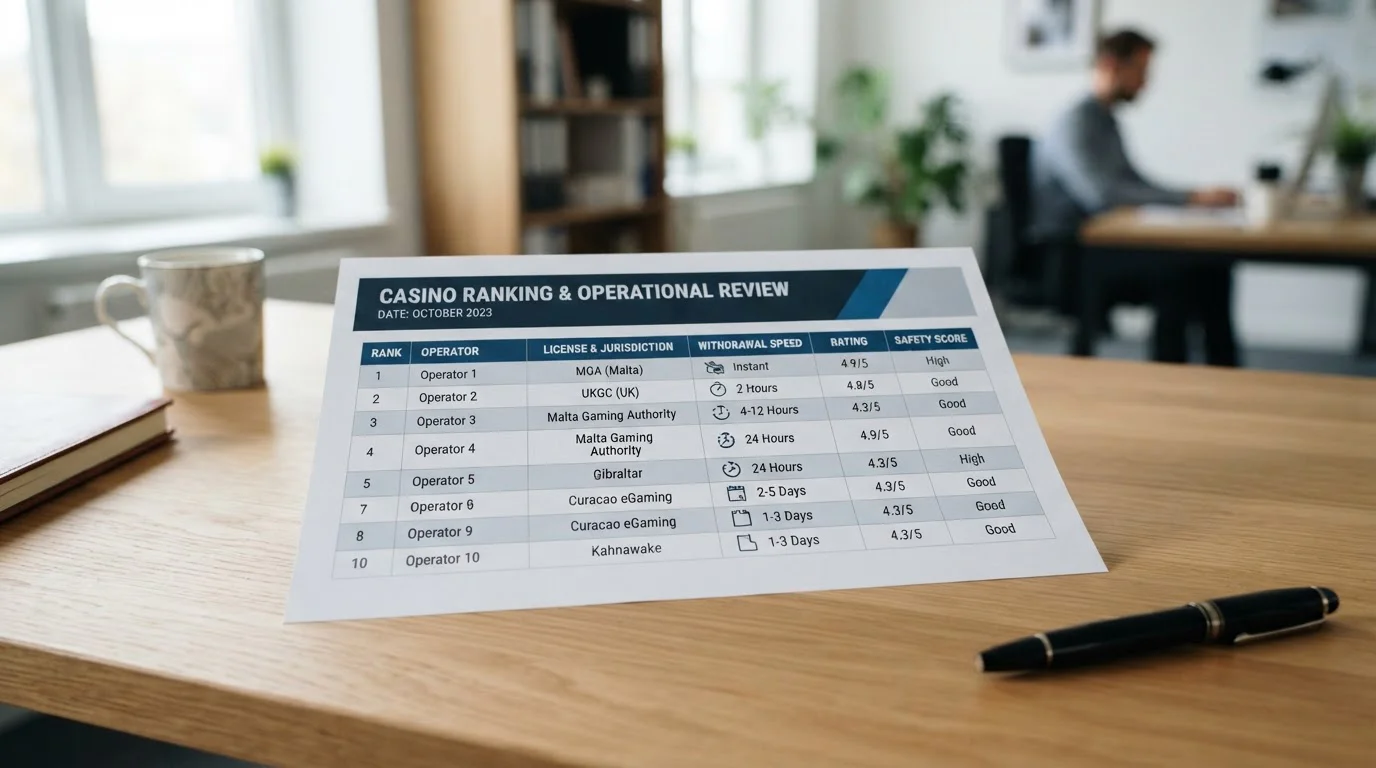
Seven offshore platforms accept BNB from British players and process withdrawals without UKGC oversight. Licensing ranges from Curaçao (the most common offshore jurisdiction for crypto gambling) to Anjouan and Comoros Mwali (lighter regulatory oversight). None integrate with GamStop. Dispute resolution routes through foreign licensing authorities with no UK enforcement power. The comparison below ranks by withdrawal reliability, payment transparency, and whether the casino’s advertised features survive real-world testing.
| Casino | License | BNB Handling | Withdrawal Speed | Min Deposit | Distinguishing Feature |
|---|---|---|---|---|---|
| Jack Casino | Curaçao | Native BNB / BEP-20 | Fast (auto-approved accounts) | $50 (for bonus) | 1x wagering on free spins (lowest) |
| 7Bit Casino | Curaçao OGL/2023/147/0081 | Native BNB accepted | Under 10 minutes | Standard | Founded 2014 (longevity signal) |
| Sportbet.one | Comoros Mwali G20190045 | BNB + 13 other cryptos | Instant (blockchain) | Standard | EOS smart contract betting, no KYC |
| Crypto-Games.io | Unlicensed (provably fair) | Native BNB | Instant (blockchain) | Low | Provably fair verification, 99% RTP |
| Cybet Casino | Anjouan | Uncertain (11 cryptos listed) | 1-6 hours | $1 | Lowest minimum deposit |
| Vave Casino | Anjouan | BNB among 12+ cryptos | 10 min advertised / days reported | 20 USDT | 16,900 games, Trustpilot 1.7/5 |
| FoxSlots | No license | BNB among 12 cryptos | Variable | Standard | Unlicensed—highest risk |
The table ranks by reliability and transparency, not by “best overall” marketing abstraction. Jack and 7Bit top the list because their licensing is verifiable, withdrawal speeds are consistent across user reports, and neither has a history of withheld payouts. Sportbet.one and Crypto-Games.io occupy the middle—transparent blockchain settlement but lighter licensing oversight. Cybet sits in the uncertain zone—decent withdrawal times tested by reviewers, but BNB support among its 11 accepted cryptocurrencies is not explicitly confirmed in 2026 sources. Vave and FoxSlots anchor the bottom due to reputation risk (Vave’s 1.7/5 Trustpilot with withdrawal delay complaints) and complete absence of regulatory oversight (FoxSlots operates with no gambling license).
How do I verify a BNB casino is trustworthy before depositing?
Check three signals: license number visible in footer and verifiable on the regulator’s site, user reviews on Trustpilot or similar platforms mentioning withdrawal success, and whether the casino displays game provider licenses (legitimate slots from Pragmatic Play or Evolution Gaming are not available to unlicensed operators). Test with the smallest deposit the casino allows before committing larger sums.
Jack Casino
Jack Casino operates under a Curaçao eGaming license and supports 21 payment methods including BNB, Bitcoin, Ethereum, Litecoin, Solana, and USDT alongside traditional Visa and Mastercard. The platform ranked first (9.3 out of 10) in CryptoSlate’s October 2026 BNB casino evaluation, scoring highest on cashier transparency and bonus fairness. The welcome offer—deposit $50, receive 100 free spins—carries a 1x wagering requirement, the lowest in the offshore crypto casino market where 30x to 40x is standard. Cashout caps at $100 from the free spins bonus.
Withdrawal processing for crypto depends on account status: auto-approved for verified accounts with clean transaction history, manual review for new accounts or large amounts. KYC requirements are described as “light,” meaning photo ID and proof of address suffice for most withdrawals under four figures. The site accepts UK players explicitly and processes GBP alongside cryptocurrency. Game library size is not disclosed in available sources, but the platform offers slots, live dealer tables via mainstream providers, sportsbook coverage, esports betting, and crash games.
The 1x wagering on free spins is the key differentiator. Most offshore bonuses lock winnings behind 35x to 50x turnover requirements that few players clear. A $100 bonus with 40x wagering means you must wager $4,000 before withdrawal—statistically, the house edge erodes most of that value before you hit the target. Jack’s 1x requirement means you wager the bonus amount once, clearing in minutes rather than hours. The $100 cashout cap limits upside, but the terms are transparent and achievable. For UK players prioritising bonus fairness over headline size, this structure delivers more real withdrawable value than a “$5,000 bonus package” with 50x wagering and game exclusions.
7Bit Casino
7Bit Casino, operated by Kika Technology B.V. under Curaçao Gaming Authority license OGL/2023/147/0081, has run since 2014—a decade of operation in a market where most crypto casinos fold or rebrand within three years. The platform supports BNB alongside Bitcoin, Ethereum, and Tether, with crypto withdrawals typically clearing in under ten minutes once approved. Game library ranges between 7,000 and 10,000 titles depending on the source, supplied by established providers including Pragmatic Play, NetEnt, and Microgaming.
The welcome bonus scales to $4,000 plus 300 free spins, split across the first four deposits. Wagering requirements and game restrictions follow industry standard patterns—expect 35x to 40x turnover and weighted contributions (slots 100%, table games 10-20%, live dealer often excluded). The platform offers weekly cashback and a VIP programme for regular players, though specifics on tier thresholds and rewards are not detailed in public-facing materials.
Longevity matters in offshore gambling. A casino operating since 2014 has weathered regulatory shifts, payment processor exits, and multiple market downturns. It has established banking relationships, provider contracts, and enough operational capital to process withdrawals during lean months. Newer entrants may offer flashier bonuses, but they carry exit risk—platforms that launch with aggressive marketing, run for 18 months extracting deposits, then vanish when withdrawal requests outpace revenue. 7Bit’s ten-year track record is not a guarantee of future behaviour, but it is a stronger signal than a site launched six months ago with no verifiable ownership.
UK players report accessible customer support in English, no arbitrary withdrawal denials, and consistent sub-10-minute crypto payout times for verified accounts. The Curaçao license is verifiable on the Gaming Control Board registry. For players prioritising operational stability and provider legitimacy over cutting-edge features, 7Bit delivers a straightforward BNB casino experience without the reputation red flags plaguing newer platforms.
Sportbet.one
Sportbet.one, operated by Reedll Limited under Comoros Mwali license G20190045, launched in 2018 as a cryptocurrency sportsbook and casino hybrid. The platform accepts BNB alongside 13 other cryptocurrencies including Bitcoin, Ethereum, Litecoin, USDT, XRP, TRON, TON, Cardano, Dogecoin, Solana, USDC, DAI, and Bitcoin Cash. Payment processing is instant via blockchain confirmation with no KYC requirements at any stage—no identity documents, no address verification, no source-of-funds questionnaire.
The no-KYC model appeals to privacy-focused players and those who cannot pass verification due to outdated documents or residency mismatches. It also concentrates risk. Without identity checks, chargebacks are impossible, account recovery if you lose login credentials is impossible, and the platform has no obligation to verify you are the legitimate owner of deposited funds. If someone gains access to your account and withdraws your balance, support has no identity baseline to verify your ownership claim. The anonymity is bilateral—you do not verify to them, they have no mechanism to verify you later.
Sportbet.one markets itself as the first decentralised EOS blockchain-based platform combining smart contracts with sports betting. The technical claim is that bet outcomes are recorded on-chain, providing transparency and immutability. In practice, most users interact with a standard web interface that feels identical to non-blockchain sportsbooks. The EOS integration is backend infrastructure, not a feature the average player experiences directly. Sportsbook coverage includes major football leagues, basketball, tennis, and esports. Casino offerings include slots, live dealer, and crypto originals.
Comoros Mwali licensing sits at the lighter end of regulatory oversight. The jurisdiction issues gambling licenses but does not maintain a public registry, publish enforcement actions, or require audited financials from operators. For UK players accustomed to UKGC’s exhaustive compliance requirements, Mwali represents the opposite extreme—licensing as a revenue-generation exercise for the issuing government, not consumer protection infrastructure. The tradeoff: instant deposits, instant withdrawals, no verification delays, and zero recourse if a dispute arises.
Crypto-Games.io
Crypto-Games.io is a minimalist provably fair casino offering Dice, Roulette, Blackjack, Video Poker, Slots, and Plinko with cryptographic verification on every bet. The platform holds no traditional gambling license, operating instead on blockchain transparency: each game generates outcomes from a hashed server seed (committed before your bet), a client seed (you choose), and a nonce (increments per bet). After the bet resolves, you receive the unhashed server seed and can independently verify the outcome was not manipulated. The math is public, the verification tools are on-site, and the house edge is fixed at 1 percent (99 percent RTP) across all games.
Provably fair is not a license. It is a cryptographic proof that the specific bet you placed was not rigged after you wagered. It does not guarantee the casino will pay out, that your withdrawal will process, or that the site will exist tomorrow. It proves only that the random number generator produced a result matching the seeds, not that the platform is trustworthy in any broader sense. Many scam casinos have implemented provably fair systems while simultaneously refusing to process withdrawals. The transparency applies to the RNG, not the operator.
Crypto-Games.io has operated since the early days of cryptocurrency gambling, long enough to establish a reputation in provably fair communities. User reports on BitcoinTalk and Reddit describe consistent payouts, instant blockchain settlement, and no withdrawal denials for players following the site’s terms. The platform accepts BNB among multiple cryptocurrencies, requires no KYC, and processes all transactions on-chain with no manual approval step. Minimum deposits are low, suitable for testing the platform with small amounts.
The game selection is narrow by modern standards—no third-party licensed slots from Pragmatic Play or NetEnt, no live dealer studios, no sports betting. You get in-house games with transparent RNG and 99 percent RTP. For players who prioritise verifiable fairness and instant settlement over game variety and licensing paperwork, Crypto-Games.io delivers exactly what it advertises. For players who want a full-featured casino with mainstream slots and regulated oversight, this is the wrong platform.
CryptoSlate scored it 7.3 out of 10 in October 2026 rankings, placing it mid-tier among BNB casinos. The score reflects narrow game selection and absence of traditional licensing, balanced against transparent RNG and long operational history. UK players seeking a no-frills, verifiable BNB gambling experience will find it here. Those who need regulatory comfort and dispute resolution pathways should look elsewhere.
Cybet Casino
Cybet Casino operates under an Anjouan license via Eskimo Adventures Ltd. The platform supports 11 cryptocurrencies, though BNB is not explicitly confirmed in 2026 sources—published sources list Bitcoin, Ethereum, USDT, and Litecoin among the accepted coins, but whether Binance Coin is included in that “11 cryptocurrencies” count remains uncertain without direct testing. Minimum deposit is $1, the lowest threshold in this comparison and accessible for bankroll testing or micro-betting.
Withdrawal processing runs 1 to 6 hours according to the platform’s own timelines, with independent testers reporting approximately 90 minutes for verified accounts during weekday business hours. Overnight and weekend requests may queue longer. No-KYC signup is advertised, but KYC can be triggered at withdrawal depending on amount and account activity—expect to upload photo ID and a selfie for withdrawals above a few hundred dollars. The platform describes this as “risk-based verification,” meaning clean small withdrawals pass automatically while larger or suspicious patterns flag manual review.
Cybet offers provably fair “Originals” games including Dice, Plinko, and Mines, using end-to-end hashing for RNG transparency. RTP percentages are displayed on every slot tile, a transparency feature not universal among offshore casinos. The sportsbook covers 35 sports including football, basketball, tennis, esports, and niche markets. Live dealer studios and game shows round out the offering. Total game library size is not specified in available sources.
The $1 minimum deposit makes Cybet ideal for testing platform behaviour before committing significant funds. Deposit $1 worth of BNB (or whichever crypto the platform actually supports), place a few bets, attempt a small withdrawal, and measure how long approval takes and whether support responds to queries. If the test withdrawal clears in the advertised timeframe and support is responsive, scale up. If it stalls or support goes silent, you have lost $1 instead of $100.
Anjouan licensing provides minimal regulatory oversight. The Anjouan Gaming Board issues licenses but does not publish enforcement actions, maintain a public dispute resolution process, or require regular audited reports from licensees. For UK players, this means no escalation pathway if Cybet denies a withdrawal or alters terms mid-play. The platform’s own terms of service and the goodwill of its operators are your only recourse. Review sources note Cybet is “not recommended for players in UK, US, Canada, Australia, or EU regulated markets” due to this regulatory gap, yet the platform accepts registrations from those jurisdictions. The contradiction is typical of offshore casinos: they discourage players from regulated markets in disclaimers while simultaneously accepting their deposits.
Vave Casino
Vave Casino operates under an Anjouan Gaming Board license with no published license number. The platform holds the largest game library in this comparison—16,900 titles including slots, live dealer, and twelve in-house “Vave Originals” (Dice, Mines, Plinko, Limbo) advertised at 99 percent RTP. It accepts 12-plus cryptocurrencies including BNB, Bitcoin, Ethereum, Litecoin, Tether, XRP, TRON, Bitcoin Cash, Dogecoin, Cardano, Bitcoin SV, and TON. Minimum deposit is 20 USDT. All deposits require 3x turnover before withdrawal—a playthrough requirement independent of any bonus, applied to every deposit including your first.
Advertised withdrawal time is “minutes to hours,” often within ten minutes once approved. User reports tell a different story. Trustpilot score sits at 1.7 out of 5 as of 2026, with recurring complaints describing withdrawal delays stretching from days to weeks. CryptoSlate’s October 2026 review flags “recurring themes of delayed or withheld withdrawals” despite the site’s technical infrastructure supporting fast blockchain settlement. The pattern suggests approval bottlenecks or deliberate stalling rather than technical limitations.
The welcome bonus structure is unusual: no maximum bet cap applies while clearing wagering requirements. Most offshore casinos impose $5 or $10 max bets during bonus play to prevent low-risk high-coverage roulette strategies. Vave removes that restriction, allowing any bet size. The bonus amount and wagering multiplier aren’t publicly detailed, but the no-cap feature differentiates it from competitors.
The disconnect between advertised speed and reported experience is the core risk. Blockchain transactions settle in minutes. If a casino advertises ten-minute withdrawals but users consistently report multi-day delays, the delay is not technical—it is policy. Possible explanations: manual review queues that process requests in batches rather than continuously, KYC requirements triggered post-deposit that were not disclosed upfront, or deliberate friction to reduce withdrawal completion rates. None of these explanations are disclosed in Vave’s terms, and support responses described in reviews are inconsistent.
The 16,900-game library and 99 percent RTP Originals are genuine strengths. The Trustpilot score and withdrawal complaints are genuine red flags. For UK players, Vave sits in the high-risk category not because of licensing (Anjouan is no weaker than Comoros Mwali) but because of the gap between marketing claims and user-reported reality. If you deposit here, assume withdrawal may take days regardless of advertised timelines, and factor that into your bankroll and timing expectations.
FoxSlots
FoxSlots operates without a gambling license. No Curaçao registration, no Anjouan license, no Comoros permit. Public records show no regulatory authorization from any recognized gambling jurisdiction. The platform accepts twelve cryptocurrencies including BNB alongside traditional payment methods, markets itself to UK players as a “non-GamStop alternative,” and reports a library of 8,000-plus games. Welcome bonuses are advertised. Support operates in English.
Operating unlicensed is not illegal for the operator in every jurisdiction—some offshore hosting locations impose no licensing requirement for online gambling. But it removes every layer of regulatory oversight, dispute resolution, and third-party accountability. Licensed casinos, even those under light-touch regimes like Anjouan, must meet minimum standards to obtain and renew their permits: maintain segregated player funds, use certified RNG, submit to occasional audits, respond to regulator inquiries. Unlicensed operators face none of these requirements. They can alter RTP, refuse withdrawals, close accounts without cause, and disappear overnight with no regulatory consequence.
Game providers are the secondary check. Legitimate studios like Pragmatic Play, Evolution Gaming, and NetEnt only supply content to licensed casinos—their own licensing agreements with regulators prohibit them from working with unlicensed operators. If FoxSlots displays games from these providers, they are either operating under a license not disclosed publicly, or the games are pirated/cloned versions not authorized by the studios. If the 8,000-game library comes from lesser-known or white-label aggregators, it may be legitimate supply from providers who do not enforce licensing checks. Without hands-on verification, this remains speculative.
For UK players, FoxSlots represents maximum risk. No GamStop integration is marketed as a feature—British players who self-excluded from UKGC-licensed casinos can register and deposit here. That accessibility is also a harm vector: self-exclusion exists to protect vulnerable players from gambling while impaired or compulsive. An unlicensed site bypassing that safeguard is not providing consumer freedom; it is exploiting a protection gap for revenue.
Withdraw requests at unlicensed casinos follow no rules. The operator can process instantly, delay indefinitely, demand invasive KYC, or refuse payout with no obligation to justify the decision. No regulator will investigate. No dispute resolution service will arbitrate. If FoxSlots withholds your withdrawal, your recourse is public complaints on forums and chargebacks if you deposited via card (impossible for crypto deposits). The platform may operate honestly and pay every winner on time. Or it may not. Without licensing, there is no external verification of which scenario you will encounter.
Include FoxSlots in this comparison not as a recommendation but as a warning. If you deposit at an unlicensed casino, you are trusting the operator’s goodwill with no institutional safeguard. That trust may be warranted in specific cases. It is never verifiable beforehand.
How BNB Casino Deposits and Withdrawals Work
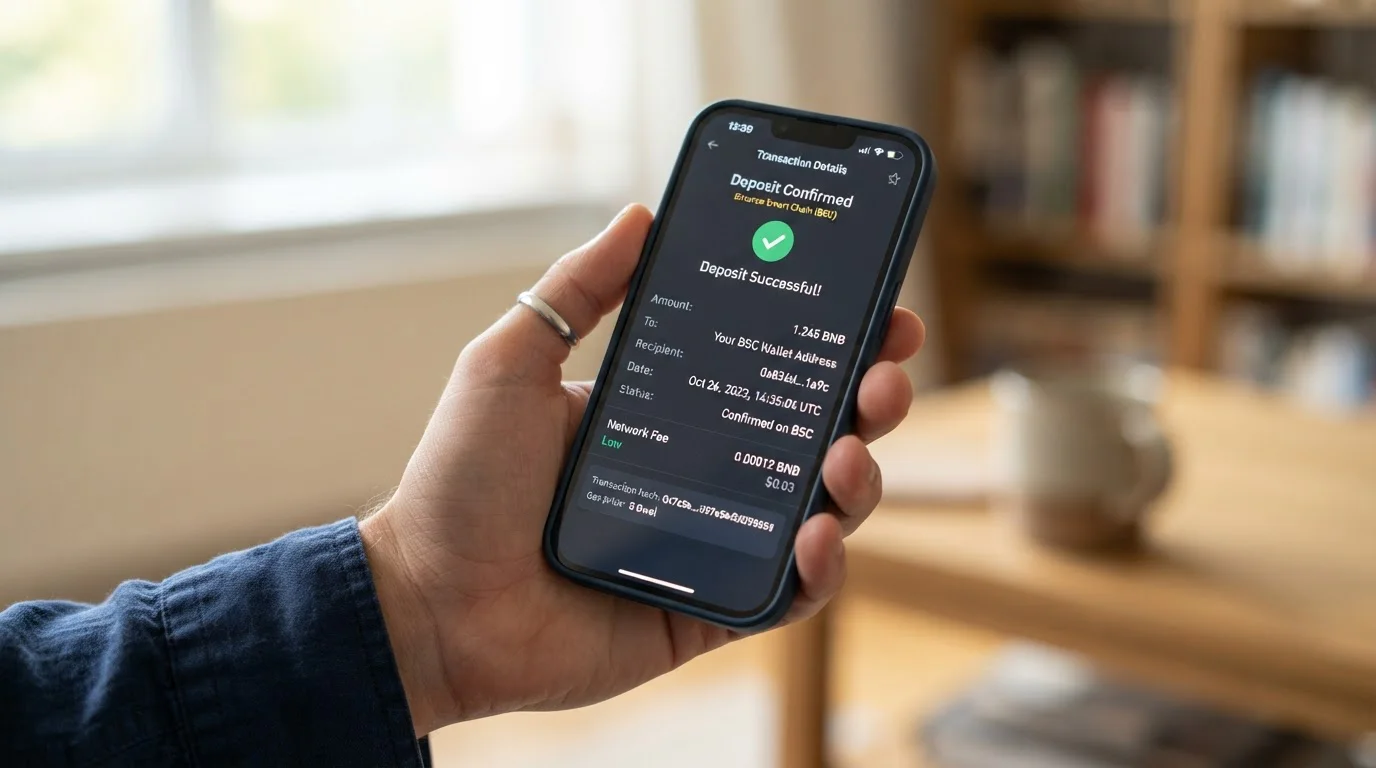
Depositing BNB at an offshore casino follows a standard three-step process: generate a deposit address in the casino’s wallet interface, send BNB from your external wallet or Binance exchange account to that address, wait for blockchain confirmation. Most casinos require one to three confirmations on Binance Smart Chain before crediting your balance—under 60 seconds for one confirmation, two to three minutes for three confirmations. No reversals exist once the transaction broadcasts. If you send to the wrong address or select the wrong network, those funds are lost unless the recipient manually recovers them.
The deposit address is unique to your casino account. Copy it exactly from the casino interface—manually typing introduces error risk, and a single wrong character redirects funds to an address nobody controls. Most wallets and exchanges support QR code scanning. Use it. The QR code encodes the address, eliminating transcription errors. Select the BEP-20 network explicitly when sending from Binance or another exchange. BNB exists on multiple networks (BEP-2, BEP-20, ERC-20 as wrapped BNB), and casinos typically accept only BEP-20. Sending on the wrong network means the transaction succeeds on-chain but never appears in your casino balance.
How to Deposit BNB at an Online Casino
Log into your casino account and navigate to the cashier or wallet section. Select BNB or Binance Coin from the list of deposit methods. The platform generates a unique deposit address—a long alphanumeric string beginning with “0x” for BEP-20 addresses. Copy this address or scan the QR code provided. Open your external wallet (Trust Wallet, MetaMask, Binance exchange account) and initiate a send transaction. Paste the casino’s deposit address as the recipient. Verify the network is set to BEP-20 or Binance Smart Chain—not BEP-2, not Ethereum. Enter the amount you wish to deposit and confirm the transaction. Your wallet will display the network fee (typically $0.10 to $0.50 for BEP-20).
The transaction broadcasts to the blockchain immediately. Binance Smart Chain block time is approximately three seconds, meaning one confirmation arrives within seconds. Most casinos credit deposits after one to three confirmations, translating to under one minute total. The deposit amount appears in your casino balance, either as BNB quantity (if the casino holds native coin) or as a dollar figure (if they auto-converted to stablecoins). Check your balance denomination to verify which model the casino uses.
UK bank friction does not affect cryptocurrency deposits. British banks cannot decline a blockchain transaction because they are not intermediaries in the payment flow. This makes BNB the primary payment method for UK players using offshore casinos, bypassing the card-decline issue that plagues traditional offshore gambling payments. You transfer value directly from your wallet to the casino’s wallet with no bank approval required. The tradeoff: no chargeback protection if the casino refuses to credit your deposit or denies withdrawal later.
How to Withdraw BNB from a Casino
Navigate to the casino’s withdrawal or cashier section. Select BNB as your withdrawal method. Enter the amount you wish to withdraw and provide your external wallet address—the address where you want to receive funds, not the address you deposited from (though using the same address for both is common practice). Double-check the address is correct. Blockchain transactions are irreversible; funds sent to a wrong address are permanently lost.
The casino processes the withdrawal request. Processing time varies by platform, account status, and amount. Auto-approved accounts with verified KYC and clean transaction history may see instant approval—the withdrawal broadcasts to the blockchain within seconds. New accounts, large withdrawal amounts, or accounts flagged for manual review face delays ranging from hours to days. This is the approval bottleneck, not blockchain speed. Once the casino approves and broadcasts the transaction, BEP-20 confirmation takes under one minute.
Some casinos batch withdrawals—they queue requests and process them in groups at set intervals (every hour, every six hours, once daily) rather than individually on demand. This explains why advertised “instant crypto withdrawals” can take hours in practice. The blockchain settles instantly, but the casino’s internal approval process runs on a schedule. Check reviews and user reports for the platform’s actual withdrawal timelines, not just marketing claims.
KYC requirements often trigger at first withdrawal rather than at registration. An offshore casino may allow no-verification signup and deposits, then demand photo ID, proof of address, and sometimes a selfie holding your ID when you attempt to withdraw. This is not necessarily a scam—many legitimate offshore casinos follow this model to reduce signup friction while still meeting basic anti-money laundering checks. However, it creates surprise delays. If KYC is triggered mid-withdrawal, expect one to three additional business days for document review before approval.
Network Selection and Common Mistakes
Sending BNB on the wrong network is the most common deposit error. Binance Coin exists on three networks: BEP-2 (Binance Chain, the original blockchain, now deprecated for most purposes), BEP-20 (Binance Smart Chain, the fast low-fee network almost all casinos use), and ERC-20 (wrapped BNB on Ethereum, rare in casino contexts). When you withdraw BNB from Binance exchange, the platform asks which network to use. Select BEP-20 or BSC. Do not select BEP-2 unless the casino explicitly supports it. Do not select Ethereum unless the casino specifies ERC-20 wrapped BNB.
If you send BNB on BEP-2 to a casino wallet expecting BEP-20, the transaction succeeds on-chain but the casino’s wallet software does not scan BEP-2, so your deposit never credits. Recovery requires contacting support with the transaction hash and requesting manual crediting—a process that can take days or weeks, assuming support is competent enough to perform cross-chain recovery. Some casinos refuse recovery entirely, classifying wrong-network deposits as user error and non-refundable.
Memo or tag fields are rare for BNB deposits but common for certain other cryptocurrencies like XRP and XLM. BNB deposits on BEP-20 do not use memos. If the casino displays a memo field, it should be empty for BNB. Filling it with random text does not harm the transaction, but missing a required memo on a different cryptocurrency will result in lost funds. Always follow the casino’s exact deposit instructions per cryptocurrency.
UK players withdrawing from Binance exchange to an offshore casino face no regulatory block. Binance permits UK customers to buy, hold, and send BNB. The restriction is on the receiving end—UKGC-licensed casinos cannot accept crypto deposits, so all BNB casino deposits flow to offshore platforms. This is legally distinct from sending GBP via bank transfer to an offshore casino, which UK banks often decline due to merchant category code restrictions. Blockchain transactions bypass merchant codes entirely.
How long do BNB deposits and withdrawals take at online casinos?
BNB deposits on Binance Smart Chain confirm within 60 seconds and credit to your casino balance after one to three confirmations (under one minute total). Withdrawals depend on casino approval time: instant for auto-approved accounts, hours to days for manual review. Once approved, blockchain settlement takes under one minute. Total withdrawal time ranges from minutes to several days depending on platform policy.
What are the network fees for BNB casino transactions?
BEP-20 (Binance Smart Chain) network fees range from $0.10 to $0.50 per transaction as of 2026. Casinos typically do not charge additional fees for BNB deposits, though some impose percentage-based or flat withdrawal fees. Check the casino’s fee schedule before depositing. BEP-20 fees are 10 to 100 times lower than Ethereum and significantly cheaper than Bitcoin during high network congestion.
BNB Casino Games: What You Can Play with Binance Coin
Every major game category appears at BNB-accepting casinos: slots, live dealer tables, table games, video poker, and crypto originals like Dice, Plinko, and Crash. The cryptocurrency you deposit does not restrict which games you can access—once BNB credits to your balance (whether held as native coin or converted to stablecoins), it functions as generic casino credit across the entire game library. No “BNB-only games” or “crypto-specific slots” exist; the distinction lies in payment processing, not game availability.
Slots and Game Providers
Offshore crypto casinos source slots from the same providers supplying UKGC-licensed operators: Pragmatic Play, NetEnt, Microgaming, Play’n GO, Yggdrasil, Hacksaw Gaming, Nolimit City, Push Gaming. Licensed studios require casino operators to hold valid gambling licenses before supplying content, meaning legitimate offshore casinos with Curaçao or Malta licenses access the same slot libraries as regulated European casinos. Unlicensed operators either source from lower-tier providers who do not enforce license checks, or they run pirated copies of mainstream slots—clones that look identical to originals but may have altered RTP or rigged RNG.
Game library size ranges from a few hundred titles at Crypto-Games.io to over 16,000 at Vave. Check which providers the casino lists—Pragmatic Play, NetEnt, Evolution Gaming, Microgaming signal legitimate supply contracts.
Live Dealer Games
Evolution Gaming, Pragmatic Play Live, and Ezugi supply live dealer content to licensed offshore casinos. Blackjack, roulette, baccarat, poker variants, game shows (Crazy Time, Monopoly Live, Deal or No Deal), and regional variations like Lightning Roulette and Speed Baccarat stream from studios in Eastern Europe, Latin America, and Asia. Table limits range from $0.50 minimums to $10,000-plus VIP tables, though high-roller limits may require account verification and deposit history before access.
Live dealer games settle in your account’s currency. If the casino holds native BNB, bets convert to dollars at current rate; if auto-converted to USDT at deposit, your balance is already in dollars. UK players face no bet limits or timeout prompts at offshore casinos—uninterrupted sessions with no regulatory monitoring.
Crypto Originals and Provably Fair Games
Dice, Crash, Plinko, Mines, Limbo, and Keno are native crypto gambling games built on provably fair RNG. Each game displays server seed (hashed), client seed (player-chosen or randomly generated), and nonce before the bet. After the outcome, the unhashed server seed is revealed, allowing independent verification that the result was not manipulated. House edge on these games typically runs 1 to 2 percent, lower than slots (3 to 5 percent house edge on average) and table games (0.5 to 5 percent depending on ruleset).
Crash is the signature crypto original: cash out before the multiplier crashes. Plinko, Mines, and Limbo follow the same provably fair structure—you can verify every outcome via open-source scripts or built-in tools. Provably fair prevents rigged RNG but does not prevent withdrawal denial.
Most offshore BNB casinos offer a mix of provably fair originals and licensed third-party slots. Platforms like Crypto-Games.io focus exclusively on provably fair games. Mainstream crypto casinos like 7Bit or Jack treat originals as a supplementary category alongside thousands of slots. Player preference splits: some prioritise RNG transparency and low house edge, accepting narrow game variety in exchange. Others want branded slots, progressive jackpots, and live dealer tables, accepting standard RNG certification as sufficient trustworthiness.
BNB Casino Bonuses and Wagering Requirements
Offshore crypto casino bonuses follow structures familiar from traditional online gambling: deposit match bonuses (100 percent up to $500), free spins packages (200 spins on selected slots), cashback offers (10 percent weekly), and reload bonuses on subsequent deposits. The headline figures inflate—some platforms advertise “$10,000 welcome packages”—but terms determine real value. A $10,000 bonus with 50x wagering and $5 maximum bet during play requires $500,000 in total wagers to clear, statistically unachievable for most bankrolls. A $200 bonus with 20x wagering and no bet caps clears in $4,000 wagered, reachable in a weekend for a mid-stakes player.
Wagering requirements (also called rollover, playthrough, or turnover requirements) specify how many times you must wager the bonus amount before withdrawing. A 30x requirement on a $100 bonus means $3,000 in total bets. These requirements apply to bonus funds, not your deposit. If you deposit $100 and receive a $100 bonus with 30x wagering, you must wager $3,000 of the bonus, not $6,000 of combined funds. Some casinos apply wagering to deposit plus bonus, effectively doubling the requirement—read the terms.
Game contribution rates vary. Slots contribute 100 percent toward wagering, meaning every dollar bet on slots counts as one dollar toward your requirement. Table games contribute 10 to 20 percent, meaning a $10 blackjack bet counts as $1 or $2 toward wagering. Live dealer often contributes 0 percent, meaning live bets do not clear bonus wagering at all. This structure funnels bonus play toward high-house-edge slots and away from low-house-edge games like blackjack basic strategy (0.5 percent house edge) where skilled players could extract value.
Maximum bet limits during bonus play prevent low-risk coverage strategies. Most offshore casinos cap bets at $5 or $10 while bonus funds are active. Bet $20 on a single spin, and the casino can void your bonus and associated winnings for terms violation. The cap prevents players from wagering the requirement rapidly on near-even-money bets (red/black roulette, both sides of a low-volatility slot) to clear wagering with minimal risk. For slots players, the $5 cap is rarely restrictive. For table game players or high-stakes slot bettors, it forces bet sizes below their preferred range.
Cashout caps limit how much you can withdraw from bonus winnings. Jack Casino caps free spins winnings at $100—if you turn 100 free spins into $500, you can only withdraw $100, and the remaining $400 is forfeited. Other casinos impose 5x or 10x bonus amount caps: a $100 bonus might cash out to a maximum of $500 or $1,000, with excess winnings removed. Uncapped bonuses exist but carry higher wagering requirements to compensate. The value equation: low wagering with cashout cap versus high wagering with no cap. For most players, low wagering wins because reaching even a capped withdrawal is statistically easier than clearing 50x requirements regardless of cap.
Crypto-specific bonus terms sometimes exempt network fees. A casino might credit the exact deposit amount as a bonus match without deducting the BEP-20 transaction fee you paid. This costs the casino $0.10 to $0.50 per deposit—negligible at scale. Fiat casinos deduct payment processor fees (3 to 5 percent) from deposits, so a $100 credit card deposit might credit $97 after fees. BNB’s low network fees eliminate this friction, allowing casinos to offer full-value matches without eating processor costs.
Cashback offers return a percentage of losses over a period (daily, weekly, monthly). A 10 percent weekly cashback on $1,000 in net losses returns $100. Some cashback is wagering-free, meaning you can withdraw immediately. Other cashback bonuses carry 1x to 5x wagering requirements. Rakeback in the crypto gambling space functions similarly—a percentage of every bet returns to your account regardless of outcome. Poker players know rakeback as a percentage of rake paid back over time. Crypto casinos apply the mechanic to slots and table games: bet $1,000 at 5 percent rakeback, receive $50 regardless of whether you won or lost overall.
The most honest bonus structure is Jack’s 1x wagering on free spins. You receive 100 spins, win $50 from them, wager that $50 once (a few spins), then withdraw whatever survives. Most players can complete 1x wagering in under an hour. Compare this to a “$1,000 bonus with 40x wagering” that requires $40,000 in bets, taking days to clear and depleting most of the bonus value through house edge before withdrawal is possible. Lower wagering with smaller absolute bonus amounts delivers more real withdrawable value than inflated figures with punishing rollover.

How We Evaluate and Rank BNB Casinos for UK Players
This comparison ranks seven BNB-accepting offshore casinos by withdrawal reliability, payment transparency, and operational trustworthiness rather than by marketing spend or affiliate commission rates. The evaluation framework uses six weighted criteria, each scored from verifiable evidence rather than operator self-reporting. No casino paid for placement. No affiliate relationship influenced rankings. The goal is filtering signal from noise in a market where regulatory oversight is minimal and user protection depends on choosing operators who follow their own rules.
License and Regulatory Oversight
Offshore licenses range from Curaçao’s mid-tier oversight (published license register, occasional audits, public complaint process) to Anjouan and Comoros structures offering licensing as revenue generation with minimal operator requirements. A Curaçao license is verifiable via the Gaming Control Board registry—you can confirm the operator exists, the license is active, and the registration matches the casino’s stated legal entity. Anjouan and Comoros licenses are often not publicly verifiable. The license number appears in the casino footer, but no public registry confirms validity.
Unlicensed casinos like FoxSlots carry maximum risk—no external checks, no accountability, no recourse if they alter RTP or refuse withdrawals.
Payment Handling and Withdrawal Reliability
Does the casino process withdrawals in advertised timeframes, or do delays stretch from hours to weeks? User reviews on Trustpilot, BitcoinTalk, Reddit, and casino complaint forums provide reality checks against marketing claims. A casino advertising “instant crypto withdrawals” may technically support blockchain settlement but queue approval for days. The bottleneck is not BNB network speed—it is the casino’s internal approval process.
Legitimate operators process payouts consistently; scams show patterns—pending withdrawals, unresponsive support, invasive KYC demands. Vave’s 1.7/5 Trustpilot places it in the caution zone. Cybet’s $1 minimum allows testing withdrawal behaviour with negligible risk.
Transaction Speed and Network Fees
BEP-20 network fees run $0.10 to $0.50, dramatically lower than Ethereum ($5 to $50) and competitive with TRON and Solana. Casinos accepting native BNB on Binance Smart Chain deliver the full low-fee advantage. Casinos that accept BNB deposits but auto-convert to stablecoins on other networks (USDT on Ethereum, USDC on TRON) negate the fee advantage at withdrawal if they force you through a costlier network.
Casinos supporting BEP-20 for both deposit and withdrawal keep fees under $1 round-trip. BEP-20 confirmation takes under 60 seconds versus 10-60 minutes for Bitcoin.
The networks commonly used at these casinos differ sharply on cost and settlement time:
| Network | Typical Transaction Fee | Confirmation Time | Practicality for Casino Play |
|---|---|---|---|
| BNB (BEP-20) | $0.10–$0.50 | Under 60 seconds | Highest: sub-dollar fees, sub-minute settlement |
| Ethereum (ERC-20) | $5–$50 ($15–$100 at peak) | Minutes | Low: fees erode small, frequent deposits |
| Bitcoin | $1–$30 | 10–60 minutes | Moderate: slower and costlier per transfer |
| TRON (TRC-20) | Under $1 | Seconds to minutes | High: common lower-cost stablecoin rail |
Game Library and Provider Quality
Casinos sourcing slots from Pragmatic Play, NetEnt, Microgaming hold legitimate provider contracts. Check the provider roster, not game count. Evolution Gaming live dealer availability indicates strict compliance standards.
Bonus Terms and Fairness
Wagering below 25x is achievable; above 40x statistically unlikely to clear. Jack’s 1x is the lowest. Cashout caps limit withdrawals—free spins with $100 cap forfeit anything beyond. Maximum bet limits during bonus play typically $5-$10.
User Reputation and Complaint History
Trustpilot, AskGamblers, BitcoinTalk, and Reddit threads reveal patterns invisible in operator marketing. A casino with 4.0-plus Trustpilot and minimal unresolved complaints has a track record of honouring terms and processing withdrawals. A casino with sub-2.0 Trustpilot and recurring withdrawal denial complaints carries documented risk. Reviews are not infallible—some casinos inflate scores with fake reviews, some disgruntled players leave one-star reviews over terms they misunderstood—but patterns across multiple platforms signal real issues.
Vave’s 1.7/5 Trustpilot with recurring themes of delayed or withheld withdrawals despite advertised instant payouts is a red flag. Not proof of scam—many reviews describe eventual withdrawal success after delays and support escalation—but evidence that the platform’s advertised speed does not match user experience. For UK players, this means budgeting extra time for withdrawal completion and avoiding deposits you need back within a fixed timeframe.
BC.Game’s 2024 bankruptcy over $2.1 million in unpaid player claims, followed by asset relocation and migration from Curaçao to Anjouan, is historical context worth knowing. The platform still operates in 2026 but now restricts UK registration. Players considering BC.Game should know it faced regulatory enforcement and court-ordered asset seizure within the past two years. That history does not guarantee future problems, but it is data.
UK Players and BNB Casinos: What You Need to Know
Using offshore BNB casinos from the UK is legal but removes every consumer protection UKGC-licensed operators provide. No GamStop integration means self-excluded players can register and deposit. No mandatory deposit limits means you can lose unlimited sums in one session. No dispute escalation to the Gambling Commission means withdrawal denials and altered terms have no UK regulatory backstop. The exchange is straightforward: fast blockchain settlement and cryptocurrency privacy for institutional safeguards and government-enforced fair play.
GamStop and Self-Exclusion
GamStop is the UK’s national self-exclusion register. UK players who self-exclude through GamStop are blocked from all UKGC-licensed casinos for six months, one year, or five years depending on their choice. The system works because UKGC regulations require every licensed operator to integrate with GamStop and reject registration attempts from excluded players. Offshore casinos do not integrate with GamStop. They operate outside UK jurisdiction and have no obligation to honour UK self-exclusion registers.
This creates a harm gap. A UK player who self-excluded from licensed casinos after recognizing a gambling problem can still register at offshore BNB casinos, deposit via cryptocurrency, and gamble without restriction. The self-exclusion they put in place to protect themselves does not extend offshore. For vulnerable players, offshore non-GamStop casinos marketed explicitly as “GamStop alternatives” exploit a protection gap for revenue. For players who self-excluded due to poor experiences with specific licensed operators rather than problem gambling, offshore access offers choice.
The ethical line is sharp. Offshore casinos cannot simultaneously market themselves as “GamStop alternatives” to attract self-excluded UK players and claim they operate responsibly. If your customer acquisition strategy targets people who excluded themselves from gambling, you are targeting vulnerable individuals by design. FoxSlots and dozens of similar platforms advertise “non-GamStop casino” as a selling point. That is not consumer freedom. That is predatory positioning.
UK players not on GamStop but considering offshore casinos should understand that self-exclusion options at offshore platforms are limited. You can request account closure, but no cross-operator exclusion system exists offshore. Closing your account at one Curaçao casino does not prevent registration at twenty others. UKGC operators share GamStop data across the industry—exclude once, you are blocked everywhere. Offshore operators share nothing. Each exclusion is isolated to that platform, assuming they honour the request at all.
Dispute Resolution and Player Protections
UKGC-licensed casinos route unresolved disputes to the Independent Betting Adjudication Service (IBAS), a free alternative dispute resolution service for UK gambling complaints. If a licensed casino denies your withdrawal or alters bonus terms unfairly, you escalate to IBAS, which investigates and issues a binding ruling. If IBAS finds in your favour, the casino must comply or face UKGC enforcement including fines, license suspension, or revocation.
Offshore casinos route disputes through their licensing jurisdiction’s complaint process. Curaçao eGaming operates a complaint form on its website. You submit details, the regulator forwards your complaint to the operator, and the operator has 14 days to respond. The regulator mediates, but rulings are not always binding, enforcement is inconsistent, and response times stretch from weeks to months. Anjouan and Comoros jurisdictions offer even less. No public complaint process, no regulator email, no dispute resolution infrastructure. If an Anjouan-licensed casino denies your withdrawal, your recourse is emailing support and hoping they respond. If they do not, you have exhausted your options.
This asymmetry matters. A UKGC-licensed casino faces institutional consequences for bad behaviour—regulatory fines, public enforcement notices, and reputational damage that affects their ability to operate in the UK market. An Anjouan-licensed casino faces none of that. They can deny withdrawals, alter terms, and close accounts with no consequence beyond negative reviews on forums. The only pressure is reputational, and many offshore operators view that as acceptable business cost.
For UK players, this means evaluating offshore casinos by their track record rather than their license. A Curaçao-licensed casino with five years of positive user reviews and consistent withdrawal processing is lower risk than a brand-new Anjouan-licensed casino with no history. License type matters less than operational history when regulatory enforcement is weak across all offshore jurisdictions.
Tax Implications for UK Players
Gambling winnings in the UK are not taxable. This applies to winnings from UKGC-licensed casinos, offshore casinos, poker tournaments, sports betting, bingo, and lottery. HMRC does not classify gambling winnings as income, and you do not report them on tax returns. The rule holds whether you win £500 or £500,000, and whether you win at a UK-licensed operator or an offshore platform.
Professional gamblers who earn their primary income from gambling may face different treatment. If gambling is your trade rather than recreation—you maintain detailed records, operate with business discipline, and rely on gambling profits as your sole income source—HMRC may classify you as a professional gambler and assess tax on trading profits. The threshold is fuzzy and determined case-by-case. Casual players, even those who win large sums or play regularly, are not professional gamblers for tax purposes.
Cryptocurrency adds a complication. Gambling winnings in BNB are not taxable, but if you hold BNB long-term as an investment and it appreciates in value, any gain you realize when converting BNB to GBP may be subject to capital gains tax. The gain is not from gambling—it is from holding a capital asset (cryptocurrency) that appreciated. If you deposit 1 BNB worth £300, win at the casino and withdraw 2 BNB, then hold that 2 BNB for three months while BNB price rises and finally sell for £700, the gambling portion (1 BNB gain from casino play) is tax-free, but the appreciation from £600 to £700 while you held BNB could be a capital gain.
In practice, most players deposit, play, and withdraw within short timeframes where BNB price does not move significantly. The capital gains complexity applies mainly to players who hold BNB long-term for investment purposes separate from gambling. HMRC’s crypto tax guidance treats cryptocurrency as a capital asset, meaning buying and selling BNB triggers potential capital gains or losses. Gambling winnings paid in BNB are exempt from income tax but holding BNB is subject to capital gains rules if you later sell at a profit.
Can UK players on GamStop access BNB casinos?
Yes. Offshore BNB casinos do not integrate with GamStop, so UK players who self-excluded from UKGC-licensed operators can still register, deposit, and gamble at offshore platforms. This creates a harm protection gap for vulnerable players. No cross-platform self-exclusion exists in the offshore market—each casino operates independently with no shared exclusion registry.
Are BNB casino winnings taxable in the UK?
No. Gambling winnings are not taxable in the UK regardless of amount, game type, or whether the casino is UKGC-licensed or offshore. HMRC does not classify gambling winnings as income. However, if you hold BNB as a capital asset and it appreciates in value before you sell, capital gains tax may apply to the appreciation separate from gambling winnings.
How do offshore BNB casinos compare to UKGC-licensed operators for UK players?
Offshore BNB casinos offer fast blockchain settlement, cryptocurrency privacy, no deposit limits, and no GamStop integration. UKGC-licensed casinos offer regulated dispute resolution via IBAS, GamStop self-exclusion, mandatory responsible gambling tools, and government enforcement of fair play. The tradeoff is speed and privacy versus consumer protection and regulatory oversight. Neither is inherently better—the right choice depends on your priorities and risk tolerance.
BNB Gambling Sites Beyond Casinos
BNB acceptance extends beyond casino games into sports betting, poker rooms, and esports wagering. Sportbet.one combines casino and sportsbook under one balance, accepting BNB for football, basketball, tennis, and esports markets. Thunderpick focuses on esports betting—Counter-Strike, League of Legends, Dota 2—alongside a casino offering, though it restricts UK players as of 2026. Poker rooms like Coinpoker accept BNB for cash games and tournaments, though player liquidity in non-Bitcoin cryptocurrencies is typically lower than BTC tables.
Sportsbook margins (the built-in house edge on odds) range from 2 to 7 percent depending on sport, market, and operator. Football and tennis carry lower margins (2 to 4 percent) due to high liquidity and sharp-bettor competition. Niche markets and esports carry higher margins (5 to 7 percent). Cryptocurrency sportsbooks rarely offer better odds than fiat sportsbooks—the advantage is payment speed and privacy, not value. If you are betting for profit rather than recreation, compare odds across multiple sportsbooks and use whichever offers the best line regardless of payment method.
Poker rake at crypto poker rooms typically runs 5 percent capped at a few big blinds, standard across the industry. The cryptocurrency element affects payment speed (instant deposits and withdrawals) but not table dynamics or rake structure. Player pools are smaller than major fiat poker sites, meaning game selection is narrower and high-stakes tables may not run at all hours. For casual players, smaller pools mean softer competition. For serious grinders, it means fewer table options and difficulty finding action at preferred stakes.
Responsible Gambling with BNB Casinos
Offshore casinos impose no mandatory deposit limits, no session time reminders, and no algorithmic intervention if you lose rapidly. UK-licensed operators under UKGC rules must display time and spend during play, offer session limits, and flag accounts showing problem gambling patterns. Offshore platforms offer none of this. You can deposit and lose your entire bankroll in one session with no friction, no warnings, and no forced break.
Self-control tools at offshore casinos are voluntary and casino-specific. You can request deposit limits or self-exclusion by contacting support, but enforcement depends on the operator honouring your request. No regulator verifies compliance. If you set a £500 monthly limit and the casino allows you to deposit £1,000, you have no enforcement pathway. UKGC-licensed operators face penalties for limit breaches. Offshore operators face no consequence.
BeGambleAware operates the National Gambling Helpline: 0808 8020 133, available 24/7 for UK residents. GamCare offers support via 0808 8020 133 and online chat. Both services are free, confidential, and independent of the gambling industry. If you feel gambling is affecting your mental health, relationships, or finances, these services provide assessment and referral to treatment. Offshore casinos display responsible gambling hotlines in footers, but they cannot enforce GamStop or deposit limits the way licensed operators can.
The core message: offshore gambling is self-regulated by the player. No institutional safeguards, no algorithm watching for problem patterns, no regulator enforcing protections. If you choose offshore BNB casinos, you are choosing a market where your only protection is your own discipline. That is liberating for players confident in their control. It is dangerous for those who struggle with impulse, chasing losses, or gambling while impaired.
Weighing Offshore BNB Casinos: Speed Versus Protection
Seven BNB casinos serve UK players in 2026, each carrying offshore licenses ranging from Curaçao’s mid-tier oversight to Comoros’s paper-only permits. Zero UKGC-licensed operators accept cryptocurrency—a regulatory wall built on anti-money laundering concerns and fund-source verification requirements incompatible with blockchain’s pseudonymous architecture. The offshore alternative offers fast settlement, low network fees, and no deposit limits, balanced against zero UK consumer protection, no GamStop integration, and dispute resolution through foreign regulators with limited enforcement power.
Jack Casino and 7Bit Casino rank highest by operational history, withdrawal consistency, and transparent licensing. Sportbet.one and Crypto-Games.io deliver blockchain transparency and instant settlement with lighter regulatory oversight. Cybet occupies uncertain middle ground—low deposit minimums and tested payout times against unconfirmed BNB support and Anjouan licensing. Vave’s game library and provably fair originals compete with a 1.7/5 Trustpilot and withdrawal delay complaints. FoxSlots operates unlicensed, carrying maximum risk for players prioritising regulatory accountability.
UK players using offshore platforms assume risk UKGC-licensed casinos externalize to regulators: withdrawal reliability depends on operator goodwill rather than enforcement threat, bonus terms can change mid-play with no IBAS escalation, and self-exclusion requests route through casino support rather than GamStop’s cross-industry block. BNB’s BEP-20 network delivers sub-dollar fees and sub-minute confirmation—advantages realized only if the casino genuinely supports native BNB rather than auto-converting to stablecoins and forcing higher-fee withdrawal networks.
The comparison above filters signal from offshore casino marketing noise. What it cannot do: guarantee any platform will honour its terms tomorrow, predict which offshore operator will exit-scam next month, or replace due diligence with rankings. Test platforms with minimal deposits before committing larger sums. Verify licenses against regulator registries. Check user reviews across multiple complaint platforms. Measure actual withdrawal times against advertised claims. The offshore market rewards skepticism and punishes trust.
Crypto Casinos UK 2026 — Solana, XRP, Dogecoin and More
Content created by the «casinopayexp» team